









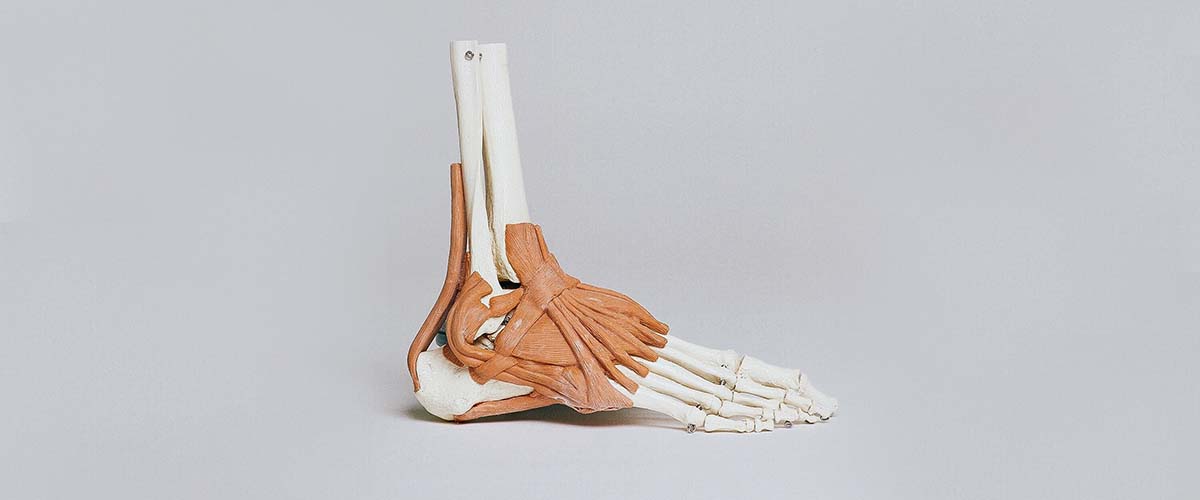
The fifth metatarsal is the long bone on the outside of the foot, running from the middle of the foot to the little toe. Fractures here are among the most common foot fractures. Where the bone breaks matters a great deal: a break at the very tip of the base usually heals well in a boot, while a Jones fracture, a little farther along the bone, sits in an area with a poorer blood supply and heals less reliably.5,8
- Pain, swelling and bruising on the outside of the foot, often after rolling the ankle or with gradual onset in athletes
- Tip-of-the-base (zone 1) fractures usually heal with a boot or stiff shoe and early walking3
- Jones (zone 2) fractures heal less reliably; a screw is often recommended for athletes9,10,12
- Stress fractures just beyond the Jones area (zone 3) often need a screw4
- Low vitamin D and a high arch can contribute and are worth checking16,26
Types of fifth metatarsal fractures
Fractures at the base of the fifth metatarsal are traditionally divided into three zones:
- Zone 1 (avulsion or “pseudo-Jones” fracture): a small piece of the tip of the bone pulled off, often when the ankle rolls.
- Zone 2 (Jones fracture): a break where the base meets the shaft, at the junction with the fourth metatarsal.
- Zone 3 (proximal shaft stress fracture): a fatigue fracture just beyond the Jones area, common in running and cutting athletes.4
Surgeons don’t always agree on which zone a fracture falls into,1 and some studies suggest zone 1 and zone 2 fractures behave more alike than once thought.2,3 That is one reason treatment is tailored to the fracture pattern, the patient’s activity level and whether the fracture is a sudden injury or a stress fracture. Fractures farther along the shaft, often called dancer’s fractures, are a separate group (see below).
Symptoms
- Pain on the outside of the midfoot, especially when walking or pushing off
- Swelling and bruising along the outer foot
- Tenderness when pressing on the base of the fifth metatarsal
- With stress fractures: aching on the outside of the foot for days or weeks before a more painful break
Diagnosis
Dr. Dold examines the foot and ankle and orders X-rays when the exam suggests a fracture. The Ottawa ankle and foot rules help decide who needs X-rays after an injury; when they are negative, X-rays are often unnecessary.6 A newer bedside screening test missed nearly a quarter of fractures and should not replace these rules.7
For a suspected stress fracture with normal X-rays, an MRI or CT scan may be used. Because a Jones or stress fracture can come back, Dr. Dold also looks at foot shape (a high arch is common in these patients),16 footwear, training load and bone health, including vitamin D, which is often low in patients with fifth metatarsal fractures.26
Zone 1 (avulsion) fractures: usually no surgery
Most tip-of-the-base fractures heal well with early functional treatment: a walking boot or stiff-soled shoe, weight-bearing as comfortable and a gradual return to activity.3,5 Many metatarsal fractures are treated in a boot or hard-soled shoe for about three to six weeks.5 Surgery is uncommon and usually reserved for a large, displaced fragment involving the joint.
Jones (zone 2) fractures: cast or screw?
Jones fractures can heal without surgery, usually with a period of non-weight-bearing in a cast or boot, but the poorer blood supply in this area means healing is slower and less predictable.5,8 In a randomized trial of acute Jones fractures, 44% of those treated in a cast failed, while early screw fixation gave faster healing and return to sport.9
Research comparing the two approaches has found:
- Intramedullary screw fixation is more likely to achieve healing than non-surgical care.10
- Across 998 patients, surgery had fewer complications (8.5% vs 15.6%) and fewer nonunions.11
- In athletes, screw fixation led to higher return-to-play and healing rates and faster recovery.12,13
For less active patients, a non-surgical trial is a reasonable choice, accepting a longer recovery and a higher chance the bone won’t heal. Dr. Dold reviews these trade-offs with each patient.
Jones fracture surgery
The standard operation is a single screw placed down the inside (intramedullary) of the fifth metatarsal through a small incision near the base of the bone.14 In laboratory testing an intramedullary screw was stiffer in bending than a plate,18 and the screw’s entry point affects how well the fracture lines up.17 Screw size, a high-arched foot and repeat fractures all affect the surgical plan.15
For chronic fractures, nonunions or repeat fractures, bone graft or bone marrow concentrate may be added to support healing,22,24 and electromagnetic bone stimulation has been studied for nonunions.25 Even after surgery, healing takes time: in the general population, union took a median of about 11 to 14 weeks.16
Stress fractures (zone 3)
Proximal fifth metatarsal stress fractures are fatigue fractures and often need a screw because they are at higher risk of not healing.4,27 For early stress reactions, rest from impact and a boot may be enough. Preventing a recurrence matters just as much: training changes, strengthening, footwear, foot alignment and bone health all play a role.28,29
Jones fractures in athletes
Jones fractures are well known in basketball and football players, who are a high-risk group with characteristic foot shapes.19 For high-performance athletes with an acute Jones fracture, early screw fixation is an accepted option, and chronic fractures often need surgery.23 In a series of NFL players, all returned to play after screw fixation,20 though refracture rates of 4% to 12% have been reported in NFL players.21 A carefully staged return to running and cutting, with attention to foot shape and footwear, helps limit that risk.
Shaft (dancer’s) fractures
Spiral fractures farther along the shaft of the fifth metatarsal, often from rolling over the foot, are called dancer’s fractures. Most heal without surgery even when displaced, with excellent results reported in a large group of patients.32 Healing took about 3 months on average,30 and dancers returned to performance at an average of 19 weeks.31
Recovery
- Zone 1 fractures: walking in a boot or stiff shoe right away as comfort allows, with a gradual return to normal shoes over several weeks.3,5
- Jones fractures without surgery: usually a longer period of protected or non-weight-bearing, with X-rays to confirm healing before returning to sport.
- After screw fixation: a short period of protection, then progressive weight-bearing and a staged return to running and sport guided by healing on X-ray.
Return-to-sport timelines vary with the fracture, the treatment and the sport, and Dr. Dold sets them individually.
Frequently asked questions
What is the difference between a Jones fracture and an avulsion fracture?
An avulsion (zone 1) fracture is a small piece pulled off the tip of the fifth metatarsal base and usually heals in a boot. A Jones fracture is a little farther along the bone, in an area with a poorer blood supply, so it heals more slowly and less reliably.
Can I walk on a Jones fracture?
Many zone 1 fractures can be walked on in a boot. Jones fractures treated without surgery usually need a period of protected or no weight-bearing. Ask before walking on any suspected fracture.
Do all Jones fractures need surgery?
No. Many heal in a cast or boot, but healing is less reliable. A screw is often recommended for athletes and active people because research shows higher healing rates and faster return to sport.
How long does a Jones fracture take to heal?
It varies. Even with surgery, healing took a median of about 11 to 14 weeks in one study of the general population. Non-surgical treatment often takes longer.
Can a Jones fracture happen again?
Yes. Refractures occur, especially in high-level athletes. Foot shape, footwear, training load and vitamin D are all checked to lower that risk.
Research cited on this page
- Noori N, Abousayed M, Guyton GP, et al. What Is the Interrater and Intrarater Reliability of the Lawrence and Botte Classification System of Fifth Metatarsal Base Fractures?. Clin Orthop Relat Res. 2022;480(7):1305-1309. PubMed
The traditional three-zone classification of fifth metatarsal base fractures has only fair agreement between surgeons. - Baumbach SF, Prall WC, Braunstein M, et al. [Fractures of the base of the V metatarsal bone-current concepts revised]. Unfallchirurg. 2018;121(9):723-729. PubMed
Zone 1 and zone 2 fractures behave similarly and can be considered together as base fractures. - Herterich V, Baumbach SF, Kaiser A, et al. Fifth Metatarsal Fracture–A Systematic Review of the Treatment of Fractures of the Base of the Fifth Metatarsal Bone. Dtsch Arztebl Int. 2021;118(35-36):587-594. PubMed
Zone 1 and 2 fractures should be treated with early functional therapy; outcomes in the two zones are similar. - Ancelin D. Metatarsal fracture without Lisfranc injury. Orthop Traumatol Surg Res. 2025;111(1S):104059. PubMed
Zone 3 fractures are fatigue (stress) fractures that often require internal fixation. - Silver S, Williams E, Plunkett ML. Common Foot Fractures. Am Fam Physician. 2024;109(2):119-129. PubMed
Many metatarsal fractures are treated in a walking boot or hard-soled shoe for three to six weeks; the proximal fifth metatarsal heals less reliably because of poor blood supply. - Palapa García LR, Regla Márquez H. [Usefulness of Ottawa rules for acute injuries of ankle and foot]. Rev Med Inst Mex Seguro Soc. 2005;43(4):293-8. PubMed
When the Ottawa rules are negative, X-rays are often unnecessary. - Gumustas I, Altinbilek E, Topcu H, et al. Comparison of the shetty test and ottawa ankle rules for foot and ankle fractures in the emergency department: a prospective validation study. Eur J Trauma Emerg Surg. 2026;52(1). PubMed
A newer bedside test missed nearly a quarter of fractures and should not replace the Ottawa rules. - Metzl JA, Bowers MW, Anderson RB. Fifth Metatarsal Jones Fractures: Diagnosis and Treatment. J Am Acad Orthop Surg. 2022;30(4):e470-e479. PubMed
A review of how Jones fractures are classified, diagnosed and treated. - Mologne TS, Lundeen JM, Clapper MF, et al. Early screw fixation versus casting in the treatment of acute Jones fractures. Am J Sports Med. 2005;33(7):970-5. PubMed
In a randomized trial, 44% of acute Jones fractures treated in a cast failed; early screw fixation gave faster union and return to sport. - Roche AJ, Calder JD. Treatment and return to sport following a Jones fracture of the fifth metatarsal: a systematic review. Knee Surg Sports Traumatol Arthrosc. 2013;21(6):1307-15. PubMed
Intramedullary screw fixation is more likely to achieve union of Jones fractures than non-surgical treatment. - Encinas R, Hall Kiriluk S, DePaolo S, et al. Clinical Outcomes and Complications of Surgical and Conservative Treatment for Jones Fractures: A Systematic Review. J Am Acad Orthop Surg. 2026. PubMed
Across 998 patients, surgery had fewer complications (8.5% vs 15.6%) and fewer nonunions than non-surgical treatment. - Attia AK, Taha T, Kong G, et al. Return to Play and Fracture Union After the Surgical Management of Jones Fractures in Athletes: A Systematic Review and Meta-analysis. Am J Sports Med. 2021;49(12):3422-3436. PubMed
In athletes, screw fixation led to higher return-to-play and union rates and faster recovery than non-surgical care. - Balboni JM, Semelsberger SD, Boggiano VJ, et al. Jones fractures in elite athletes-2025 International Foot and Ankle Sports Consensus and systematic review. Knee Surg Sports Traumatol Arthrosc. 2026;34(9):3120-3134. PubMed
An international consensus found faster return to sport after surgery for Jones fractures in elite athletes. - Ruta DJ, Parker D. Jones Fracture Management in Athletes. Orthop Clin North Am. 2020;51(4):541-553. PubMed
Intramedullary screw fixation is the standard surgical technique for Jones fractures in athletes. - Porter DA. Fifth Metatarsal Jones Fractures in the Athlete. Foot Ankle Int. 2018;39(2):250-258. PubMed
Technical considerations for screw fixation, including cavus feet and recurrent fractures. - Kavanagh AM, Burgess BJ, Garras D, et al. Rate of bony union after Jones fracture fixation in the general population. J Foot Ankle Surg. 2025;64(4):481-487. PubMed
In the general population, union after Jones fracture fixation took a median of about 11 to 14 weeks, and many patients had a high arch (pes cavus). - Khurana A, Alexander B, Pitts C, et al. Predictors of Malreduction in Zone II and III Fifth Metatarsal Fractures Fixed With an Intramedullary Screw. Foot Ankle Int. 2020;41(12):1537-1545. PubMed
The screw entry point affects how well the fracture is reduced. - Huh J, Glisson RR, Matsumoto T, et al. Biomechanical Comparison of Intramedullary Screw Versus Low-Profile Plate Fixation of a Jones Fracture. Foot Ankle Int. 2016;37(4):411-8. PubMed
An intramedullary screw was stiffer in bending than a plate in a laboratory model. - O’Malley M, DeSandis B, Allen A, et al. Operative Treatment of Fifth Metatarsal Jones Fractures (Zones II and III) in the NBA. Foot Ankle Int. 2016;37(5):488-500. PubMed
Professional basketball players with Jones fractures are a high-risk group with specific foot characteristics. - Lareau CR, Hsu AR, Anderson RB. Return to Play in National Football League Players After Operative Jones Fracture Treatment. Foot Ankle Int. 2016;37(1):8-16. PubMed
All NFL players in this series returned to play after screw fixation, with a low refracture rate. - Luo EJ, Anastasio AT, Stauffer T, et al. Jones Fracture in the National Football League. Sports (Basel). 2023;12(1). PubMed
In NFL players treated with surgery, refracture rates ranged from 4% to 12%. - Murawski CD, Kennedy JG. Percutaneous internal fixation of proximal fifth metatarsal jones fractures (Zones II and III) with Charlotte Carolina screw and bone marrow aspirate concentrate: an outcome study in athletes. Am J Sports Med. 2011;39(6):1295-301. PubMed
Percutaneous screw fixation with bone marrow concentrate gave predictable results in athletes. - Rosenberg GA, Sferra JJ. Treatment strategies for acute fractures and nonunions of the proximal fifth metatarsal. J Am Acad Orthop Surg. 2000;8(5):332-8. PubMed
For high-performance athletes with an acute Jones fracture, early screw fixation is an accepted option; chronic fractures often need surgery. - Murakami R, Sanada T, Fukai A, et al. Less Invasive Surgery With Autologous Bone Grafting for Proximal Fifth Metatarsal Diaphyseal Stress Fractures. J Foot Ankle Surg. 2022;61(4):807-811. PubMed
Screw fixation with bone grafting from the fifth metatarsal base was used for proximal stress fractures. - Streit A, Watson BC, Granata JD, et al. Effect on Clinical Outcome and Growth Factor Synthesis With Adjunctive Use of Pulsed Electromagnetic Fields for Fifth Metatarsal Nonunion Fracture: A Double-Blind Randomized Study. Foot Ankle Int. 2016;37(9):919-23. PubMed
Pulsed electromagnetic field stimulation increased growth factors in fifth metatarsal nonunions. - Clutton J, Perera A. Vitamin D insufficiency and deficiency in patients with fractures of the fifth metatarsal. Foot (Edinb). 2016;27:50-2. PubMed
Low vitamin D was common in patients with fifth metatarsal fractures. - Paavana T, Rammohan R, Hariharan K. Stress fractures of the foot – current evidence on management. J Clin Orthop Trauma. 2024;50:102381. PubMed
Most metatarsal stress fractures heal with activity changes; certain stress fractures are high risk for nonunion. - Weinfeld SB, Haddad SL, Myerson MS. Metatarsal stress fractures. Clin Sports Med. 1997;16(2):319-38. PubMed
Metatarsal stress fractures are linked to foot alignment, metabolic factors and training; most heal without surgery. - Warden SJ, Davis IS, Fredericson M. Management and prevention of bone stress injuries in long-distance runners. J Orthop Sports Phys Ther. 2014;44(10):749-65. PubMed
Bone stress injuries in runners can be reduced with training changes and strengthening. - Gonzalez LJ, Johnson JR, Konda SR, et al. The Fifth Metatarsal Shaft Fracture Is Well Treated With Benign Neglect. Foot Ankle Spec. 2024;17(3):189-193. PubMed
Shaft (dancer’s) fractures treated without surgery healed by about 3 months on average. - O’Malley MJ, Hamilton WG, Munyak J. Fractures of the distal shaft of the fifth metatarsal. “Dancer’s fracture”. Am J Sports Med. 1996;24(2):240-3. PubMed
Dancers with distal shaft fractures returned to performance at an average of 19 weeks without surgery. - Aynardi M, Pedowitz DI, Saffel H, et al. Outcome of nonoperative management of displaced oblique spiral fractures of the fifth metatarsal shaft. Foot Ankle Int. 2013;34(12):1619-23. PubMed
Displaced spiral shaft fractures treated without surgery had excellent outcomes in a large cohort.
Medically reviewed by Andrew P. Dold, MD, FAOA, FAAOS, FACS, FRCSC. Last reviewed October 2026. This page is general information, not medical advice. Your own diagnosis and treatment plan depend on your exam and imaging.