








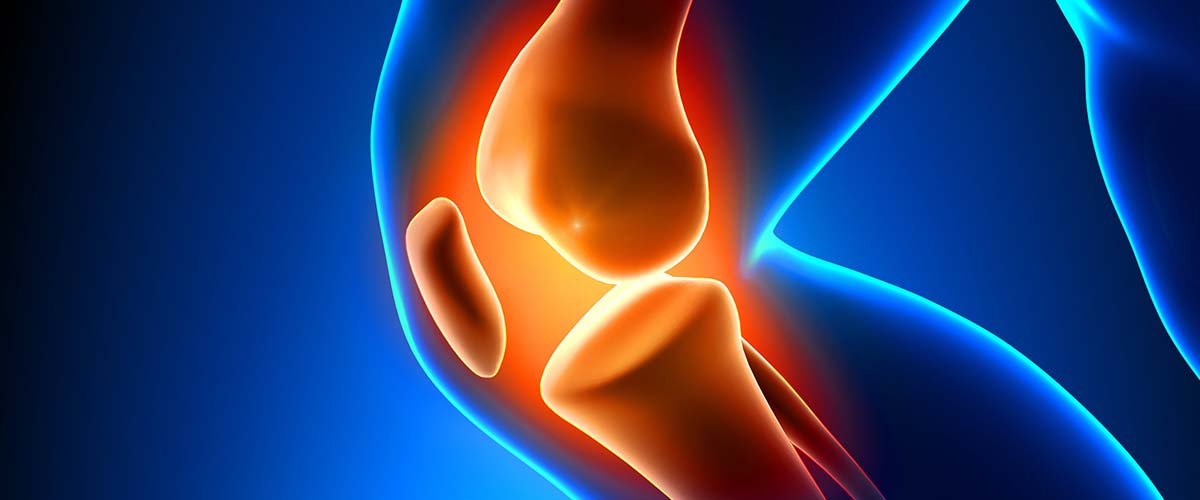
The smooth cartilage that lines the knee can be damaged by an injury, by repeated stress or by a condition called osteochondritis dissecans (OCD), in which a small area of bone beneath the cartilage loses its blood supply and can loosen. Cartilage has very little ability to heal on its own, so these injuries need careful evaluation. Dr. Andrew Dold, a board-certified, fellowship-trained sports medicine surgeon in Frisco, Texas, treats cartilage defects and OCD in athletes of all ages, from activity changes and fixation to the full range of cartilage restoration procedures.
- OCD is most common in children and teenagers who play sports
- Stable OCD lesions in children often heal with activity changes
- Unstable lesions are fixed or drilled; lesions that cannot be saved are restored with cartilage procedures
- Focal cartilage defects in adults can be treated with microfracture, OATS, osteochondral allograft, MACI or the CartiHeal Agili-C implant
What are cartilage defects and OCD?
A focal cartilage defect is a well-defined area of damaged cartilage, often caused by a twisting injury, a kneecap dislocation or an ACL tear. It differs from arthritis, which involves wider wear of the joint.
Osteochondritis dissecans affects the bone just beneath the cartilage, most often on the inner femoral condyle. Prognosis and treatment depend on the stability of the lesion and on whether the patient is still growing.1
Symptoms
- Aching pain with activity
- Swelling after sport
- Catching, locking or a feeling that something is loose in the knee
- Giving way
Diagnosis
Dr. Dold examines the knee and reviews X-rays, including special views that show OCD lesions. An MRI shows the size of the lesion, the condition of the cartilage over it and whether the fragment is stable or loosening, which is the key factor in deciding treatment.1
Treatment without surgery
For children and teenagers who are still growing and have a stable OCD lesion, Dr. Dold usually starts with activity modification, sometimes with a period of protected weight bearing or bracing, and follow-up imaging to check healing.1 In one study, about two-thirds of stable lesions in skeletally immature patients progressed toward healing after 6 months of non-surgical treatment; smaller lesions were more likely to heal.2 Non-surgical treatment is less predictable in adults and in unstable lesions.1
Surgical treatment
- Drilling of stable lesions that have not healed, to stimulate blood flow and healing
- Fixation of unstable fragments with screws or pins. In skeletally mature knees, healing on imaging ranged from 67% to 100% across studies.3
- Cartilage restoration when the fragment cannot be saved: microfracture, osteochondral autograft (OATS), osteochondral allograft, MACI or the CartiHeal Agili-C implant
A systematic review of procedures for unstable OCD found good function scores overall, with fixation commonly used in younger patients and cartilage restoration when the lesion could not be fixed.4 The choice depends on the size and location of the defect, the condition of the bone underneath and your age and goals.
Dr. Dold has published research on biologic treatment of cartilage damage, including a 2014 systematic review of PRP for cartilage pathology.5 See the cartilage page for details.
What the research shows
Here is what published studies show about how OCD and cartilage defects respond to treatment.
OCD in young athletes
Stable OCD lesions in children and teenagers often heal with activity changes and time. In pooled studies of young athletes, most returned to sport, whether they healed without surgery or needed drilling. Surgery is usually considered when a lesion does not heal after a trial of non-surgical care or becomes unstable. When an unstable fragment can be saved, arthroscopic fixation has produced high function scores, and bioabsorbable implants have had fewer complications than metal ones in pooled studies.
Cartilage restoration options
When the fragment cannot be saved, or the defect is from an injury, several procedures can restore the surface. Large reviews show that ACI/MACI, osteochondral autograft and osteochondral allograft all improve pain and function. Microfracture can work well for small defects in lower-demand patients, but its results tend to fade after about 5 years, and for defects larger than about 3 cm², osteochondral grafting has shown lower failure and better activity levels. Allograft failure is more likely with defects on both sides of the joint, older age and higher body weight, which is part of why matching the procedure to the defect matters.
Return to sport
Most athletes, including professionals, return to sport after cartilage surgery, but recovery is measured in months, and published studies rarely use formal return-to-sport testing.
Aragonite scaffold (CartiHeal Agili-C)
In a multicenter randomized trial, patients treated with the aragonite-based scaffold improved more than patients treated with microfracture or debridement, and the difference held at 5 years. It is one option among several, and the right choice depends on the defect and your goals.
CartiHeal and Agili-C are trademarks of Smith+Nephew. Dr. Dold is a consultant for Smith+Nephew.
Why see Dr. Dold
- Board certified by the American Board of Orthopaedic Surgery, with subspecialty certification in Sports Medicine
- Sports medicine and arthroscopy fellowship at NYU Langone / Hospital for Joint Diseases; orthopedic residency at the University of Toronto
- Fellow of the American College of Surgeons (FACS), the American Academy of Orthopaedic Surgeons (FAAOS), the American Orthopaedic Association (FAOA) and the Royal College of Surgeons of Canada (FRCSC)
- Published research on knee ligament and meniscus surgery, including The Posteromedial Corner of the Knee (JAAOS, 2017) and transtibial meniscal root repair (KSSTA, 2017)
- Team physician and surgical consultant to Rugby Canada; has cared for professional athletes from the NFL, NBA, NHL, MLS, PGA Tour and Major League Rugby
- D Magazine Best Doctors (Collin County), 2019–2026 · Rated 4.9 on Google
Frequently asked questions
Can a cartilage defect heal on its own?
Cartilage has very little ability to heal on its own. Stable OCD lesions in children often heal with activity changes,2 but adult cartilage defects that cause symptoms usually need treatment.
Will my child need surgery for OCD?
Not always. In one study, about two-thirds of stable lesions in growing children progressed toward healing with 6 months of non-surgical treatment.2 Unstable lesions usually need surgery.1
What happens if an OCD fragment comes loose?
A loose fragment can cause locking and damage the joint. Dr. Dold will try to fix the fragment back in place; if it cannot be saved, the defect can be restored with a cartilage procedure.4
Which cartilage procedure is best?
It depends on the size and location of the defect and your age and goals. See Cartilage Repair and Transplantation for a comparison of microfracture, OATS, allograft, MACI and Agili-C.
Is a cartilage defect the same as arthritis?
No. A focal defect is a defined area of damage in an otherwise healthy joint, while arthritis involves wider wear.
Research cited on this page
- Yang JS, Bogunovic L, Wright RW. Nonoperative treatment of osteochondritis dissecans of the knee. Clin Sports Med. 2014;33(2):295-304. PubMed
- Wall EJ, Vourazeris J, Myer GD, et al. The healing potential of stable juvenile osteochondritis dissecans knee lesions. J Bone Joint Surg Am. 2008;90(12):2655-2664. PubMed
- Leland DP, Bernard CD, Camp CL, et al. Does Internal Fixation for Unstable Osteochondritis Dissecans of the Skeletally Mature Knee Work? A Systematic Review. Arthroscopy. 2019;35(8):2512-2522. PubMed
- Matthews JR, Sonnier JH, Paul RW, et al. A systematic review of cartilage procedures for unstable osteochondritis dissecans. Phys Sportsmed. 2023;51(6):497-505. PubMed
- Dold AP, Zywiel MG, Taylor DW, Dwyer T, Theodoropoulos J. Platelet-rich plasma in the management of articular cartilage pathology: a systematic review. Clin J Sport Med. 2014;24(1):31-43. PubMed
- Muchintala R, Coladonato C, Perez A, et al. Return to Sport After Treatment of Stable Osteochondritis Dissecans Lesions of the Knee in Adolescents: A Systematic Review. Am J Sports Med. 2025;53(7):1761-1768. PubMed
A review of 13 studies (783 knees, ages 8–18) found high return-to-sport rates after treatment of stable knee OCD, both with and without surgery; all patients first tried at least 6 weeks of non-surgical care. - Salci L, Ayeni O, Abouassaly M, et al. Indications for surgical management of osteochondritis dissecans of the knee in the pediatric population: a systematic review. J Knee Surg. 2014;27(2):147-55. PubMed
In children with knee OCD, the most common reason for surgery was failure of a trial of non-surgical treatment. - Andriolo L, Solaro L, Altamura SA, et al. Classification Systems for Knee Osteochondritis Dissecans: A Systematic Review. Cartilage. 2022;13(3):19476035221121789. PubMed
A review of OCD classification systems found imaging is the first step in judging lesion stability, with arthroscopy used to confirm it. - Andriolo L, Crawford DC, Reale D, et al. Osteochondritis Dissecans of the Knee: Etiology and Pathogenetic Mechanisms. A Systematic Review. Cartilage. 2020;11(3):273-290. PubMed
A review of knee OCD causes found both biologic and mechanical factors contribute to changes in the bone beneath the cartilage. - Fellheimer HS, Davis G, McCormick C, et al. Arthroscopic Bioabsorbable Fixation Achieves Favorable Outcomes for Unstable Knee Osteochondritis Dissecans Lesions Compared With Open Fixation and Metal Implants: A Systematic Review. Arthroscopy. 2026;42(10):2325-2342. PubMed
Across 39 studies (about 1,100 knees), arthroscopic fixation of OCD fragments produced high function scores, and bioabsorbable implants had fewer complications and revisions than metal implants. - Vivekanantha P, Sritharan P, Hemstock R, et al. High rates of return to sport following management of osteochondritis dissecans of the femoral trochlea: A systematic review. Knee Surg Sports Traumatol Arthrosc. 2024;32(2):389-404. PubMed
Evidence for OCD of the trochlea (the groove for the kneecap) is limited; drilling and fixation were the most common surgical options. - Lu V, Wong TM. Do reconstructive techniques for osteochondritis dissecans of the skeletally mature knee work? A systematic review and meta-analysis. Knee Surg Sports Traumatol Arthrosc. 2024;32(8):1969-1991. PubMed
In adults with knee OCD, reconstructive procedures improved function and pain with a low complication rate over about 5 years. - Bellamy M, Mastan S, Nicolaou N, et al. Treatment options and outcomes for paediatric knee cartilage lesions: a systematic review. Knee. 2025;57:298-310. PubMed
A review of cartilage lesions in children found OATS, osteochondral allograft and ACI gave the most promising results, though study quality was low. - Nassar JE, Guerin G, Keel T, et al. Autologous chondrocyte implantation, matrix-induced autologous chondrocyte implantation, osteochondral autograft transplantation and osteochondral allograft improve knee function and pain with considerations for patient and cartilage defects characteristics: A systematic review and meta-analysis. Knee Surg Sports Traumatol Arthrosc. 2025;33(8):2745-2762. PubMed
A 2025 meta-analysis found ACI, MACI, osteochondral autograft and osteochondral allograft all significantly improved knee function and pain. - Angele P, Zellner J, Schröter S, et al. Biological Reconstruction of Localized Full-Thickness Cartilage Defects of the Knee: A Systematic Review of Level 1 Studies with a Minimum Follow-Up of 5 Years. Cartilage. 2022;13(4):5-18. PubMed
A review of randomized trials found restorative procedures (ACI and osteochondral autograft) had better long-term results and lower failure rates than microfracture. - Pareek A, Reardon PJ, Macalena JA, et al. Osteochondral Autograft Transfer Versus Microfracture in the Knee: A Meta-analysis of Prospective Comparative Studies at Midterm. Arthroscopy. 2016;32(10):2118-2130. PubMed
Osteochondral autograft gave higher activity levels and lower failure than microfracture for lesions larger than 3 cm², with no clear difference for smaller lesions. - Goyal D, Keyhani S, Lee EH, et al. Evidence-based status of microfracture technique: a systematic review of level I and II studies. Arthroscopy. 2013;29(9):1579-88. PubMed
Microfracture gave good short-term results for small lesions in lower-demand patients, but failure became more common beyond 5 years. - Knutsen G, Drogset JO, Engebretsen L, et al. A randomized trial comparing autologous chondrocyte implantation with microfracture. Findings at five years. J Bone Joint Surg Am. 2007;89(10):2105-12. PubMed
A randomized trial found ACI and microfracture gave similar results at 5 years, with satisfactory outcomes in 77% of patients. - Knutsen G, Drogset JO, Engebretsen L, et al. A Randomized Multicenter Trial Comparing Autologous Chondrocyte Implantation with Microfracture: Long-Term Follow-up at 14 to 15 Years. J Bone Joint Surg Am. 2016;98(16):1332-9. PubMed
At 15 years, the same trial found no significant difference in clinical scores between ACI and microfracture. - Gou GH, Tseng FJ, Wang SH, et al. Autologous Chondrocyte Implantation Versus Microfracture in the Knee: A Meta-analysis and Systematic Review. Arthroscopy. 2020;36(1):289-303. PubMed
A meta-analysis of 12 randomized trials found similar improvement in function scores after ACI and microfracture. - Abraamyan T, Johnson AJ, Wiedrick J, et al. Marrow Stimulation Has Relatively Inferior Patient-Reported Outcomes in Cartilage Restoration Surgery of the Knee: A Systematic Review and Meta-analysis of Randomized Controlled Trials. Am J Sports Med. 2022;50(3):858-866. PubMed
Across 14 randomized trials, ACI/MACI produced larger gains in sport-related function than microfracture. - Harris JD, Siston RA, Brophy RH, et al. Failures, re-operations, and complications after autologous chondrocyte implantation–a systematic review. Osteoarthritis Cartilage. 2011;19(7):779-91. PubMed
A review of over 5,000 ACI patients found overall failure near 6%, with lower rates for newer-generation techniques; about 1 in 3 had a later operation. - DiBartola AC, Everhart JS, Magnussen RA, et al. Correlation between histological outcome and surgical cartilage repair technique in the knee: A meta-analysis. Knee. 2016;23(3):344-9. PubMed
Osteochondral autograft repairs were mostly hyaline-like cartilage, followed by cell-based techniques; microfracture produced less hyaline-like tissue. - Trofa DP, Hong IS, Lopez CD, et al. Isolated Osteochondral Autograft Versus Allograft Transplantation for the Treatment of Symptomatic Cartilage Lesions of the Knee: A Systematic Review and Meta-analysis. Am J Sports Med. 2023;51(3):812-824. PubMed
Osteochondral autograft and allograft both produced favorable patient-reported outcomes and graft survival at medium-term follow-up. - Kunze KN, Ramkumar PN, Manzi JE, et al. Risk Factors for Failure After Osteochondral Allograft Transplantation of the Knee: A Systematic Review and Exploratory Meta-analysis. Am J Sports Med. 2023;51(5):1356-1367. PubMed
Pooled failure after osteochondral allograft was about 19%; defects on both sides of the joint, male sex, older age and higher BMI raised the risk. - Chahla J, Sweet MC, Okoroha KR, et al. Osteochondral Allograft Transplantation in the Patellofemoral Joint: A Systematic Review. Am J Sports Med. 2019;47(12):3009-3018. PubMed
Osteochondral allograft for the kneecap joint had about 88% survival at 5 years and 77% at 10 years. - Everhart JS, Campbell AB, Abouljoud MM, et al. Cost-efficacy of Knee Cartilage Defect Treatments in the United States. Am J Sports Med. 2020;48(1):242-251. PubMed
A cost analysis found current US cartilage treatments are generally cost-effective, but microfracture is not cost-effective as a first treatment for defects larger than 3 cm². - Kunze KN, Uzzo RN, Thomas ZD, et al. Return to Sport in Professional Athletes After Cartilage Restoration Surgery of the Knee: A Systematic Review and Meta-Analysis Demonstrates Gender Inequality and the Need for Improved Reporting. Cartilage. 2025;16(4):409-418. PubMed
Most professional athletes returned to sport after knee cartilage surgery, though the evidence is mostly from microfracture. - Altschuler N, Zaslav KR, Di Matteo B, et al. Aragonite-Based Scaffold Versus Microfracture and Debridement for the Treatment of Knee Chondral and Osteochondral Lesions: Results of a Multicenter Randomized Controlled Trial. Am J Sports Med. 2023;51(4):957-967. PubMed
A multicenter randomized trial found the aragonite-based scaffold (CartiHeal Agili-C) gave greater improvement than microfracture or debridement at 2 years, including in knees with mild to moderate arthritis. - Altschuler N, Zaslav KR, Di Matteo B, et al. Five-Year Follow-up of a Multicenter Randomized Controlled Trial Comparing an Aragonite-Based Scaffold With Microfracture and Debridement for Chondral and Osteochondral Knee Lesions. Am J Sports Med. 2026;54(6):1376-1385. PubMed
Five-year follow-up of the same trial found the scaffold group kept a larger improvement in KOOS scores than the control group.
Medically reviewed by Andrew P. Dold, MD, FAOA, FAAOS, FACS, FRCSC. Last reviewed October 2026. This page is general information, not medical advice. Individual results vary.