









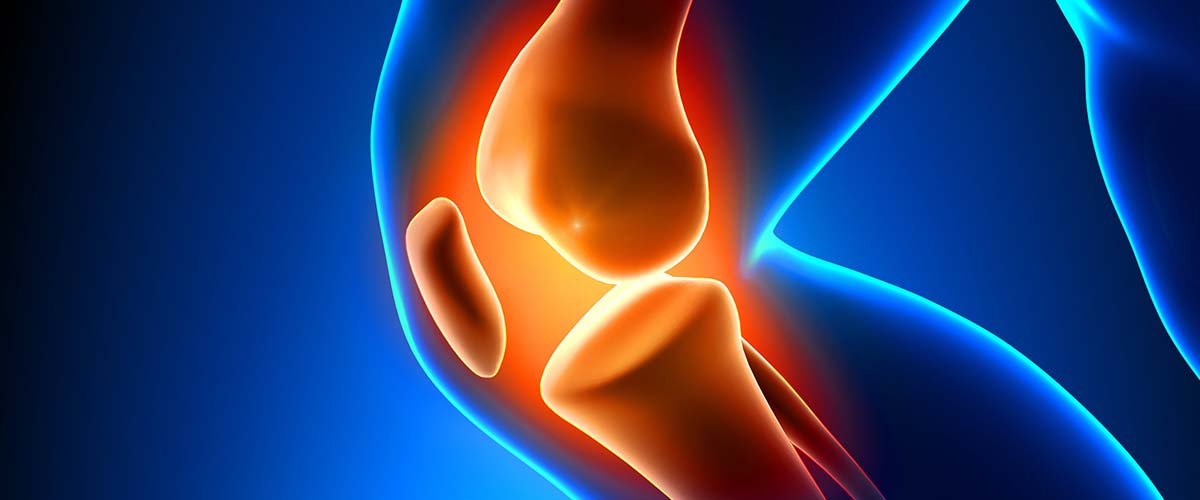
The quadriceps tendon connects the large thigh muscles to the top of the kneecap. Quadriceps tendonitis, more accurately called quadriceps tendinopathy, is overload of this tendon, causing pain just above the kneecap with jumping, squatting, kneeling or stairs. It is a form of “jumper’s knee,” which more often affects the patellar tendon below the kneecap.1,4 Quadriceps tendinopathy has been studied far less than patellar tendinopathy, so much of the treatment evidence comes from tendon research at the knee and elsewhere.1,3
- Pain at the top of the kneecap with jumping, squatting, lunging or stairs
- Common in jumping sports, weightlifting and running6,7
- Progressive strengthening is the foundation of treatment15,16,17
- Cortisone helps short term but is linked to worse long-term results and rupture risk19,21
- Surgery is rarely needed26
Who gets it?
Extensor-mechanism tendinopathy (jumper’s knee) is common in jumping sports: it affected 8.5% of non-elite athletes, most often volleyball players,6 and patellar tendinopathy affected 18.3% of athletes in a large review.7 Quadriceps tendinopathy also occurs in weightlifters, runners and people who kneel or squat at work. Possible risk factors include tight thigh and calf muscles and high training volume, though the evidence is limited.8 Certain medicines (fluoroquinolone antibiotics, statins, steroids) and conditions such as diabetes, gout and kidney disease are linked to tendon problems.28
Symptoms
- Pain at the top edge of the kneecap, often on the outer side
- Pain that warms up during activity then returns afterward or the next morning
- Pain with squatting, lunging, jumping, kneeling and stairs
- Tenderness where the tendon attaches to the kneecap
Diagnosis
Dr. Dold examines the tendon, checks strength and flexibility, and rules out other causes of anterior knee pain such as patellofemoral pain and plica syndrome. Ultrasound or MRI shows tendon thickening and tears; ultrasound changes have predicted who develops jumper’s knee.9 A large plica above the kneecap has been found in some people with quadriceps tendinopathy.10 Sudden weakness or inability to straighten the knee suggests a tendon rupture, which needs urgent care.29
Exercise-based treatment
Tendons respond to the right load. Treatment usually starts with load management and a progressive strengthening program:
- Isometric holds (for example, wall sits or holding a leg extension) gave immediate pain relief in patellar tendinopathy11,18 and suit in-season athletes.12
- Eccentric decline-board squats: eccentric quadriceps training reduced pain in jumper’s knee, while concentric training did not.13 Eccentric loading remains a first-line treatment.17
- Heavy slow resistance training gave good short- and long-term results,14 and a progressive tendon-loading program did better at 24 weeks than eccentric exercise alone.15
- Across 110 studies, higher-intensity resistance exercise with added load was more effective.16
Most programs run about 12 weeks. Taping or a strap can reduce pain during sport,18 and a gradual return to jumping and running is built in once strength improves.
Injections
- Cortisone: reduced tendon pain in the short term, but the effect reversed at intermediate and long term,19,20 and in patellar tendinopathy cortisone had poor long-term results.14 Because of recurrence and rupture risk near major load-bearing tendons, many authors recommend against it.21,22
- PRP: results are mixed. In a small randomized trial of patellar tendinopathy, all groups improved, most with PRP,24 but a large review found effects similar to control injections in most comparisons.23 PRP may still help selected patients who have not improved with a full course of exercise, and Dr. Dold can discuss whether it is reasonable for you.
- Shockwave: focused shockwave was no better than placebo for patellar tendinopathy.25
Dr. Dold reviews these options and the evidence with you when exercise alone isn’t enough.
Surgery
Most extensor-mechanism tendinopathy resolves without surgery.26 For the small number of people with persistent pain after a long, well-run rehabilitation program, removing degenerated tendon tissue (debridement) can help; arthroscopic debridement for refractory jumper’s knee improved scores at 2 years.27 Surgery has traditionally been reserved for failed conservative care.5
A complete quadriceps tendon rupture is different: it is more common over age 40 and with gout, diabetes or steroid use, and needs early surgical repair.29 After repair, re-rupture rates were under 5%.30
Recovery
- Most people improve over about 6 to 12 weeks of consistent loading, with longer timelines for long-standing symptoms.
- Return to jumping and running is gradual, guided by pain during and after activity.
Dr. Dold reviews your expected timeline based on your symptoms and goals.
Frequently asked questions
What’s the difference between quadriceps and patellar tendonitis?
Quadriceps tendinopathy causes pain above the kneecap; patellar tendinopathy causes pain below it. Both are forms of jumper’s knee, but they differ in anatomy and loading, so rehab is tailored.
Should I rest completely?
Usually not. Complete rest weakens the tendon. Reducing the aggravating activities while doing a progressive strengthening program works better.
Is a cortisone shot a good idea?
Cortisone can relieve pain briefly, but studies show worse long-term results and a risk of tendon weakening near major tendons, so it is generally avoided for this tendon.
How long does quadriceps tendonitis take to heal?
Many people improve within 6 to 12 weeks of consistent strengthening. Long-standing cases can take several months.
When should I worry about a tear?
Sudden pain with a pop, a gap above the kneecap or inability to straighten the leg suggests a rupture and needs urgent evaluation.
Research cited on this page
- King D, Yakubek G, Chughtai M, et al. Quadriceps tendinopathy: a review-part 1: epidemiology and diagnosis. Ann Transl Med. 2019;7(4):71. PubMed
Studies of quadriceps tendinopathy are few compared with patellar tendinopathy, and there is no universally accepted classification. - King D, Yakubek G, Chughtai M, et al. Quadriceps tendinopathy: a review, part 2-classification, prognosis, and treatment. Ann Transl Med. 2019;7(4):72. PubMed
Review of the classification, prognosis and treatment results of quadriceps tendinopathy. - Sprague A, Epsley S, Silbernagel KG. Distinguishing Quadriceps Tendinopathy and Patellar Tendinopathy: Semantics or Significant?. J Orthop Sports Phys Ther. 2019;49(9):627-630. PubMed
Quadriceps and patellar tendinopathy have distinct anatomy and loading and should be treated as separate conditions. - Ferretti A, Ippolito E, Mariani P, et al. Jumper’s knee. Am J Sports Med. 1983;11(2):58-62. PubMed
In jumper’s knee, tissue changes were found at the tendon-bone junction of the extensor mechanism. - Ferretti A, Puddu G, Mariani PP, et al. The natural history of jumper’s knee. Patellar or quadriceps tendonitis. Int Orthop. 1985;8(4):239-42. PubMed
In the natural history of jumper’s knee, many patients needed a long period of rest and reduced sport; surgery was reserved for failed conservative care. - Zwerver J, Bredeweg SW, van den Akker-Scheek I. Prevalence of Jumper’s knee among nonelite athletes from different sports: a cross-sectional survey. Am J Sports Med. 2011;39(9):1984-8. PubMed
Jumper’s knee affected 8.5% of non-elite athletes, most often volleyball players (14.4%). - Nutarelli S, da Lodi CMT, Cook JL, et al. Epidemiology of Patellar Tendinopathy in Athletes and the General Population: A Systematic Review and Meta-analysis. Orthop J Sports Med. 2023;11(6):23259671231173659. PubMed
Patellar tendinopathy affected 18.3% of athletes, most often volleyball and basketball players. - Sprague AL, Smith AH, Knox P, et al. Modifiable risk factors for patellar tendinopathy in athletes: a systematic review and meta-analysis. Br J Sports Med. 2018;52(24):1575-1585. PubMed
Possible risk factors include reduced ankle and thigh flexibility and high jump-training volume, but evidence is limited. - Visnes H, Tegnander A, Bahr R. Ultrasound characteristics of the patellar and quadriceps tendons among young elite athletes. Scand J Med Sci Sports. 2015;25(2):205-15. PubMed
Ultrasound tendon changes were risk factors for jumper’s knee; quadriceps tendon thickness increased with training in healthy athletes. - Alfredson H, Masci L, Spang C. Is There a Relationship Between Quadriceps Tendinopathy and Suprapatellar Plica? An Observational Case Series. Int Med Case Rep J. 2022;15:81-84. PubMed
In 10 knees with quadriceps tendinopathy, all had large plica formations in the pouch above the kneecap. - Rio E, Kidgell D, Purdam C, et al. Isometric exercise induces analgesia and reduces inhibition in patellar tendinopathy. Br J Sports Med. 2015;49(19):1277-83. PubMed
Isometric contractions gave immediate pain relief in volleyball players with patellar tendinopathy. - Lim HY, Wong SH. Effects of isometric, eccentric, or heavy slow resistance exercises on pain and function in individuals with patellar tendinopathy: A systematic review. Physiother Res Int. 2018;23(4):e1721. PubMed
Isometric exercise suits short-term pain relief in season, while heavy slow resistance or eccentric exercise suits long-term improvement. - Jonsson P, Alfredson H. Superior results with eccentric compared to concentric quadriceps training in patients with jumper’s knee: a prospective randomised study. Br J Sports Med. 2005;39(11):847-50. PubMed
Eccentric decline-board quadriceps training reduced pain in jumper’s knee, while concentric training did not. - Kongsgaard M, Kovanen V, Aagaard P, et al. Corticosteroid injections, eccentric decline squat training and heavy slow resistance training in patellar tendinopathy. Scand J Med Sci Sports. 2009;19(6):790-802. PubMed
Cortisone gave good short-term but poor long-term results, while heavy slow resistance training gave good short- and long-term results. - Breda SJ, Oei EHG, Zwerver J, et al. Effectiveness of progressive tendon-loading exercise therapy in patients with patellar tendinopathy: a randomised clinical trial. Br J Sports Med. 2021;55(9):501-509. PubMed
Progressive tendon-loading exercise gave better results at 24 weeks than eccentric exercise alone. - Pavlova AV, Shim JSC, Moss R, et al. Effect of resistance exercise dose components for tendinopathy management: a systematic review with meta-analysis. Br J Sports Med. 2023;57(20):1327-1334. PubMed
Across 110 studies, higher-intensity resistance exercise with added load was more effective for tendinopathy. - Challoumas D, Pedret C, Biddle M, et al. Management of patellar tendinopathy: a systematic review and network meta-analysis of randomised studies. BMJ Open Sport Exerc Med. 2021;7(4):e001110. PubMed
Eccentric loading with or without adjuncts should remain first-line treatment for patellar tendinopathy. - Vander Doelen T, Jelley W. Non-surgical treatment of patellar tendinopathy: A systematic review of randomized controlled trials. J Sci Med Sport. 2020;23(2):118-124. PubMed
Isometric exercise reduced pain immediately, and strapping or taping reduced pain during sport. - Coombes BK, Bisset L, Vicenzino B. Efficacy and safety of corticosteroid injections and other injections for management of tendinopathy: a systematic review of randomised controlled trials. Lancet. 2010;376(9754):1751-67. PubMed
Cortisone injections reduced tendon pain in the short term, but the effect reversed at intermediate and long term. - Lazzarini SG, Buraschi R, Pollet J, et al. Effectiveness of Additional or Standalone Corticosteroid Injections Compared to Physical Therapist Interventions in Rotator Cuff Tendinopathy: A Systematic Review and Meta-Analysis of Randomized Controlled Trials. Phys Ther. 2025;105(3). PubMed
Cortisone injections were not more effective than physical therapy at mid- and long-term follow-up. - Visser TSS, van Linschoten R, Vicenzino B, et al. Terminating Corticosteroid Injection in Tendinopathy? Hasta la Vista, Baby. J Orthop Sports Phys Ther. 2024;54(1):10-13. PubMed
Authors recommended against cortisone injections for tendinopathy because of recurrence and tendon rupture risk. - Kane SF, Olewinski LH, Tamminga KS. Management of Chronic Tendon Injuries. Am Fam Physician. 2019;100(3):147-157. PubMed
Care should be taken when injecting cortisone near major load-bearing tendons because of the risk of rupture. - Masiello F, Pati I, Veropalumbo E, et al. Ultrasound-guided injection of platelet-rich plasma for tendinopathies: a systematic review and meta-analysis. Blood Transfus. 2023;21(2):119-136. PubMed
Ultrasound-guided PRP for tendinopathy showed effects similar to control injections in most comparisons; evidence was low certainty. - van der Heijden RA, Stewart Z, Moskwa R, et al. Platelet-rich plasma for patellar tendinopathy: a randomized controlled trial correlating clinical outcomes and quantitative imaging. Radiol Adv. 2024;1(2):umae017. PubMed
In a small randomized trial of patellar tendinopathy, all groups improved, most with PRP. - Korakakis V, Whiteley R, Tzavara A, et al. The effectiveness of extracorporeal shockwave therapy in common lower limb conditions: a systematic review including quantification of patient-rated pain reduction. Br J Sports Med. 2018;52(6):387-407. PubMed
Focused shockwave was no better than placebo for patellar tendinopathy at short and mid-term. - Schwartz A, Watson JN, Hutchinson MR. Patellar Tendinopathy. Sports Health. 2015;7(5):415-20. PubMed
Most patellar tendinopathy resolves without surgery; refractory cases may need open or arthroscopic debridement. - Lorbach O, Diamantopoulos A, Paessler HH. Arthroscopic resection of the lower patellar pole in patients with chronic patellar tendinosis. Arthroscopy. 2008;24(2):167-73. PubMed
Arthroscopic debridement for refractory jumper’s knee improved scores significantly at 2 years. - Deren ME, Klinge SA, Mukand NH, et al. Tendinopathy and Tendon Rupture Associated with Statins. JBJS Rev. 2016;4(5). PubMed
Statins, fluoroquinolones and corticosteroids, and conditions such as diabetes, gout and kidney disease, are linked to tendon problems and rupture. - Ilan DI, Tejwani N, Keschner M, et al. Quadriceps tendon rupture. J Am Acad Orthop Surg. 2003;11(3):192-200. PubMed
Quadriceps tendon rupture is more common over age 40 and with gout, diabetes or steroid use; complete ruptures need early repair. - Tandogan RN, Terzi E, Gomez-Barrena E, et al. Extensor mechanism ruptures. EFORT Open Rev. 2022;7(6):384-395. PubMed
After repair of native quadriceps or patellar tendon tears, re-rupture rates were under 5%.
Medically reviewed by Andrew P. Dold, MD, FAOA, FAAOS, FACS, FRCSC. Last reviewed October 2026. This page is general information, not medical advice. Your own diagnosis and treatment plan depend on your exam and imaging.