








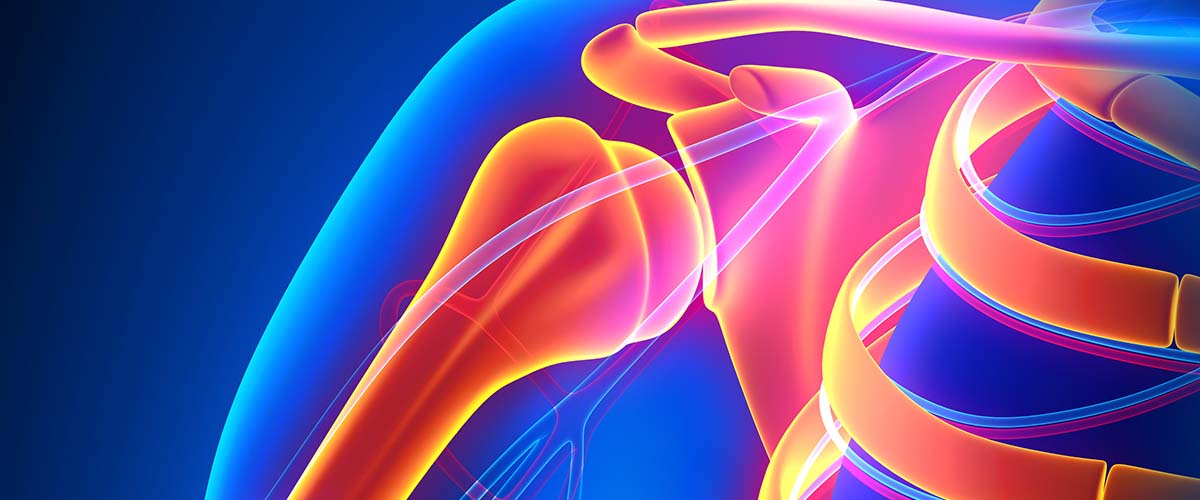
Most shoulder dislocations happen toward the front (anterior instability). Two less common patterns are posterior shoulder instability, where the ball of the shoulder slips out the back of the socket, and multidirectional instability (MDI), where the shoulder is loose in more than one direction, often because of naturally lax ligaments. Both can cause pain, weakness and a feeling that the shoulder is slipping. Dr. Andrew Dold, a board-certified, fellowship-trained sports medicine surgeon in Frisco, Texas, treats both with targeted rehabilitation first and arthroscopic stabilization when needed. For front-of-the-shoulder dislocations, see shoulder dislocation and instability.
- Posterior instability accounts for about 10% of shoulder instability and can occur in football linemen, weightlifters and overhead athletes
- MDI often occurs without a major injury, in people with loose joints
- A focused strengthening program is the first treatment, especially for MDI
- Arthroscopic repair of the labrum and tightening of the capsule are used when rehabilitation does not work
Posterior shoulder instability
Posterior instability accounts for approximately 10% of all shoulder instability.1 It can follow a single injury, such as a fall on an outstretched arm or a seizure, and can also develop from repeated pushing force on the back of the shoulder, as in blocking in football, bench press, push-ups or the follow-through of throwing. Rather than a full dislocation, many patients feel the shoulder slip partly out (subluxation) and notice deep pain at the back of the shoulder and loss of strength.
Multidirectional instability (MDI)
In MDI the shoulder is loose in two or three directions (front, back and below). It usually occurs without a major injury, and can occur in young people with generally loose joints, including swimmers, gymnasts and other overhead athletes. Symptoms include pain, a feeling of the shoulder slipping during everyday or sports activities, fatigue and sometimes tingling down the arm.
Diagnosis
Dr. Dold tests the stability of the shoulder in each direction, checks general joint laxity and shoulder-blade control, and looks for associated injuries. X-rays assess the shape of the socket, and an MRI arthrogram shows the labrum and capsule. Telling posterior instability from MDI matters because treatment differs.
Rehabilitation first
A structured program strengthens the rotator cuff and the shoulder-blade muscles and retrains control of the shoulder. How the instability started matters: in a classic study, an exercise program gave good or excellent results in 80% of shoulders with instability that began without trauma, compared with only 16% of shoulders with instability caused by an injury.2 For this reason, rehabilitation is the main first treatment for MDI. In a systematic review of MDI, 21% of patients who had physiotherapy later needed surgery.3
Surgery
When symptoms persist despite good rehabilitation, or after a traumatic posterior injury with a torn labrum, Dr. Dold may recommend arthroscopic stabilization:
- Posterior labral repair and capsular plication: the torn back of the labrum is reattached with small suture anchors and the stretched capsule is tightened. In a systematic review of 2,307 shoulders, 90.9% of patients were satisfied, recurrent instability occurred in 7.4% and 86.4% returned to play.1 A separate meta-analysis found that 88% returned to sport but only about two thirds returned to their previous level.4
- Capsular plication for MDI: the loose capsule is tightened in the directions of instability. In a systematic review of MDI, recurrent dislocation occurred in 7.8% after arthroscopic plication and 7.5% after the traditional open capsular shift, with arthroscopic plication showing results comparable to open surgery. Older “thermal shrinkage” techniques had much higher failure rates and are no longer recommended.3
Recovery
After stabilization, the arm is protected in a sling or brace for several weeks, followed by staged physical therapy. Return to contact and overhead sports usually takes several months. Dr. Dold will give you a specific plan.
What the research shows
- Often pain, not dislocation: posterior instability accounts for roughly 10% of shoulder instability and usually causes deep shoulder pain and weakness from repeated small subluxations (common in athletes and military members) rather than a dramatic dislocation. MRI or MR arthrogram shows the posterior labral tear.
- Therapy first, but it often isn’t enough for athletes: strengthening of the rotator cuff, posterior deltoid and scapular muscles helps many patients, and is the main treatment for functional (muscle-patterning) instability. In active patients with a structural labral tear, non-operative care often fails, and bracing has not been shown to help.
- Arthroscopic repair works well: across 847 shoulders in a systematic review, recurrence after posterior stabilization was about 9%, with good outcomes in most patients. Return to the same level of sport is high but not universal, particularly in throwers.
- Bone matters: a posterior glenoid bone loss of 11% or more raised the failure risk of arthroscopic repair tenfold, and excessive glenoid tilt (retroversion) or dysplasia may need a bone block or osteotomy.
- Higher-risk groups: younger and female athletes and those with traumatic injuries had higher failure rates in some series, so rehabilitation and return-to-sport progressions are tailored.
Why see Dr. Dold
- Board certified by the American Board of Orthopaedic Surgery, with subspecialty certification in Sports Medicine
- Sports medicine and arthroscopy fellowship at NYU Langone / Hospital for Joint Diseases; orthopedic residency at the University of Toronto
- Fellow of the American College of Surgeons (FACS), the American Academy of Orthopaedic Surgeons (FAAOS), the American Orthopaedic Association (FAOA) and the Royal College of Surgeons of Canada (FRCSC)
- Author of a SLAP repair book chapter (Springer, 2017) and research on shoulder suture anchors (KSSTA, 2013)
- Team physician and surgical consultant to Rugby Canada; has cared for professional athletes from the NFL, NBA, NHL, MLS, PGA Tour and Major League Rugby
- D Magazine Best Doctors (Collin County), 2019–2026 · Rated 4.9 on Google
Frequently asked questions
Can physical therapy fix shoulder instability?
Often, especially when instability began without a major injury. In one study, 80% of such shoulders had good or excellent results with exercises.2
What is the difference between posterior instability and MDI?
Posterior instability is mainly toward the back of the shoulder, often from repeated pushing force. MDI is looseness in more than one direction, usually without a major injury.
Will I be able to return to sport after surgery?
Most athletes return to sport after posterior stabilization (about 88% in a meta-analysis), but about two thirds return to their previous level.4
Is arthroscopic surgery as good as open surgery for MDI?
In a systematic review, arthroscopic capsular plication had results comparable to open capsular shift.3
How common is recurrence after posterior stabilization?
In a large systematic review, recurrent instability occurred in 7.4% of patients.1
Do you accept my insurance?
Dr. Dold accepts most major insurance plans, including Medicare and Tricare. Please call 469-850-0680 to confirm your coverage.
Considering surgery? Read about shoulder arthroscopy in Frisco, the minimally invasive procedure Dr. Dold uses for rotator cuff, labral and biceps problems.
Research cited on this page
- Ralph JE, Hurley ET, Lunn K, et al. Outcomes of arthroscopic stabilization for posterior shoulder instability: a systematic review. J Shoulder Elbow Surg. 2024;33(11):2530-2538. PubMed
- Burkhead WZ, Rockwood CA. Treatment of instability of the shoulder with an exercise program. J Bone Joint Surg Am. 1992;74(6):890-896. PubMed
- Longo UG, Rizzello G, Loppini M, et al. Multidirectional Instability of the Shoulder: A Systematic Review. Arthroscopy. 2015;31(12):2431-2443. PubMed
- Gouveia K, Kay J, Memon M, et al. Return to Sport After Surgical Management of Posterior Shoulder Instability: A Systematic Review and Meta-analysis. Am J Sports Med. 2022;50(3):845-857. PubMed
- Brelin A, Dickens JF. Posterior Shoulder Instability. Sports Med Arthrosc Rev. 2017;25(3):136-143. PubMed
Review: posterior instability usually presents with pain and recurrent subluxation; acute traumatic posterior dislocation is about 20 times less common than anterior. - Antosh IJ, Tokish JM, Owens BD. Posterior Shoulder Instability. Sports Health. 2016;8(6):520-526. PubMed
Review: posterior instability is about 10% of shoulder instability; non-operative care often fails in active patients, and surgical stabilization is effective. - Moroder P, Scheibel M. ABC classification of posterior shoulder instability. Obere Extrem. 2017;12(2):66-74. PubMed
Review: the ABC classification of posterior instability guides individualized treatment. - Moroder P, Danzinger V, Maziak N, et al. Characteristics of functional shoulder instability. J Shoulder Elbow Surg. 2020;29(1):68-78. PubMed
Study: functional (muscle-patterning) instability has subtypes, most commonly unidirectional posterior. - Rothrauff BB, Arner JW, Bradley JP. Arthroscopic Management of Posterior Shoulder Instability. Clin Sports Med. 2024;43(4):737-753. PubMed
Review: pain, from repetitive microtrauma rather than one injury, is the usual complaint; arthroscopic repair is recommended when non-operative treatment fails. - Albano D, Messina C, Sconfienza LM. Posterior Shoulder Instability: What to Look for. Magn Reson Imaging Clin N Am. 2020;28(2):211-221. PubMed
Imaging review: MRI and MR arthrography are central for identifying posterior labral and capsular lesions. - Gusmer PB, Potter HG, Schatz JA, et al. Labral injuries: accuracy of detection with unenhanced MR imaging of the shoulder. Radiology. 1996;200(2):519-24. PubMed
Study: MRI accurately detects and localizes labral injuries. - McIntyre K, Bélanger A, Dhir J, et al. Evidence-based conservative rehabilitation for posterior glenohumeral instability: A systematic review. Phys Ther Sport. 2016;22:94-100. PubMed
Systematic review: rotator cuff and posterior deltoid strengthening may help manage symptoms of posterior instability. - Stokes DJ, McCarthy TP, Frank RM. Physical Therapy for the Treatment of Shoulder Instability. Phys Med Rehabil Clin N Am. 2023;34(2):393-408. PubMed
Review: physical therapy approaches for shoulder instability. - Ward JP, Bradley JP. Decision making in the in-season athlete with shoulder instability. Clin Sports Med. 2013;32(4):685-96. PubMed
Review: brace wear has no proven efficacy for in-season athletes with instability. - Longo UG, Ciuffreda M, Locher J, et al. Posterior shoulder instability: a systematic review. Br Med Bull. 2020;134(1):34-53. PubMed
Systematic review of 847 shoulders: recurrence after posterior stabilization was about 9% with soft-tissue or bony abnormalities. - Pavlik A, Tátrai M, Papp E. Return to Sport After Arthroscopic Treatment of Posterior Shoulder Instability. Orthop J Sports Med. 2020;8(12):2325967120969151. PubMed
Study: low recurrence and good outcomes in more than 90% after arthroscopic posterior labral reconstruction; over half returned to their previous sports level. - Vaswani R, Arner J, Freiman H, et al. Risk Factors for Revision Posterior Shoulder Stabilization in Throwing Athletes. Orthop J Sports Med. 2020;8(12):2325967120967652. PubMed
Study in throwers: revision rate after arthroscopic posterior stabilization was 8.6%, higher in female athletes. - Arner JW, Ruzbarsky JJ, Midtgaard K, et al. Defining Critical Glenoid Bone Loss in Posterior Shoulder Capsulolabral Repair. Am J Sports Med. 2021;49(8):2013-2019. PubMed
Study: posterior glenoid bone loss of 11% or more increased failure risk of arthroscopic repair tenfold. - Asturias AM, Bastrom TP, Pennock AT, et al. Posterior Shoulder Instability: Surgical Outcomes and Risk of Failure in Adolescence. Am J Sports Med. 2020;48(5):1200-1206. PubMed
Study in adolescents: female sex, younger age and traumatic presentation were associated with failure after surgery. - Chang ES, Greco NJ, McClincy MP, et al. Posterior Shoulder Instability in Overhead Athletes. Orthop Clin North Am. 2016;47(1):179-87. PubMed
Review: overhead athletes have inherent laxity and humeral retroversion that make posterior instability challenging. - Eichinger JK, Galvin JW, Grassbaugh JA, et al. Glenoid Dysplasia: Pathophysiology, Diagnosis, and Management. J Bone Joint Surg Am. 2016;98(11):958-68. PubMed
Review: glenoid dysplasia and excessive retroversion may require bone procedures, with variable results. - Cerciello S, Visonà E, Morris BJ, et al. Bone block procedures in posterior shoulder instability. Knee Surg Sports Traumatol Arthrosc. 2016;24(2):604-11. PubMed
Systematic review: posterior bone block procedures improved scores with low recurrence, though study quality is limited. - Hachem AI, Pereira J, Rius X, et al. Arthroscopic Posterior Glenoid Osteotomy. Arthrosc Tech. 2024;13(1):102827. PubMed
Technique: posterior glenoid osteotomy for excessive retroversion. - Matsuki K, Sugaya H. Complications after arthroscopic labral repair for shoulder instability. Curr Rev Musculoskelet Med. 2015;8(1):53-58. PubMed
Review: recurrence is the most common complication after labral repair; axillary nerve injury is rare.
Medically reviewed by Andrew P. Dold, MD, FAOA, FAAOS, FACS, FRCSC. Last reviewed October 2026. This page is general information, not medical advice. Individual results vary.