









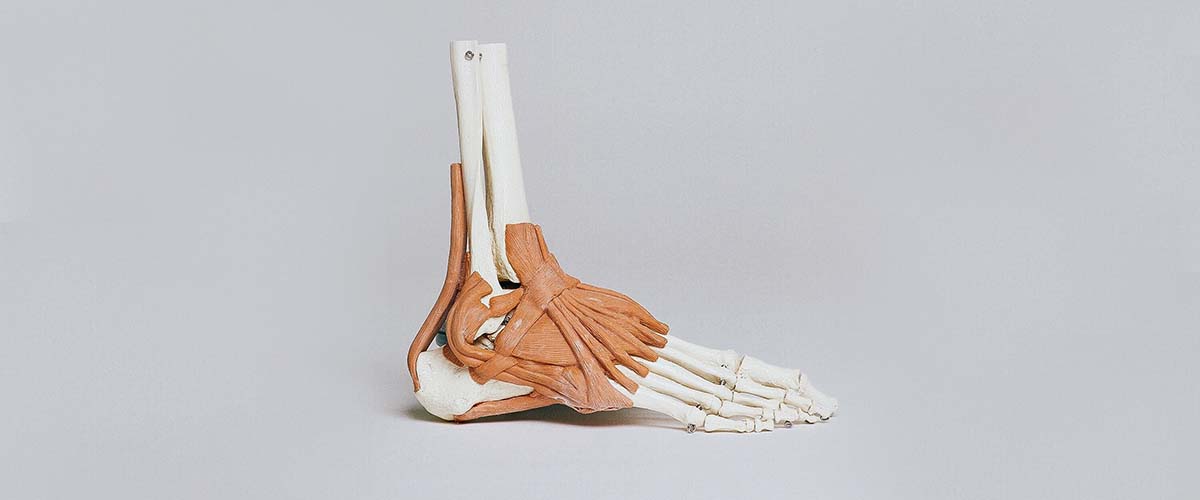
An ankle sprain is a stretch or tear of the ligaments that hold the ankle bones together. It is one of the most common sports and everyday injuries, from a rolled ankle on the basketball court or soccer field to a misstep off a curb. Most ankle sprains heal well without surgery when they are treated properly from the start. Dr. Andrew Dold, a board-certified, fellowship-trained sports medicine surgeon in Frisco, Texas, treats the full range of ankle sprains, from mild sprains to high ankle sprains and ankles that keep giving way.
- About 90% of ankle sprains are inversion injuries, where the foot rolls inward and stretches or tears the ligaments on the outside of the ankle
- Most heal with bracing, protected walking and physical therapy
- High ankle sprains usually take longer to recover from than common sprains
- Repeated sprains or an ankle that keeps giving way (chronic ankle instability) may need ligament repair
- Same-day sports injury appointments and walk-in visits are available in Frisco
Types of ankle sprains
Lateral (outside) ankle sprain
The most common type. When the foot rolls inward, the ligaments on the outside of the ankle are stretched or torn, most often the anterior talofibular ligament (ATFL) and sometimes the calcaneofibular ligament (CFL).
High ankle sprain (syndesmosis injury)
A high ankle sprain injures the ligaments that connect the two bones of the lower leg, the tibia and fibula, just above the ankle joint (the syndesmosis). It usually happens when the foot is planted and twisted outward, and it is common in football, soccer, hockey and other cutting and contact sports. High ankle sprains are often more painful with pushing off and usually take longer to heal than a common ankle sprain. If the joint between the tibia and fibula is unstable, surgery may be needed.
Medial (inside) ankle sprain
Less common. The deltoid ligament on the inside of the ankle is injured when the foot rolls outward. Deltoid injuries can occur together with ankle fractures or high ankle sprains.
Ankle sprain grades
| Grade | What happens to the ligament | Typical signs |
|---|---|---|
| Grade 1 (mild) | Stretching with microscopic tearing | Mild tenderness and swelling; usually able to walk; no instability |
| Grade 2 (moderate) | Partial tear | Moderate swelling, bruising and tenderness; pain with walking; some looseness |
| Grade 3 (severe) | Complete tear | Significant swelling and bruising; hard to bear weight; the ankle feels unstable |
Symptoms
- Pain, especially when you stand or walk
- Swelling and bruising
- Tenderness over the injured ligaments
- Stiffness and reduced range of motion
- A feeling that the ankle is loose or giving way
Diagnosis
Dr. Dold starts with your history and a careful examination of the ankle, checking where it is tender, how it moves and how stable the ligaments are. X-rays, which can be taken in our office, rule out a fracture. Stress X-rays can show whether a ligament is loose, and an MRI may be ordered to look at the ligaments, the syndesmosis, the cartilage and the tendons when a more serious injury is suspected or the ankle isn’t healing as expected.
Non-surgical treatment
Most ankle sprains, including many complete (grade 3) tears of the outside ligaments, heal without surgery. Treatment usually follows three phases:
- Protect and calm it down: rest, ice, compression and elevation (RICE), anti-inflammatory medication if appropriate, and a brace or walking boot to protect the ligaments
- Restore motion and strength: physical therapy to recover range of motion and strengthen the muscles around the ankle
- Balance and return to sport: balance (proprioception) training and sport-specific drills before a gradual return to full activity
Skipping rehabilitation is one of the main reasons sprains come back. Incomplete healing can lead to chronic ankle pain, repeated sprains and, over time, arthritis.
When surgery is needed
Surgery is considered when an ankle keeps giving way or remains painful despite a full course of rehabilitation (chronic ankle instability), or when a high ankle sprain leaves the joint between the tibia and fibula unstable. Depending on the injury, Dr. Dold performs:
- Lateral ankle ligament repair (Broström procedure): the stretched or torn outside ligaments are repaired and tightened back to the bone
- Ligament reconstruction with a graft: when the native ligament tissue is too poor to repair, a tendon graft is used to rebuild it
- Ankle arthroscopy: a minimally invasive procedure through small incisions to treat cartilage damage, scar tissue or bone spurs (impingement) and loose pieces that often accompany instability
- Syndesmosis fixation: stabilization of an unstable high ankle sprain, most often with a suture-button device or screws
Recovery timeline
These are general ranges. Your own timeline depends on the type and severity of the injury, your sport and how rehabilitation progresses.
| Injury | Typical recovery |
|---|---|
| Mild (grade 1) sprain | About 2 weeks |
| Moderate (grade 2) sprain | About 3 to 6 weeks |
| Severe (grade 3) sprain | About 6 to 12 weeks |
| High ankle sprain (athletes) | About 2 months on average, sometimes longer |
| After Broström ligament repair | Return to sport often at about 3 to 4 months |
In a 2025 review of elite athletes with high ankle sprains, 96% returned to sport, on average about 58 days after injury, whether they were treated with or without surgery.
What the research shows
Ankle sprains are among the most studied sports injuries. Here is what the research shows:
- Do you need an X-ray? The Ottawa ankle rules, a short checklist of bone tenderness and the ability to walk four steps, have close to 100% sensitivity for ruling out a fracture in adults and in children over 5, so many sprains do not need X-rays.
- Early motion beats prolonged immobilization. For most sprains, functional treatment (a brace or support with early, protected walking) leads to faster recovery than a cast. For severe sprains, the large CAST trial found that a short period in a below-knee cast or Aircast brace gave faster recovery than a simple compression bandage.
- Medicine and ice. Anti-inflammatory medicine has good evidence for short-term pain relief. Ice is widely used for comfort, but trials have not shown that it speeds healing, and compression wraps alone have not shown a clear benefit.
- Exercise is the key treatment. Starting gentle exercises in the first week improved function in a randomized trial. Balance (proprioceptive) and strengthening programs reduce the risk of another sprain, especially if you have sprained the ankle before. Many patients can do this with a home program; others benefit from a physical therapist.
- Protecting the ankle in sport. A semi-rigid brace or lace-up support reduces sprains during high-risk sports such as basketball and soccer, and neuromuscular warm-up programs reduce ankle sprains in athletes.
- Not every sprain fully recovers. A meta-analysis found that a significant number of people still have symptoms a year after a first sprain, and some develop chronic ankle instability. That is why completing rehabilitation matters, even after the pain settles.
- Surgery is for persistent instability. Most sprains, even complete ligament tears, heal without surgery. When the ankle keeps giving way despite thorough rehabilitation, a Broström-type ligament repair is the standard operation. Arthroscopic and open repairs give similar results, and suture-tape augmentation allowed an earlier return to activity in a randomized trial.
- High ankle sprains take longer. When the syndesmosis is unstable, surgical stabilization is recommended, and a randomized trial found that a flexible suture-button device gave better function than a screw. Return-to-sport rates are high with appropriate treatment.
Why see Dr. Dold
- Board certified by the American Board of Orthopaedic Surgery, with subspecialty certification in Sports Medicine
- Sports medicine and arthroscopy fellowship at NYU Langone / Hospital for Joint Diseases; orthopedic residency at the University of Toronto
- Fellow of the American College of Surgeons (FACS), the American Academy of Orthopaedic Surgeons (FAAOS), the American Orthopaedic Association (FAOA) and the Royal College of Surgeons of Canada (FRCSC)
- Author of Acute Achilles Tendon Ruptures: An Update on Current Management Strategies (Journal of the American Academy of Orthopaedic Surgeons, 2025)
- Team physician and surgical consultant to Rugby Canada; has cared for professional athletes from the NFL, NBA, NHL, MLS, PGA Tour and Major League Rugby
- D Magazine Best Doctors (Collin County), 2019–2026 · Rated 4.9 on Google
Related pages: Achilles tendon rupture · Turf toe · Foot and ankle conditions
Frequently asked questions
How do I know if my ankle is sprained or broken?
The two can feel alike. Pain directly over the bone, being unable to take four steps, a deformed-looking ankle or numbness are reasons to get an X-ray. Our Frisco office can take X-rays on site.
Should I walk on a sprained ankle?
For a mild sprain, gentle walking as pain allows, with a brace, is usually fine. If you can’t bear weight or the ankle feels unstable, protect it with a boot or crutches and have it checked.
How long does a sprained ankle take to heal?
Mild sprains often recover in about 2 weeks; more severe sprains can take 6 to 12 weeks. High ankle sprains usually take longer than common sprains. Individual recovery varies.
What is a high ankle sprain?
A high ankle sprain is an injury to the ligaments that hold the tibia and fibula together just above the ankle joint. It is usually caused by the foot twisting outward and generally takes longer to recover from than a common ankle sprain.
Do I need surgery for an ankle sprain?
Most ankle sprains heal without surgery. Surgery is considered for ankles that keep giving way despite rehabilitation, or for unstable high ankle sprains.
Why does my ankle keep rolling?
Repeated sprains can leave the ligaments stretched out and weaken balance, a condition called chronic ankle instability. Physical therapy helps many patients; if it doesn’t, the ligaments can be repaired or reconstructed.
Can I be seen the same day?
Yes. Same-day appointments are available for new sports injuries, and walk-in visits are welcome Monday, Wednesday and Friday, 8:30 to 10:30 am.
Should I ice my sprained ankle?
Ice can help with comfort in the first few days, but research has not shown that it speeds healing. Early, protected movement and exercise have stronger evidence.
How can I avoid spraining my ankle again?
Balance and strengthening exercises reduce the risk of another sprain, especially after a previous one. A semi-rigid or lace-up brace also helps during high-risk sports.
Research cited on this page
- Doherty C, Bleakley C, Delahunt E, et al. Treatment and prevention of acute and recurrent ankle sprain: an overview of systematic reviews with meta-analysis. Br J Sports Med. 2017;51(2):113-125. PubMed
Systematic review of reviews: strong evidence for NSAIDs and early mobilization in acute ankle sprain; moderate evidence for exercise and manual therapy; exercise and bracing help prevent recurrence. - Vuurberg G, Hoorntje A, Wink LM, et al. Diagnosis, treatment and prevention of ankle sprains: update of an evidence-based clinical guideline. Br J Sports Med. 2018;52(15):956. PubMed
Evidence-based clinical guideline: supervised exercise-based programs are preferred over passive treatments; surgery is reserved for cases that do not respond to thorough exercise-based treatment. - Gaddi D, Mosca A, Piatti M, et al. Acute Ankle Sprain Management: An Umbrella Review of Systematic Reviews. Front Med (Lausanne). 2022;9:868474. PubMed
Umbrella review: supports non-surgical treatment of acute ankle sprain, with functional treatment favored. - Kerkhoffs GM, Rowe BH, Assendelft WJ, et al. Immobilisation for acute ankle sprain. A systematic review. Arch Orthop Trauma Surg. 2001;121(8):462-71. PubMed
Systematic review: functional treatment appears more appropriate than immobilization for most acute ankle sprains. - Kerkhoffs GM, Struijs PA, Marti RK, et al. Functional treatments for acute ruptures of the lateral ankle ligament: a systematic review. Acta Orthop Scand. 2003;74(1):69-77. PubMed
Cochrane review: semi-rigid ankle supports gave a shorter time to return to work than an elastic bandage; tape caused more skin complications. - Lamb SE, Marsh JL, Hutton JL, et al. Mechanical supports for acute, severe ankle sprain: a pragmatic, multicentre, randomised controlled trial. Lancet. 2009;373(9663):575-81. PubMed
CAST randomized trial (Lancet): for severe ankle sprains, a short period in a below-knee cast gave faster recovery than a tubular compression bandage; an Aircast brace also helped. - O’connor G, Martin AJ. Acute ankle sprain: is there a best support?. Eur J Emerg Med. 2011;18(4):225-30. PubMed
Randomized trial: no difference in ankle function between tubular bandage, elastic bandage and no support at 10 and 30 days. - Borra V, Berry DC, Zideman D, et al. Compression Wrapping for Acute Closed Extremity Joint Injuries: A Systematic Review. J Athl Train. 2020;55(8):789-800. PubMed
Systematic review: no clear benefit or harm from compression wrapping for closed ankle injuries. - Miranda JP, Silva WT, Silva HJ, et al. Effectiveness of cryotherapy on pain intensity, swelling, range of motion, function and recurrence in acute ankle sprain: A systematic review of randomized controlled trials. Phys Ther Sport. 2021;49:243-249. PubMed
Systematic review: current literature lacks evidence supporting cryotherapy for acute ankle sprain. - van den Bekerom MPJ, Sjer A, Somford MP, et al. Non-steroidal anti-inflammatory drugs (NSAIDs) for treating acute ankle sprains in adults: benefits outweigh adverse events. Knee Surg Sports Traumatol Arthrosc. 2015;23(8):2390-2399. PubMed
Meta-analysis: limited evidence supports NSAIDs for short-term pain relief after ankle sprain. - Bleakley CM, O’Connor SR, Tully MA, et al. Effect of accelerated rehabilitation on function after ankle sprain: randomised controlled trial. BMJ. 2010;340:c1964. PubMed
Randomized trial: an accelerated exercise program in the first week after sprain improved ankle function. - Brison RJ, Day AG, Pelland L, et al. Effect of early supervised physiotherapy on recovery from acute ankle sprain: randomised controlled trial. BMJ. 2016;355:i5650. PubMed
Randomized trial: adding supervised physiotherapy to usual care did not meaningfully improve outcomes for simple ankle sprains in a general population. - Gogate N, Satpute K, Hall T. The effectiveness of mobilization with movement on pain, balance and function following acute and sub acute inversion ankle sprain – A randomized, placebo controlled trial. Phys Ther Sport. 2021;48:91-100. PubMed
Randomized trial: mobilization-with-movement improved pain, motion, disability and balance in acute and subacute sprains. - Bachmann LM, Kolb E, Koller MT, et al. Accuracy of Ottawa ankle rules to exclude fractures of the ankle and mid-foot: systematic review. BMJ. 2003;326(7386):417. PubMed
Meta-analysis: the Ottawa ankle rules have nearly 100% sensitivity for excluding ankle and midfoot fractures. - Dowling S, Spooner CH, Liang Y, et al. Accuracy of Ottawa Ankle Rules to exclude fractures of the ankle and midfoot in children: a meta-analysis. Acad Emerg Med. 2009;16(4):277-87. PubMed
Meta-analysis: the Ottawa ankle rules reliably exclude fractures in children over 5 years. - Gomes YE, Chau M, Banwell HA, et al. Diagnostic accuracy of the Ottawa ankle rule to exclude fractures in acute ankle injuries in adults: a systematic review and meta-analysis. BMC Musculoskelet Disord. 2022;23(1):885. PubMed
Meta-analysis: the Ottawa ankle rules are highly sensitive for ankle fractures, with lower specificity. - Bleakley CM, Taylor JB, Dischiavi SL, et al. Rehabilitation Exercises Reduce Reinjury Post Ankle Sprain, But the Content and Parameters of an Optimal Exercise Program Have Yet to Be Established: A Systematic Review and Meta-analysis. Arch Phys Med Rehabil. 2019;100(7):1367-1375. PubMed
Meta-analysis: exercise-based rehabilitation reduces re-injury after acute ankle sprain compared with usual care. - Wagemans J, Bleakley C, Taeymans J, et al. Exercise-based rehabilitation reduces reinjury following acute lateral ankle sprain: A systematic review update with meta-analysis. PLoS One. 2022;17(2):e0262023. PubMed
Meta-analysis: exercise-based rehabilitation reduces the risk of recurrent ankle sprain. - Schiftan GS, Ross LA, Hahne AJ. The effectiveness of proprioceptive training in preventing ankle sprains in sporting populations: a systematic review and meta-analysis. J Sci Med Sport. 2015;18(3):238-44. PubMed
Meta-analysis: proprioceptive training reduces ankle sprain rates, particularly in athletes with a previous sprain. - Hupperets MD, Verhagen EA, van Mechelen W. Effect of unsupervised home based proprioceptive training on recurrences of ankle sprain: randomised controlled trial. BMJ. 2009;339:b2684. PubMed
Randomized trial: an unsupervised home proprioceptive program after usual care reduced self-reported recurrences. - Verhagen E, van der Beek A, Twisk J, et al. The effect of a proprioceptive balance board training program for the prevention of ankle sprains: a prospective controlled trial. Am J Sports Med. 2004;32(6):1385-93. PubMed
Trial: a balance-board program in volleyball players reduced ankle sprain recurrences. - Wang F, Guan Y, Bamber Z, et al. Preventive interventions for lateral ankle sprains: A systematic review and meta-analysis. Clin Rehabil. 2023;37(5):585-602. PubMed
Network meta-analysis: proprioceptive training is recommended to prevent lateral ankle sprain, especially after a previous sprain. - Handoll HH, Rowe BH, Quinn KM, et al. Interventions for preventing ankle ligament injuries. Cochrane Database Syst Rev. 2001(3):CD000018. PubMed
Cochrane review: semi-rigid orthoses or air-cast braces reduce ankle sprains during high-risk sports. - Bullock GS, Räisänen AM, Martin C, et al. Prevention strategies for lower extremity injury: a systematic review and meta-analyses for the Female, woman and/or girl Athlete Injury pRevention (FAIR) consensus. Br J Sports Med. 2025;59(22):1575-1586. PubMed
Systematic review: neuromuscular training programs reduced ankle sprains by about 39% in female athletes. - Michels F, Wastyn H, Pottel H, et al. The presence of persistent symptoms 12 months following a first lateral ankle sprain: A systematic review and meta-analysis. Foot Ankle Surg. 2022;28(7):817-826. PubMed
Meta-analysis: a significant number of patients still have symptoms 12 months after a first lateral ankle sprain, and some develop chronic ankle instability. - Doherty C, Bleakley C, Hertel J, et al. Recovery From a First-Time Lateral Ankle Sprain and the Predictors of Chronic Ankle Instability: A Prospective Cohort Analysis. Am J Sports Med. 2016;44(4):995-1003. PubMed
Cohort study: early movement deficits after a first-time sprain predicted later chronic ankle instability. - Lin CI, Houtenbos S, Lu YH, et al. The epidemiology of chronic ankle instability with perceived ankle instability- a systematic review. J Foot Ankle Res. 2021;14(1):41. PubMed
Systematic review: the reported prevalence of chronic ankle instability varies widely across populations. - Petersen W, Rembitzki IV, Koppenburg AG, et al. Treatment of acute ankle ligament injuries: a systematic review. Arch Orthop Trauma Surg. 2013;133(8):1129-41. PubMed
Systematic review: most grade I to III lateral ligament ruptures can be managed without surgery. - de Vries JS, Krips R, Sierevelt IN, et al. Interventions for treating chronic ankle instability. Cochrane Database Syst Rev. 2011;2011(8):CD004124. PubMed
Cochrane review: neuromuscular training helps chronic ankle instability in the short term; evidence is insufficient to favor one surgical technique. - Cho BK, Kim YM, Kim DS, et al. Comparison between suture anchor and transosseous suture for the modified-Broström procedure. Foot Ankle Int. 2012;33(6):462-8. PubMed
Randomized trial: modified Broström repair with suture anchors or transosseous sutures gave similar results. - Zhao B, Sun Q, Xu X, et al. Comparison of arthroscopic and open Brostrom-Gould surgery for chronic ankle instability: a systematic review and meta-analysis. J Orthop Surg Res. 2023;18(1):866. PubMed
Meta-analysis of 686 patients: arthroscopic and open Broström-Gould repair gave similar stability, function and complication rates. - Song YJ, Hua YH. Similar Outcomes at Early Term After Arthroscopic or Open Repair of Chronic Ankle Instability: A Systematic Review and Meta-Analysis. J Foot Ankle Surg. 2019;58(2):312-319. PubMed
Systematic review: arthroscopic and open lateral ligament repair produced equivalent early clinical results. - Kulwin R, Watson TS, Rigby R, et al. Traditional Modified Broström vs Suture Tape Ligament Augmentation. Foot Ankle Int. 2021;42(5):554-561. PubMed
Randomized trial: suture-tape augmentation allowed earlier return to activity than modified Broström repair alone. - Cao Y, Hong Y, Xu Y, et al. Surgical management of chronic lateral ankle instability: a meta-analysis. J Orthop Surg Res. 2018;13(1):159. PubMed
Meta-analysis: limited evidence favors any single surgical technique for chronic lateral ankle instability. - Andersen MR, Frihagen F, Hellund JC, et al. Randomized Trial Comparing Suture Button with Single Syndesmotic Screw for Syndesmosis Injury. J Bone Joint Surg Am. 2018;100(1):2-12. PubMed
Randomized trial: suture-button fixation of the syndesmosis gave better function and less widening than a screw. - Vancolen SY, Nadeem I, Horner NS, et al. Return to Sport After Ankle Syndesmotic Injury: A Systematic Review. Sports Health. 2019;11(2):116-122. PubMed
Systematic review: high return-to-sport rates after syndesmotic (high ankle) injury with operative and non-operative treatment. - Jones MH, Amendola A. Syndesmosis sprains of the ankle: a systematic review. Clin Orthop Relat Res. 2007;455:173-5. PubMed
Systematic review: time lost from sport after syndesmotic sprains varied widely, from 0 to 137 days.
Medically reviewed by Andrew P. Dold, MD, FAOA, FAAOS, FACS, FRCSC. Last reviewed October 2026. This page is general information, not medical advice. Individual results vary.