








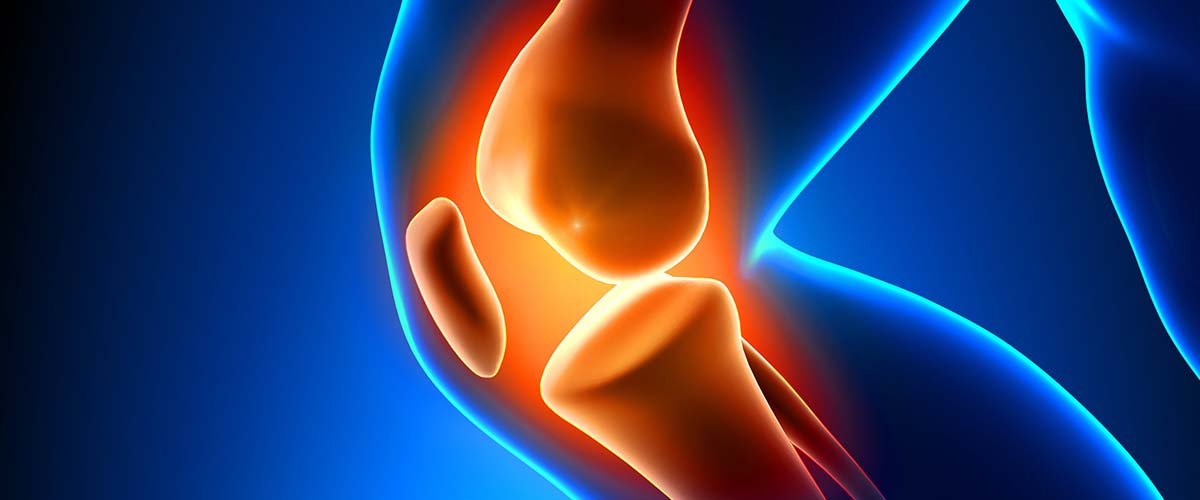
A tibial spine fracture (also called a tibial eminence fracture) happens when the ACL pulls off a piece of bone from the top of the shin bone, instead of tearing itself. It is often called the childhood version of an ACL tear, and it is most common between about 8 and 14 years of age, often from a fall off a bike, a ski injury or a twisting sports injury.1,2
- A painful, swollen knee after a fall or twist, often in a child aged 8 to 14
- The ACL is attached to the broken piece of bone
- Graded by how far the piece is displaced (Meyers and McKeever types I to IV)
- Non-displaced fractures are treated in a cast or brace
- Displaced fractures usually need surgery to fix the piece back in place
Symptoms
- Sudden knee pain and rapid swelling after an injury
- Difficulty or inability to bear weight
- Trouble straightening the knee fully
- A feeling of instability once swelling settles
Types of tibial spine fracture
The Meyers and McKeever system, with a later modification, describes how far the fragment has moved:2
| Type | Description | Usual treatment |
|---|---|---|
| I | Not displaced | Cast or brace |
| II | Front of the fragment lifted, back edge still attached (hinged) | Debated: closed reduction and casting, or surgery |
| III | Fragment completely lifted off | Surgery |
| IV | Fragment completely displaced and rotated or broken into pieces | Surgery |
The meniscus or the ligament between the menisci can get trapped under the fragment and stop it from going back into place, one reason surgery is often needed.
Diagnosis
X-rays usually show the fracture. An MRI or CT scan may be used to see how far the fragment has moved and whether the meniscus, cartilage or other ligaments are also injured.
Treatment
Type I fractures heal in a long-leg cast or locked brace with the knee nearly straight. Type II fractures are the most debated. A 2026 review of 38 studies found that, in type II fractures, surgery led to less residual looseness and better knee scores than non-surgical care, though with more stiffness. It concluded that surgery should be considered the preferred option in active children and teens.1 Types III and IV are usually fixed surgically.
Surgery is most often done arthroscopically (keyhole), holding the fragment with strong sutures or small screws. Suture fixation was linked to less looseness, less loss of motion and fewer second operations to remove hardware than screws.1 Fixation is placed to avoid the growth plates.
Recovery and stiffness
The most common problem after a tibial spine fracture is stiffness (arthrofibrosis), so early, supervised motion is an important part of recovery.1,2 Most children return to sport in a few months once motion, strength and stability have returned. Some have mild residual looseness of the ACL even when the bone heals, which is usually well tolerated.
Frequently asked questions
Is a tibial spine fracture the same as a torn ACL?
It is closely related. The ACL pulls off a piece of bone instead of tearing. In children, the bone where the ACL attaches is weaker than the ligament itself.
Does my child need surgery?
Not always. Non-displaced (type I) fractures heal in a cast or brace. Displaced fractures, and many type II fractures in active children, are usually treated with surgery.
Will it affect my child’s growth?
Fixation is placed to avoid the growth plates, and growth problems are uncommon.
How long until my child can play sports again?
Usually a few months, once the bone has healed and the knee has full motion, strength and stability.
Can it happen in adults?
Yes, but it is much less common. In adults, the same type of injury more often causes an ACL tear.
Research cited on this page
- Sapienza M, Torrisi P, Mirto F, et al. Management of type II tibial spine fractures in children and adolescents: a systematic review. J Orthop Surg Res. 2026;21(1):278. PubMed
38 studies, 1,070 patients: for type II fractures, surgery gave less instability and residual laxity and higher knee scores than non-surgical care, with more stiffness; suture fixation had less laxity, better motion and far fewer hardware removals than screws. - Velandia-Amaya C, Vergara-Amador E. Effectiveness comparison of pediatric tibial spine fractures fixation techniques: a systematic review. Rev Esp Cir Ortop Traumatol. 2026;70(3):T240-T247. PubMed
Tibial spine fractures peak between 8 and 14 years. Functional results were good to excellent across fixation methods; stiffness (arthrofibrosis) was the most frequent complication.
Medically reviewed by Andrew P. Dold, MD, FAOA, FAAOS, FACS, FRCSC. Last reviewed October 2026. This page is general information, not medical advice. Your own diagnosis and treatment plan depend on your exam and imaging.