








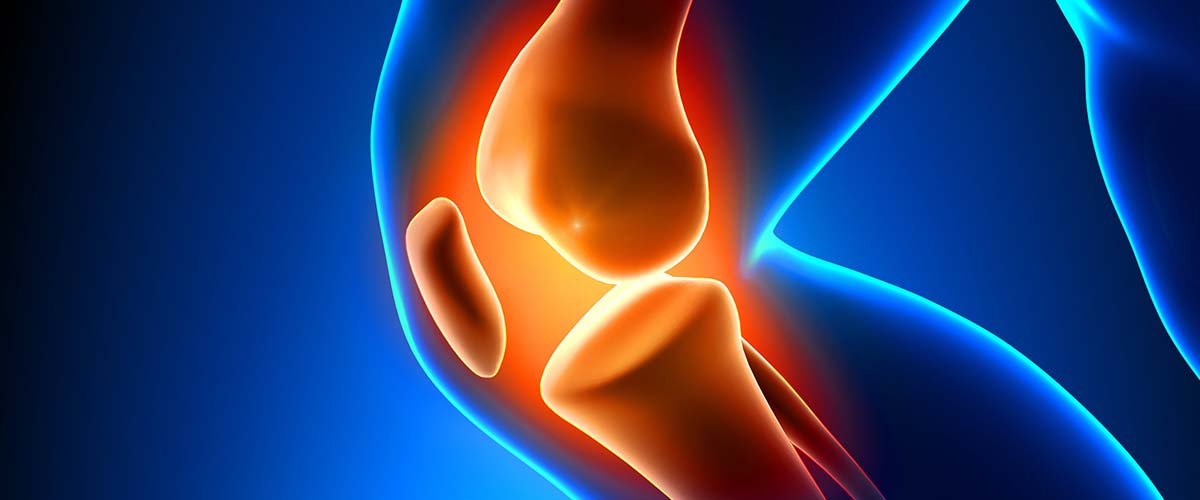
Osgood-Schlatter disease is a common cause of knee pain in growing athletes. The patellar tendon pulls on a growth area (the tibial tubercle) just below the kneecap. During growth spurts, repeated running and jumping irritate this area, causing pain and often a tender bump. It is an overuse condition, not a serious injury, and it settles once growth is complete.
- Pain and a tender bump just below the kneecap
- Most common in active children and teens during growth spurts
- Worse with running, jumping, kneeling and stairs
- Treated without surgery in almost all cases
- Symptoms usually settle when the growth plate closes
Who gets it?
Osgood-Schlatter disease typically affects active children and teenagers during growth spurts, especially in sports with running, jumping and quick changes of direction, such as basketball, soccer, volleyball, gymnastics and football. A systematic review estimated that up to 10% of adolescents are affected.1 One or both knees can be involved.
Symptoms
- Pain just below the kneecap, at the top of the shin bone
- A tender, sometimes enlarged bump at the tibial tubercle
- Pain with running, jumping, squatting, kneeling or stairs
- Tightness in the front and back of the thigh
Diagnosis
The diagnosis is usually made from the history and a physical exam. Dr. Dold may order X-rays to rule out other causes of knee pain, such as a fracture, and to look at the growth area. Pain at night or at rest, swelling of the whole knee, fever, or a limp without activity are not typical of Osgood-Schlatter disease and should be checked promptly.
Treatment
Treatment is non-surgical and focuses on calming the irritated area while keeping your child active:
- Adjusting activity: reducing the most painful activities for a period, rather than always stopping sport completely
- Ice after activity
- Stretching the quadriceps and hamstrings, and strengthening the hips and legs
- A patellar tendon strap or kneepads for kneeling
- Over-the-counter pain relief when needed
A systematic review found that stretching appears to help, but there are few high-quality studies comparing specific exercise programs.1 Surgery is rarely needed. In some adults, a small loose piece of bone (ossicle) remains and keeps causing pain; in those cases it can be removed surgically.
Sinding-Larsen-Johansson syndrome
Sinding-Larsen-Johansson syndrome is a similar overuse condition at the bottom of the kneecap, where the patellar tendon begins. It mainly affects active adolescents aged about 9 to 17, and in a scoping review it improved with conservative treatment, mainly limiting aggravating activity, over two to eight months.2 It is managed much like Osgood-Schlatter disease.
Returning to sport
Most young athletes keep playing with some adjustments. Return to full activity is guided by pain: if a sport causes pain that lasts into the next day or causes a limp, it needs to be scaled back. Dr. Dold and your child’s physical therapist can set a plan that fits the season. See also sports injuries in children and teens and jumper’s knee.
What the research shows
- It usually goes away: Osgood-Schlatter disease is self-limiting and typically resolves when the growth plate at the top of the shinbone closes. About 90% of young athletes improve with non-surgical care.
- Activity modification, not complete rest: a program of reducing jumping and sprinting load, monitoring pain, progressive strengthening and a staged return to sport improved pain, strength and jumping performance in young athletes. Stretching the front of the thigh also appears helpful.
- Symptoms can linger: one follow-up study found that about 60% of patients still had some knee pain around 4 years later, which is why a structured plan, rather than simply waiting, is worthwhile.
- Injections: in a randomized trial of athletes with persistent symptoms, dextrose injections improved symptom-free sport compared with usual care. Corticosteroid injections are generally avoided here.
- Surgery is rare: for the small number of young adults with a painful loose bone fragment after growth is complete, removing it gave good long-term results, with most returning to their previous sports level.
Frequently asked questions
Does my child have to stop playing sports?
Not usually. Most athletes can keep playing with reduced intensity, stretching and strengthening. Pain that lasts into the next day or causes a limp means activity should be scaled back.
Will the bump go away?
The pain usually settles once growth is complete. The bump below the kneecap may remain, but it is rarely a problem.
Is Osgood-Schlatter disease serious?
No. It is a common overuse condition of growing athletes. Night pain, fever, swelling of the whole knee or a limp at rest are not typical and should be checked.
When is surgery needed?
Rarely. Surgery is considered mainly for adults who still have pain from a loose piece of bone after growth has finished.
Research cited on this page
- Neuhaus C, Appenzeller-Herzog C, Faude O. A systematic review on conservative treatment options for Osgood-Schlatter disease. Phys Ther Sport. 2021;49:178-187. PubMed
Up to 10% of adolescents are affected. Stretching appears to help, but there are no randomized trials comparing specific exercises with usual care. - Wilczyński B, Taraszkiewicz M, de Tillier K, et al. Sinding-Larsen-Johansson disease. Clinical features, imaging findings, conservative treatments and research perspectives: a scoping review. PeerJ. 2024;12:e17996. PubMed
Mainly affects active adolescents aged 9 to 17; conservative treatment led to improvement within two to eight months. - Gholve PA, Scher DM, Khakharia S, et al. Osgood Schlatter syndrome. Curr Opin Pediatr. 2007;19(1):44-50. PubMed
Review: about 90% of patients respond to non-surgical treatment including rest, ice, activity modification and rehabilitation; surgery is rare. - Ladenhauf HN, Seitlinger G, Green DW. Osgood-Schlatter disease: a 2020 update of a common knee condition in children. Curr Opin Pediatr. 2020;32(1):107-112. PubMed
Review: conservative management succeeds in over 90% of patients; surgery is considered for persistent symptoms after growth plate closure. - Circi E, Atalay Y, Beyzadeoglu T. Treatment of Osgood-Schlatter disease: review of the literature. Musculoskelet Surg. 2017;101(3):195-200. PubMed
Review: the condition is self-limiting and usually resolves when the tibial growth plate closes; overall prognosis is good apart from some kneeling discomfort. - Ndjonko LCM, Klein JH, Chakraborty Y, et al. Treatments for Osgood Schlatter Disease: A Systematic Review of the Literature. Orthop J Sports Med. 2026;14(3):23259671251387354. PubMed
Systematic review of 712 patients: non-surgical treatments are effective; surgery is reserved for persistent symptoms after skeletal maturity. - Rathleff MS, Winiarski L, Krommes K, et al. Activity Modification and Knee Strengthening for Osgood-Schlatter Disease: A Prospective Cohort Study. Orthop J Sports Med. 2020;8(4):2325967120911106. PubMed
Cohort study: activity modification, pain monitoring, progressive strengthening and a staged return to sport improved outcomes, strength and jumping. - Krommes K, Thorborg K, Clausen MB, et al. Self-management including exercise, education and activity modification compared to usual care for adolescents with Osgood-Schlatter (the SOGOOD trial): protocol of a randomized controlled superiority trial. BMC Sports Sci Med Rehabil. 2024;16(1):89. PubMed
Trial protocol: a randomized trial testing self-management with exercise, education and activity modification for Osgood-Schlatter disease. - Guldhammer C, Rathleff MS, Jensen HP, et al. Long-term Prognosis and Impact of Osgood-Schlatter Disease 4 Years After Diagnosis: A Retrospective Study. Orthop J Sports Med. 2019;7(10):2325967119878136. PubMed
Long-term study: 60.5% still reported knee pain about 4 years later, and many had reduced sports participation. - Bezuglov EN, Tikhonova АА, Chubarovskiy PV, et al. Conservative treatment of Osgood-Schlatter disease among young professional soccer players. Int Orthop. 2020;44(9):1737-1743. PubMed
Academy soccer study: about 10% of players aged 11 to 15 developed the condition; conservative treatment allowed return in about 4 weeks. - Lucenti L, Sapienza M, Caldaci A, et al. The Etiology and Risk Factors of Osgood-Schlatter Disease: A Systematic Review. Children (Basel). 2022;9(6). PubMed
Review: tightness of the rectus femoris, extensor mechanism changes and repetitive loading are the most discussed risk factors. - Corbi F, Matas S, Álvarez-Herms J, et al. Osgood-Schlatter Disease: Appearance, Diagnosis and Treatment: A Narrative Review. Healthcare (Basel). 2022;10(6). PubMed
Review: risk factor reduction and prevention are the most logical strategies. - Topol GA, Podesta LA, Reeves KD, et al. Hyperosmolar dextrose injection for recalcitrant Osgood-Schlatter disease. Pediatrics. 2011;128(5):e1121-8. PubMed
Randomized trial: dextrose injections improved symptom-free sport compared with usual care in recalcitrant cases. - Pihlajamäki HK, Mattila VM, Parviainen M, et al. Long-term outcome after surgical treatment of unresolved Osgood-Schlatter disease in young men. J Bone Joint Surg Am. 2009;91(10):2350-8. PubMed
Long-term study: after surgery for unresolved disease in young adults, 87% had no daily restrictions and 75% returned to their sports level at 10 years. - Visuri T, Pihlajamäki HK, Mattila VM, et al. Elongated patellae at the final stage of Osgood-Schlatter disease: a radiographic study. Knee. 2007;14(3):198-203. PubMed
Imaging study: patients with Osgood-Schlatter disease had longer patellae and patellar tendons and a higher kneecap position. - Blankstein A, Cohen I, Heim M, et al. Ultrasonography as a diagnostic modality in Osgood-Schlatter disease. A clinical study and review of the literature. Arch Orthop Trauma Surg. 2001;121(9):536-9. PubMed
Ultrasound study: ultrasound shows the tendon, tibial tuberosity and bursal changes of the condition. - Rosenberg ZS, Kawelblum M, Cheung YY, et al. Osgood-Schlatter lesion: fracture or tendinitis? Scintigraphic, CT, and MR imaging features. Radiology. 1992;185(3):853-8. PubMed
Imaging study: an ossicle was present in a minority of cases; bursal swelling was common and improved over time. - Achar S, Yamanaka J. Apophysitis and Osteochondrosis: Common Causes of Pain in Growing Bones. Am Fam Physician. 2019;99(10):610-618. PubMed
Review (American Family Physician): apophysitis and osteochondroses are common causes of pain in growing athletes.
Medically reviewed by Andrew P. Dold, MD, FAOA, FAAOS, FACS, FRCSC. Last reviewed October 2026. This page is general information, not medical advice. Your own diagnosis and treatment plan depend on your exam and imaging.