








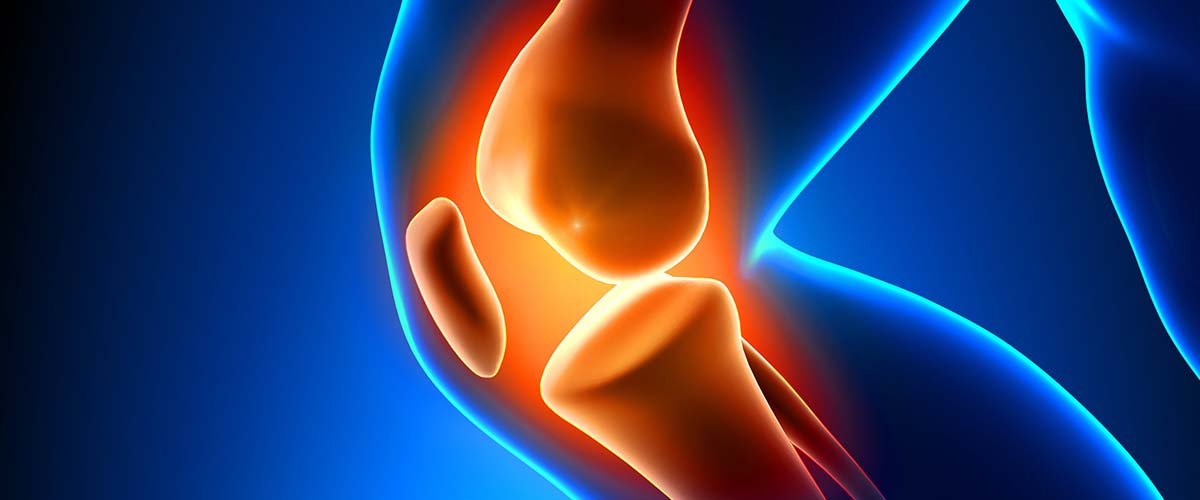
Fractures around the knee range from small avulsion fractures, where a ligament or tendon pulls off a fragment of bone, to complex breaks of the top of the shinbone (tibial plateau) or the bottom of the thighbone (distal femur). Because these fractures often involve the joint surface, accurate treatment matters for long-term knee function. Dr. Andrew Dold, a board-certified, fellowship-trained orthopedic surgeon in Frisco, Texas, treats the full range of knee fractures.
- Common knee fractures include patella, tibial plateau, distal femur and avulsion fractures
- Fractures that involve the joint surface often need surgery to restore it
- High-energy fractures may need staged treatment to protect the skin and soft tissues
- Arthritis can develop after joint fractures, especially severe ones
Types of knee fractures
| Fracture | Description |
|---|---|
| Patella (kneecap) | From a direct blow or a forceful pull of the thigh muscle; may disrupt the ability to straighten the knee1 |
| Tibial plateau | Break of the top of the shinbone, which forms the lower half of the knee joint; can be a lower-energy split or depression, or a complex high-energy fracture2 |
| Distal femur | Break of the lower thighbone just above the knee, from high-energy trauma in younger people or falls in older adults |
| Avulsion fractures | A ligament or tendon pulls off a piece of bone, for example at the ACL, PCL or collateral ligament attachments |
Diagnosis
Dr. Dold examines the knee, the skin, the circulation and the nerves, and reviews X-rays. A CT scan maps the fracture pieces and the joint surface for surgical planning, and an MRI may be used to check the ligaments and meniscus, which are often injured with tibial plateau fractures.
Treatment
Non-surgical treatment with a brace and protected weight bearing is used for stable fractures that have not shifted.
Surgery is usually recommended when the joint surface is displaced, the leg is out of alignment, the knee is unstable or the extensor mechanism is disrupted. The fracture is put back together and held with plates, screws or other fixation, sometimes with arthroscopic assistance. For high-energy fractures, a staged approach with temporary fixation, further imaging and then definitive fixation helps protect the skin and lower the risk of infection.2 Avulsion fractures are often repaired back to the bone together with the ligament or tendon.
Outcomes and what to expect
Most patients recover good function, but joint fractures can lead to arthritis. In a long-term study of surgically treated tibial plateau fractures, about 10% of patients had a knee replacement by 15 years, approaching 15% after fractures involving both sides of the plateau; restoring the joint surface accurately lowered the risk.3 In a systematic review, about 70% of patients returned to sport after tibial plateau fractures.4 Recovery typically involves several weeks of protected weight bearing and months of rehabilitation.
What the research shows
Knee fractures range from small avulsion injuries to complex breaks of the tibial plateau or distal femur. Here is what published studies show about treatment and recovery.
Tibial plateau fractures
Trials comparing fixation methods for the tibial plateau are small, so treatment is tailored to the fracture pattern, the soft tissues and the patient. For simpler split or depression fractures, arthroscopy-assisted and percutaneous techniques have produced good results in most patients and let the surgeon check the meniscus, which is injured in a large share of these fractures. For complex bicondylar fractures, external fixation and plate fixation are both reasonable options with different trade-offs. After surgery, one randomized trial found that early weight-bearing as tolerated improved function at 6 months in selected fracture types. Over the long term, a minority of patients develop arthritis that leads to knee replacement, most often within the first 5 years.
Distal femur fractures
Locking plates and retrograde nails have similar healing rates, with nonunion in roughly 1 in 20 fractures. Obesity, open fractures, comminution and infection raise that risk. In older adults, fixation and distal femur replacement have similar overall complication rates, and fixation is usually the more cost-effective choice. Fractures above an existing knee replacement need a plan that accounts for implant stability.
Tibial spine and avulsion fractures
Displaced tibial spine (eminence) fractures do better with surgery than without it. Arthroscopic repair with sutures or screws gives similar results, and sutures avoid a second operation to remove hardware. A Segond fracture usually signals an ACL tear; when the ACL is reconstructed, the small avulsion fragment generally does not need its own repair.
Why see Dr. Dold
- Board certified by the American Board of Orthopaedic Surgery, with subspecialty certification in Sports Medicine
- Sports medicine and arthroscopy fellowship at NYU Langone / Hospital for Joint Diseases; orthopedic residency at the University of Toronto
- Fellow of the American College of Surgeons (FACS), the American Academy of Orthopaedic Surgeons (FAAOS), the American Orthopaedic Association (FAOA) and the Royal College of Surgeons of Canada (FRCSC)
- Published research on knee ligament and meniscus surgery, including The Posteromedial Corner of the Knee (JAAOS, 2017) and transtibial meniscal root repair (KSSTA, 2017)
- Team physician and surgical consultant to Rugby Canada; has cared for professional athletes from the NFL, NBA, NHL, MLS, PGA Tour and Major League Rugby
- D Magazine Best Doctors (Collin County), 2019–2026 · Rated 4.9 on Google
Frequently asked questions
Do all knee fractures need surgery?
No. Stable fractures that have not shifted can often be treated with a brace and protected weight bearing. Displaced fractures of the joint surface usually need surgery.
What is a tibial plateau fracture?
A break in the top of the shinbone, which forms the lower half of the knee joint. Treatment depends on how much the joint surface has shifted.2
Will I get arthritis after a knee fracture?
The risk is higher after fractures that involve the joint. In one long-term study, about 10% of patients had a knee replacement within 15 years after tibial plateau fracture surgery.3
Can I return to sports after a tibial plateau fracture?
Many people do. A systematic review found an overall return-to-sport rate of about 70%.4
How long until I can put weight on my leg?
It depends on the fracture and its fixation. Many joint fractures need several weeks of protected weight bearing; Dr. Dold will give you a specific plan.
Think you have a fracture? See fracture care in Frisco: same-day appointments and walk-ins Monday, Wednesday and Friday, 8:30–10:30 am.
Research cited on this page
- Melvin JS, Mehta S. Patellar fractures in adults. J Am Acad Orthop Surg. 2011;19(4):198-207. PubMed
- Martz P, Le Baron M, et al. High-energy tibial plateau fracture. Orthop Traumatol Surg Res. 2025;111(1S):104072. PubMed
- Arsoy D, Kleeblad LJ, Haeberle HS, et al. Excellent long-term survivorship, radiologic and functional outcomes of operatively treated tibial plateau fractures. Knee. 2025;55:142-152. PubMed
- Robertson GAJ, Wong SJ, Wood AM. Return to sport following tibial plateau fractures: A systematic review. World J Orthop. 2017;8(7):574-587. PubMed
- Haslhofer DJ, Kraml N, Winkler PW, et al. Risk for total knee arthroplasty after tibial plateau fractures: a systematic review. Knee Surg Sports Traumatol Arthrosc. 2023;31(11):5145-5153. PubMed
A review of 42 studies (over 52,000 patients) found about 5% of treated tibial plateau fractures were later converted to knee replacement, most often in the first 5 years. - Rieger E, Fuqua A, Shah J, et al. A Systematic Review and Meta-Analysis of Total Knee Arthroplasty after Tibial Plateau Fracture Fixation. J Knee Surg. 2025;38(12):639-649. PubMed
A meta-analysis estimated about 9% of patients needed knee replacement by roughly 7 years after tibial plateau fracture fixation, and those replacements carried higher infection and revision risk. - McNamara IR, Smith TO, Shepherd KL, et al. Surgical fixation methods for tibial plateau fractures. Cochrane Database Syst Rev. 2015;2015(9):CD009679. PubMed
A Cochrane review found only small, high-bias trials comparing fixation methods for tibial plateau fractures, so the evidence remains very uncertain. - Metcalfe D, Hickson CJ, McKee L, et al. External versus internal fixation for bicondylar tibial plateau fractures: systematic review and meta-analysis. J Orthop Traumatol. 2015;16(4):275-85. PubMed
For complex bicondylar plateau fractures, external fixation and plate fixation had different complication profiles; external fixation had more infections but earlier return to activity. - Ibrahim MA, Moustafa MMA, Brismée JM, et al. Immediate weight-bearing after tibial plateau fractures internal fixation results in better clinical outcomes with similar radiological outcomes: a randomized clinical trial. Int Orthop. 2025;49(5):1245-1253. PubMed
A randomized trial found immediate weight-bearing as tolerated after plate fixation of Schatzker I–IV plateau fractures improved 6-month function and pain without loss of fracture position. - Chen XZ, Liu CG, Chen Y, et al. Arthroscopy-assisted surgery for tibial plateau fractures. Arthroscopy. 2015;31(1):143-53. PubMed
A systematic review of arthroscopy-assisted plateau fixation found meniscus injuries in about 42% of patients, supporting a careful look at the soft tissues. - Chen HW, Liu GD, Wu LJ. Clinical and radiological outcomes following arthroscopic-assisted management of tibial plateau fractures: a systematic review. Knee Surg Sports Traumatol Arthrosc. 2015;23(12):3464-72. PubMed
Across 12 studies of arthroscopy-assisted fixation, mostly for Schatzker I–III fractures, most patients had good or excellent clinical scores at about 3 years. - Nguyen MP, Gannon NP, Paull TZ, et al. Outcomes of arthroscopic-assisted lateral tibial plateau fixation: a systematic review. Eur J Orthop Surg Traumatol. 2023;33(5):1473-1483. PubMed
A review of 17 studies of arthroscopy-assisted lateral plateau fixation reported good-to-excellent function in more than 90% of patients. - Chang HR, Yu YY, Ju LL, et al. Percutaneous Reduction and Internal Fixation for Monocondylar Fractures of Tibial Plateau: A Systematic Review. Orthop Surg. 2018;10(2):77-83. PubMed
Percutaneous reduction and fixation of single-condyle plateau fractures gave mostly good or excellent results, with an overall complication rate near 7%. - Sinha A, Maffulli N. Balloon tibioplasty for tibial plateau fractures. Surgeon. 2021;19(5):297-309. PubMed
Balloon tibioplasty for plateau fractures shows encouraging early results, but the evidence is small and low level. - Griffin XL, Parsons N, Zbaeda MM, et al. Interventions for treating fractures of the distal femur in adults. Cochrane Database Syst Rev. 2015;2015(8):CD010606. PubMed
A Cochrane review found insufficient evidence from trials to say which surgical method is preferable for distal femur fractures. - Lefaivre KA, Slobogean G, O’Hara NN, et al. Far Cortical Locking Versus Standard Constructs for Locked Plate Fixation in the Treatment of Acute, Displaced Fractures of the Distal Femur: A Multicenter Randomized Trial. J Bone Joint Surg Am. 2024;106(19):1739-1749. PubMed
A randomized trial of far-cortical locking screws for distal femur fractures found results similar to standard locking constructs. - Yoon BH, Park IK, Kim Y, et al. Incidence of nonunion after surgery of distal femoral fractures using contemporary fixation device: a meta-analysis. Arch Orthop Trauma Surg. 2021;141(2):225-233. PubMed
A meta-analysis found nonunion in roughly 5% of distal femur fractures, with similar rates for locking plates and retrograde nails. - Wang MT, An VVG, Sivakumar BS. Non-union in lateral locked plating for distal femoral fractures: A systematic review. Injury. 2019;50(11):1790-1794. PubMed
Factors linked to distal femur nonunion after locked plating included obesity, open fractures, infection, comminution and very rigid constructs. - Quinzi DA, Ramirez G, Kaplan NB, et al. Early complications and reoperation rates are similar amongst open reduction internal fixation, intramedullary nail, and distal femoral replacement for periprosthetic distal femur fractures: a systematic review and meta-analysis. Arch Orthop Trauma Surg. 2021;141(6):997-1006. PubMed
In older adults with distal femur fractures, major complications and reoperations were similar among plating, nailing and distal femur replacement; replacement had more deep infections. - Brodke DJ, Devana SK, Upfill-Brown A, et al. Cost-effectiveness of fixation versus arthroplasty for geriatric distal femur fractures. Injury. 2022;53(2):661-668. PubMed
A cost-effectiveness model favored fixation over distal femur replacement for geriatric distal femur fractures in most scenarios. - Ebraheim NA, Kelley LH, Liu X, et al. Periprosthetic Distal Femur Fracture after Total Knee Arthroplasty: A Systematic Review. Orthop Surg. 2015;7(4):297-305. PubMed
For fractures above a knee replacement, locked plating and nailing were the most common treatments, and both carried meaningful complication rates. - Bogunovic L, Tarabichi M, Harris D, et al. Treatment of tibial eminence fractures: a systematic review. J Knee Surg. 2015;28(3):255-62. PubMed
In tibial eminence (tibial spine) fractures, surgery led to less instability than nonoperative care; screw fixation needed hardware removal far more often than suture fixation. - Osti L, Buda M, Soldati F, et al. Arthroscopic treatment of tibial eminence fracture: a systematic review of different fixation methods. Br Med Bull. 2016;118(1):73-90. PubMed
Arthroscopic tibial eminence fixation reduced soft-tissue complications compared with open surgery, and suture and screw techniques gave similar outcomes. - Gans I, Baldwin KD, Ganley TJ. Treatment and Management Outcomes of Tibial Eminence Fractures in Pediatric Patients: A Systematic Review. Am J Sports Med. 2014;42(7):1743-50. PubMed
A review of pediatric tibial eminence fractures found healing with both screw and suture fixation; most nonunions were displaced fractures treated without surgery. - Ye M, Chen J, Hu F, et al. Suture versus screw fixation technique for tibial eminence fracture: A meta-analysis of laboratory studies. J Orthop Surg (Hong Kong). 2020;28(1):2309499020907977. PubMed
Laboratory studies found suture fixation of tibial eminence fractures at least as strong as single-screw fixation. - Johnstone TM, Baird DW, Cuellar-Montes A, et al. Screws or Sutures? A Pediatric Cadaveric Study of Tibial Spine Fracture Repairs. Am J Sports Med. 2023;51(10):2589-2595. PubMed
A pediatric cadaver study found similar failure loads for screw and suture tibial spine repairs. - Chouhan DK, Dhillon MS, John R, et al. Management of neglected ACL avulsion fractures: a case series and systematic review. Injury. 2017;48 Suppl 2:S54-S60. PubMed
A small series and review found that even neglected ACL avulsion fractures can be repaired successfully with stable knees. - Nagai K, Kamada K, Kay J, et al. Clinical Outcomes After Anterior Cruciate Ligament Reconstruction in Patients With a Concomitant Segond Fracture: A Systematic Review. Am J Sports Med. 2023;51(2):525-533. PubMed
A review of over 2,400 patients found an unrepaired Segond fracture did not worsen outcomes after ACL reconstruction.
Medically reviewed by Andrew P. Dold, MD, FAOA, FAAOS, FACS, FRCSC. Last reviewed October 2026. This page is general information, not medical advice. Individual results vary.