









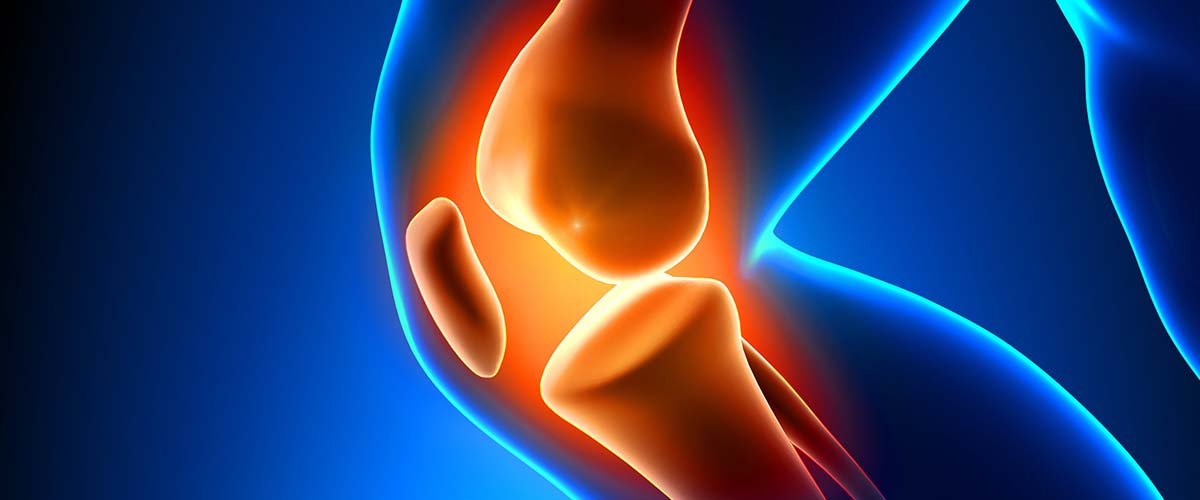
Pes anserine bursitis causes pain on the inner side of the knee, a few centimeters below the joint line, where three tendons (the sartorius, gracilis and semitendinosus) attach to the shinbone. Their combined attachment is called the “pes anserinus,” Latin for “goose’s foot.” A small fluid-filled sac, the bursa, lies beneath these tendons.1 Dr. Andrew Dold, a board-certified, fellowship-trained sports medicine surgeon in Frisco, Texas, diagnoses and treats pes anserine bursitis and related knee conditions.
- Pain on the inner knee, below the joint, often with stairs or rising from a chair
- Often occurs together with knee arthritis
- Usually improves with exercise, stretching and activity changes
- An injection can help if pain persists; surgery is rarely needed
Symptoms
- Pain and tenderness on the inner side of the knee, about 5 cm below the joint line1
- Pain climbing stairs or getting up from a seated position1
- Sometimes mild swelling over the area
Who gets it?
Pes anserine bursitis most often affects middle-aged women who are overweight, and it is frequently associated with other knee problems, especially knee osteoarthritis.1 Bursitis and tendinitis of the pes anserinus are hard to tell apart, but they are treated the same way.1
Diagnosis
Dr. Dold examines the knee for tenderness over the pes anserinus and checks for other causes of inner knee pain, such as a meniscus tear, an MCL injury, arthritis or a stress fracture. X-rays check for arthritis, and ultrasound or MRI can be used when the diagnosis is unclear.
Treatment
Pes anserine bursitis is generally self-limiting and usually responds to conservative treatment.1 Most bursitis improves with non-surgical care such as ice, activity modification and anti-inflammatory medicines.2 Dr. Dold’s approach typically includes:
- Physical therapy, with hamstring and quadriceps stretching and strengthening, and hip strengthening
- Adjusting activities and training load
- Weight management and treatment of any underlying knee arthritis
- A targeted cortisone injection for pain that does not improve
What the research shows
- Diagnosis is mainly clinical: the classic finding is tenderness on the inner side of the knee a few centimeters below the joint line. Pain often mimics a medial meniscus tear, and the condition frequently coexists with knee arthritis, so a careful exam matters. Ultrasound can help confirm it.
- Risk factors: studies link it to knee arthritis, being overweight, knock-knee alignment and diabetes, and it becomes more common with age.
- First-line care: most patients improve with activity changes, ice, anti-inflammatory medicine and a stretching and strengthening program for the hamstrings and hip. Taping may help symptoms.
- Injections: results are mixed. A small randomized trial found a steroid injection was no better than placebo at 4 weeks in patients already taking an anti-inflammatory, while other studies found injections helpful. Ultrasound guidance made injections more accurate and more effective, and a randomized trial reported benefit from PRP injections.
- Surgery is very rarely needed. Treating associated knee arthritis or alignment problems is often part of the plan.
Why see Dr. Dold
- Board certified by the American Board of Orthopaedic Surgery, with subspecialty certification in Sports Medicine
- Sports medicine and arthroscopy fellowship at NYU Langone / Hospital for Joint Diseases; orthopedic residency at the University of Toronto
- Fellow of the American College of Surgeons (FACS), the American Academy of Orthopaedic Surgeons (FAAOS), the American Orthopaedic Association (FAOA) and the Royal College of Surgeons of Canada (FRCSC)
- Published research on knee ligament and meniscus surgery, including The Posteromedial Corner of the Knee (JAAOS, 2017) and transtibial meniscal root repair (KSSTA, 2017)
- Team physician and surgical consultant to Rugby Canada; has cared for professional athletes from the NFL, NBA, NHL, MLS, PGA Tour and Major League Rugby
- D Magazine Best Doctors (Collin County), 2019–2026 · Rated 4.9 on Google
Frequently asked questions
How long does pes anserine bursitis last?
It is usually self-limiting and improves with exercise, stretching and activity changes.1
Is pes anserine bursitis related to knee arthritis?
Often. It is frequently associated with other knee problems, especially osteoarthritis.1
Will an injection help?
A targeted injection can help if pain persists despite therapy. Dr. Dold will discuss the options with you.
Does pes anserine bursitis need surgery?
Rarely. Most patients improve with non-surgical treatment.1,2
Research cited on this page
- Mohseni M, Mabrouk A, Li D, et al. Pes Anserine Bursitis. In: StatPearls. Treasure Island (FL): StatPearls Publishing. PubMed
- Aaron DL, Patel A, Kayiaros S, et al. Four common types of bursitis: diagnosis and management. J Am Acad Orthop Surg. 2011;19(6):359-367. PubMed
- Helfenstein M, Kuromoto J. Anserine syndrome. Rev Bras Reumatol. 2010;50(3):313-27. PubMed
Review: proposes the term anserine syndrome; diabetes is a known predisposing factor, and overweight and arthritis may be additional risk factors. - Alvarez-Nemegyei J, Canoso JJ. Evidence-Based Soft Tissue Rheumatology IV: Anserine Bursitis. J Clin Rheumatol. 2004;10(4):205-6. PubMed
Evidence-based review: anserine bursitis is diagnosed clinically from medial knee pain and localized tenderness below the joint line. - Rennie WJ, Saifuddin A. Pes anserine bursitis: incidence in symptomatic knees and clinical presentation. Skeletal Radiol. 2005;34(7):395-8. PubMed
MRI study: pes anserine bursitis was seen in 2.5% of knee MRIs and often mimicked a medial meniscus tear. - Uysal F, Akbal A, Gökmen F, et al. Prevalence of pes anserine bursitis in symptomatic osteoarthritis patients: an ultrasonographic prospective study. Clin Rheumatol. 2015;34(3):529-33. PubMed
Ultrasound study: anserine bursitis prevalence rose with age and arthritis grade. - Kang I, Han SW. Anserine bursitis in patients with osteoarthritis of the knee. South Med J. 2000;93(2):207-9. PubMed
Study in knee arthritis: anserine bursitis was common, and local injection was more effective than no injection. - Cohen SE, Mahul O, Meir R, et al. Anserine bursitis and non-insulin dependent diabetes mellitus. J Rheumatol. 1997;24(11):2162-5. PubMed
Study: an association between type 2 diabetes, knee pain and anserine bursitis. - Alvarez-Nemegyei J. Risk factors for pes anserinus tendinitis/bursitis syndrome: a case control study. J Clin Rheumatol. 2007;13(2):63-5. PubMed
Case-control study: valgus (knock-knee) deformity was a risk factor for pes anserine tendinobursitis. - Yoon HS, Kim SE, Suh YR, et al. Correlation between ultrasonographic findings and the response to corticosteroid injection in pes anserinus tendinobursitis syndrome in knee osteoarthritis patients. J Korean Med Sci. 2005;20(1):109-12. PubMed
Ultrasound study: few patients diagnosed clinically had ultrasound evidence of bursitis, though symptoms improved after injection. - Vega-Morales D, Esquivel-Valerio JA, Negrete-López R, et al. Safety and efficacy of methylprednisolone infiltration in anserine syndrome treatment. Reumatol Clin. 2012;8(2):63-7. PubMed
Randomized trial: methylprednisolone injection was no better than placebo at 4 weeks in patients already taking diclofenac. - Lee JH, Lee JU, Yoo SW. Accuracy and efficacy of ultrasound-guided pes anserinus bursa injection. J Clin Ultrasound. 2019;47(2):77-82. PubMed
Randomized trial: ultrasound-guided pes anserine injection was more accurate and more effective than blind injection. - Karabaş Ç, Talay Çaliş H, Topaloğlu US, et al. Effects of ultrasound guided leukocyte-rich platelet-rich plasma (LR-PRP) injection in patients with pes anserinus tendinobursitis. Transfus Apher Sci. 2021;60(3):103048. PubMed
Randomized trial: single and double PRP injections were safe and effective for pes anserine tendinobursitis. - Beutler A. Musculoskeletal Therapies: Adjunctive Physical Therapy. FP Essent. 2018;470:16-20. PubMed
Review: kinesiology taping improved symptoms for pes anserine bursitis among other conditions. - Algarni AD. Pes anserinus pain syndrome following total knee arthroplasty for degenerative varus: incidence and predictors. Int Orthop. 2020;44(6):1083-1089. PubMed
Study: pes anserinus pain occurred in 5.6% after knee replacement and was usually treated successfully without surgery. - Butcher JD, Salzman KL, Lillegard WA. Lower extremity bursitis. Am Fam Physician. 1996;53(7):2317-24. PubMed
Review: lower-extremity bursitis is often mild and responds to activity modification and self-treatment. - Handy JR. Anserine bursitis: a brief review. South Med J. 1997;90(4):376-7. PubMed
Review: anserine bursitis is commonly missed in older patients and often accompanies knee arthritis. - Curtis BR, Huang BK, Pathria MN, et al. Pes Anserinus: Anatomy and Pathology of Native and Harvested Tendons. AJR Am J Roentgenol. 2019;213(5):1107-1116. PubMed
Imaging review of pes anserinus anatomy and pathology. - Shapiro SA, Hernandez LO, Montero DP. Snapping Pes Anserinus and the Diagnostic Utility of Dynamic Ultrasound. J Clin Imaging Sci. 2017;7:39. PubMed
Case report: snapping pes anserinus syndrome as a cause of medial knee snapping.
Medically reviewed by Andrew P. Dold, MD, FAOA, FAAOS, FACS, FRCSC. Last reviewed October 2026. This page is general information, not medical advice. Individual results vary.