








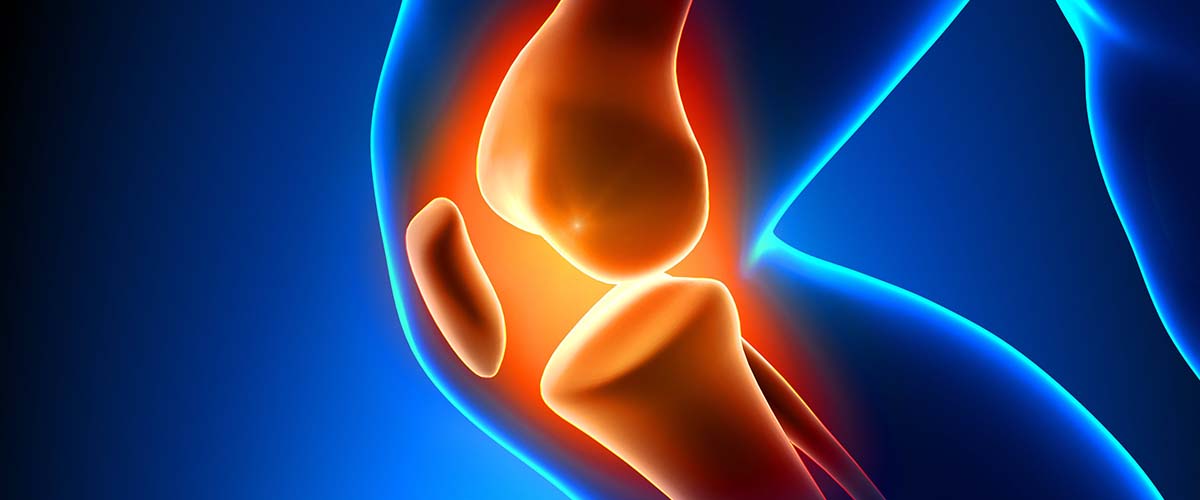
A kneecap dislocation happens when the kneecap (patella) slips out of the groove at the end of the thigh bone, usually toward the outside of the knee. Some people dislocate once; others go on to have repeated episodes or a constant feeling that the kneecap is about to slip, called patellar instability. It is especially common in teenagers and young athletes. Dr. Andrew Dold, a board-certified, fellowship-trained sports medicine surgeon in Frisco, Texas, treats first-time dislocations and recurrent patellar instability, including MPFL reconstruction when surgery is needed.
- Dislocations usually happen with a pivot, twist or awkward fall, often without contact
- Most first-time dislocations are treated without surgery
- The medial patellofemoral ligament (MPFL), the main ligament holding the kneecap in place, is torn in most dislocations
- Surgery is considered for repeated dislocations, loose pieces of cartilage or bone, or underlying alignment problems
- After surgery, the chance of the kneecap dislocating again is low (under 10%, according to the American Academy of Orthopaedic Surgeons)
What causes the kneecap to dislocate?
The kneecap is held in its groove by ligaments, mainly the MPFL on the inner side, and by the shape of the groove itself. A dislocation can happen when the knee twists while the foot is planted, with a direct blow, or with an awkward fall. Some knees are more likely to dislocate because of:
- A shallow or flat groove in the thigh bone (trochlear dysplasia)
- A kneecap that sits higher than normal (patella alta)
- Alignment of the leg that pulls the kneecap outward, including where the patellar tendon attaches to the shin bone
- Loose ligaments or a previous dislocation that stretched the MPFL
Symptoms
- A sudden shift of the kneecap, often with a pop, and the knee giving way
- The kneecap may stay out of place or slide back on its own
- Pain and rapid swelling
- Tenderness along the inner side of the kneecap
- Apprehension or fear that the kneecap will slip again, and episodes of instability
- Catching or locking if a piece of cartilage or bone has broken off
Diagnosis
Dr. Dold examines the knee, checks how the kneecap tracks and how stable it is, and reviews your history of previous episodes. X-rays, which can be taken in our office, check for fractures and the shape of the groove and kneecap. An MRI shows the torn MPFL, bone bruising and any cartilage damage or loose pieces, and a CT scan is sometimes used to measure alignment when surgery is being planned.
Non-surgical treatment
Most first-time dislocations, without a loose fragment, are treated without surgery:
- A short period of protection in a brace, with crutches as needed
- Rest, ice, compression and elevation to settle the swelling
- Physical therapy to restore motion and strengthen the quadriceps, hip and core muscles that help control the kneecap
- A patellar-stabilizing brace or sleeve when returning to sport
The goal is a return to normal activities within about 1 to 3 months.
When surgery is needed
Surgery is considered when the kneecap keeps dislocating, when a piece of cartilage or bone has broken off, or when anatomy such as a high kneecap or abnormal alignment makes another dislocation likely. Depending on the cause, Dr. Dold performs:
- MPFL reconstruction: the torn ligament is rebuilt with a tendon graft to restore the main restraint that holds the kneecap in place
- Tibial tubercle osteotomy (TTO): the bony attachment of the patellar tendon on the shin bone is moved to realign the kneecap; often combined with MPFL reconstruction. Learn more about knee osteotomy
- Cartilage repair: loose fragments are fixed back in place or removed, and damaged cartilage behind the kneecap can be treated at the same surgery. See cartilage repair and transplant
Watch Dr. Dold: MPFL reconstruction videos
Recovery timeline
These are general ranges. Your own timeline depends on the injury, the procedure and how rehabilitation progresses.
| Treatment | Typical recovery |
|---|---|
| First dislocation, treated without surgery | Return to normal activities in about 1 to 3 months |
| After MPFL reconstruction | Return to sport around 4 to 6 months |
| MPFL reconstruction with tibial tubercle osteotomy | Often longer, because the bone needs time to heal |
Watch Dr. Dold: MPFL reconstruction
Some of these videos show real surgery, so some viewers may prefer not to watch.
More videos on Dr. Dold’s YouTube channel.
What the research shows
- Who is likely to dislocate again: about one in three people re-dislocate after a first dislocation. The risk is higher with younger age and open growth plates, a shallow groove at the end of the thighbone (trochlear dysplasia), a high-riding kneecap (patella alta) and a laterally positioned tibial tubercle. Combining these factors helps guide treatment.
- Check for cartilage damage: a piece of cartilage or bone breaks off in roughly a third of dislocations. MRI is the preferred test, because a loose fragment often needs prompt surgery.
- First dislocation: most people start with bracing and rehabilitation. Surgery lowers the chance of another dislocation, but studies disagree about whether it improves long-term function, so the decision depends on your risk factors and goals.
- Recurrent instability: MPFL reconstruction (rebuilding the ligament that holds the kneecap in place) is effective. In a randomized trial, it reduced persistent instability at 3 years far more than rehabilitation alone. About 85–93% of patients return to sport, typically around 7 months, and recurrence after surgery is about 5%.
- When bone procedures are added: a tibial tubercle osteotomy can correct patella alta or a laterally placed tubercle, and a trochleoplasty can deepen a severely dysplastic groove. For moderate dysplasia, MPFL reconstruction alone works as well as adding trochleoplasty.
- Lateral release alone is not recommended: randomized trials show that adding a lateral release to MPFL reconstruction does not improve results.
Why see Dr. Dold
- Board certified by the American Board of Orthopaedic Surgery, with subspecialty certification in Sports Medicine
- Sports medicine and arthroscopy fellowship at NYU Langone / Hospital for Joint Diseases; orthopedic residency at the University of Toronto
- Fellow of the American College of Surgeons (FACS), the American Academy of Orthopaedic Surgeons (FAAOS), the American Orthopaedic Association (FAOA) and the Royal College of Surgeons of Canada (FRCSC)
- Published research on knee ligament and meniscus surgery, including The Posteromedial Corner of the Knee (JAAOS, 2017) and transtibial meniscal root repair (KSSTA, 2017)
- Team physician and surgical consultant to Rugby Canada; has cared for professional athletes from the NFL, NBA, NHL, MLS, PGA Tour and Major League Rugby
- D Magazine Best Doctors (Collin County), 2019–2026 · Rated 4.9 on Google
Related pages: Knee conditions · Knee osteotomy · Jumper’s knee · Runner’s knee
Frequently asked questions
Will my kneecap dislocate again?
Many people who dislocate once never do again, but the risk is higher in young athletes and in knees with a shallow groove, a high-riding kneecap or alignment problems. Dr. Dold can assess your individual risk. After MPFL reconstruction, the re-dislocation rate is low, under 10%.
Do I need surgery after my first kneecap dislocation?
Usually not. Most first-time dislocations are treated with a brace and physical therapy. Surgery is recommended earlier if a piece of cartilage or bone has broken off or if the kneecap keeps slipping.
What is MPFL reconstruction?
MPFL reconstruction rebuilds the medial patellofemoral ligament, the main ligament that keeps the kneecap from sliding outward, using a tendon graft.
How long is recovery after MPFL reconstruction?
Most patients return to sport around 4 to 6 months after surgery, after completing physical therapy. Recovery can take longer if a tibial tubercle osteotomy is also performed. Individual recovery varies.
Can teenagers have kneecap stabilization surgery?
Yes. Kneecap dislocations are common in teenage athletes, and the surgical technique is chosen based on the patient’s age and whether the growth plates are still open.
Can I be seen the same day?
Yes. Same-day appointments are available for new injuries, and walk-in visits are welcome Monday, Wednesday and Friday, 8:30 to 10:30 am.
Research cited on this page
- Fithian DC, Paxton EW, Stone ML, et al. Epidemiology and natural history of acute patellar dislocation. Am J Sports Med. 2004;32(5):1114-1121. PubMed
Risk was highest in girls aged 10 to 17. After a first-time dislocation, 17% had another instability episode during follow-up, compared with 49% of those who had dislocated before. - Cohen D, Le N, Zakharia A, et al. MPFL reconstruction results in lower redislocation rates and higher functional outcomes than rehabilitation: a systematic review and meta-analysis. Knee Surg Sports Traumatol Arthrosc. 2022;30(11):3784-3795. PubMed
After a first-time dislocation, the kneecap dislocated again in 7% of patients after MPFL reconstruction, compared with 30% after rehabilitation alone. - Erickson BJ, Mascarenhas R, Sayegh ET, et al. Does operative treatment of first-time patellar dislocations lead to increased patellofemoral stability? A systematic review of overlapping meta-analyses. Arthroscopy. 2015;31(6):1207-1215. PubMed
Across 1,984 patients, the kneecap dislocated again in 24.0% after surgery and 34.6% after non-surgical care; the evidence on routine surgery after a first dislocation is mixed. - Huntington LS, Webster KE, Devitt BM, et al. Factors Associated With an Increased Risk of Recurrence After a First-Time Patellar Dislocation: A Systematic Review and Meta-analysis. Am J Sports Med. 2020;48(10):2552-2562. PubMed
Meta-analysis: after a first dislocation, 33.6% re-dislocated; younger age, open growth plates, trochlear dysplasia, high TT-TG distance and patella alta increased risk. - Frings J, Balcarek P, Tscholl P, et al. Conservative Versus Surgical Treatment for Primary Patellar Dislocation. Dtsch Arztebl Int. 2020;117(16):279-286. PubMed
Systematic review: recurrence risk rises with each additional risk factor; stratification models help guide treatment. - Abelleyra Lastoria DA, Hutchinson K, Tapadar T, et al. Patho-morphology of patellar instability in children and adolescents: A systematic review and meta-analysis. Knee. 2024;48:166-196. PubMed
Systematic review of anatomical factors associated with patellar instability. - Qiu RY, Fitzpatrick DWD, Cohen D, et al. MRI as the optimal imaging modality for assessment and management of osteochondral fractures and loose bodies following traumatic patellar dislocation: a systematic review. Knee Surg Sports Traumatol Arthrosc. 2023;31(5):1744-1752. PubMed
Systematic review: osteochondral fractures were found in about 38% of patients after patellar dislocation; MRI is the preferred imaging. - Stefancin JJ, Parker RD. First-time traumatic patellar dislocation: a systematic review. Clin Orthop Relat Res. 2007;455:93-101. PubMed
Systematic review: initial non-operative management is recommended for first-time dislocation unless there is an osteochondral fracture or loose body. - Smith TO, Donell S, Song F, et al. Surgical versus non-surgical interventions for treating patellar dislocation. Cochrane Database Syst Rev. 2015(2):CD008106. PubMed
Meta-analysis: very low-quality evidence of a short-term benefit of surgery for first-time dislocation. - Saccomanno MF, Sircana G, Fodale M, et al. Surgical versus conservative treatment of primary patellar dislocation. A systematic review and meta-analysis. Int Orthop. 2016;40(11):2277-2287. PubMed
Meta-analysis: surgery for first-time dislocation reduced re-dislocation (relative risk 0.62). - Flores GW, de Oliveira DF, Ramos APS, et al. Conservative management following patellar dislocation: a level I systematic review. J Orthop Surg Res. 2023;18(1):393. PubMed
Systematic review: surgery lowers re-dislocation after a first dislocation, but whether it improves function is unclear. - Xing X, Shi H, Feng S. Does surgical treatment produce better outcomes than conservative treatment for acute primary patellar dislocations? A meta-analysis of 10 randomized controlled trials. J Orthop Surg Res. 2020;15(1):118. PubMed
Meta-analysis: conservative care may give better activity scores than surgery after a first dislocation; evidence is limited. - Palmu S, Kallio PE, Donell ST, et al. Acute patellar dislocation in children and adolescents: a randomized clinical trial. J Bone Joint Surg Am. 2008;90(3):463-70. PubMed
Randomized trial in children: early repair of medial structures with lateral release did not improve long-term outcomes. - Nwachukwu BU, So C, Schairer WW, et al. Surgical versus conservative management of acute patellar dislocation in children and adolescents: a systematic review. Knee Surg Sports Traumatol Arthrosc. 2016;24(3):760-7. PubMed
Systematic review in children and adolescents: surgery after a first dislocation was associated with fewer re-dislocations and better sports function. - Smith TO, Gaukroger A, Metcalfe A, et al. Surgical versus non-surgical interventions for treating patellar dislocation. Cochrane Database Syst Rev. 2023;1(1):CD008106. PubMed
Cochrane review: uncertain whether surgery improves outcomes over non-surgical care; very low-certainty evidence. - Straume-Næsheim TM, Randsborg PH, Nilsgård TL, et al. Medial Patellofemoral Ligament Reconstruction vs Nonoperative Treatment for Recurrent Lateral Patellar Dislocation: Three-Year Results From a Randomized Controlled Trial. Am J Sports Med. 2026;54(4):773-779. PubMed
Randomized trial: isolated MPFL reconstruction reduced persistent instability at 3 years compared with active rehabilitation alone (16.7% vs 53.6%). - Platt BN, Bowers LC, Magnuson JA, et al. Return to Sport After Medial Patellofemoral Ligament Reconstruction: A Systematic Review and Meta-analysis. Am J Sports Med. 2022;50(1):282-291. PubMed
Meta-analysis of 930 patients: 92.8% returned to sport after MPFL reconstruction; 71% at or above their previous level. - Manjunath AK, Hurley ET, Jazrawi LM, et al. Return to Play After Medial Patellofemoral Ligament Reconstruction: A Systematic Review. Am J Sports Med. 2021;49(4):1094-1100. PubMed
Systematic review of 1,278 patients: 85% returned to play at about 7 months; recurrent instability 5.4%. - Castagno C, Kneedler S, Fares A, et al. Isolated medial patellofemoral reconstruction outcomes: A systematic review and meta-analysis. Knee. 2023;44:59-71. PubMed
Meta-analysis: isolated MPFL reconstruction is safe and effective for recurrent dislocation, with an 8% complication rate. - An VV, Sivakumar BS, Phan K, et al. Isolated versus combined medial patellofemoral ligament reconstruction for lateral instability of the patella. J Orthop Surg (Hong Kong). 2019;27(1):2309499018820698. PubMed
Meta-analysis: no outcome difference between isolated and combined MPFL reconstruction in the studies analyzed. - Su P, Yao D, Zhang L, et al. Results of medial patellofemoral ligament reconstruction with and without tibial tubercle osteotomy in patellar instability: a systematic review and single-arm meta-analysis. BMC Musculoskelet Disord. 2024;25(1):642. PubMed
Systematic review: MPFL reconstruction alone and with tibial tubercle osteotomy are both effective, with similar recurrence. - Longo UG, Berton A, Salvatore G, et al. Medial Patellofemoral Ligament Reconstruction Combined With Bony Procedures for Patellar Instability: Current Indications, Outcomes, and Complications. Arthroscopy. 2016;32(7):1421-7. PubMed
Systematic review: a combined bony procedure is suggested with high TT-TG distance or severe trochlear dysplasia. - Knapik DM, Kunze KN, Azua E, et al. Radiographic and Clinical Outcomes After Tibial Tubercle Osteotomy for the Treatment of Patella Alta: A Systematic Review and Meta-analysis. Am J Sports Med. 2022;50(7):2042-2051. PubMed
Meta-analysis: tibial tubercle osteotomy for patella alta lowers kneecap height, with a modest complication rate. - Zaffagnini S, Previtali D, Tamborini S, et al. Recurrent patellar dislocations: trochleoplasty improves the results of medial patellofemoral ligament surgery only in severe trochlear dysplasia. Knee Surg Sports Traumatol Arthrosc. 2019;27(11):3599-3613. PubMed
Meta-analysis: isolated MPFL reconstruction was as effective as combined trochleoplasty in moderate dysplasia; severe dysplasia may need trochleoplasty. - Leclerc JT, Dartus J, Labreuche J, et al. Complications and outcomes of trochleoplasty for patellofemoral instability: A systematic review and meta-analysis of 1000 trochleoplasties. Orthop Traumatol Surg Res. 2021;107(7):103035. PubMed
Meta-analysis of 1,000 trochleoplasties: recurrent dislocation occurred in 2.4%; 17% needed later surgery. - Migliorini F, Trivellas A, Eschweiler J, et al. Comparable outcome for autografts and allografts in primary medial patellofemoral ligament reconstruction for patellofemoral instability: systematic review and meta-analysis. Knee Surg Sports Traumatol Arthrosc. 2022;30(4):1282-1291. PubMed
Meta-analysis: allograft and autograft MPFL reconstruction gave similar outcomes. - Malatray M, Magnussen R, Lustig S, et al. Lateral retinacular release is not recommended in association to MPFL reconstruction in recurrent patellar dislocation. Knee Surg Sports Traumatol Arthrosc. 2019;27(8):2659-2664. PubMed
Randomized trial: adding a lateral release to MPFL reconstruction did not improve outcomes. - Fauré F, Erard J, Batailler C, et al. Lateral Retinacular Release During MPFL Reconstruction: A Randomized Clinical Trial. Am J Sports Med. 2025;53(12):2869-2874. PubMed
Randomized trial: routine lateral retinacular release with MPFL reconstruction did not improve patient-reported outcomes. - Brightwell BD, Stone A, Li X, et al. Blood flow Restriction training After patellar INStability (BRAINS Trial). Trials. 2022;23(1):88. PubMed
Randomized trial design: blood flow restriction training in non-operative rehabilitation for patellar instability.
Medically reviewed by Andrew P. Dold, MD, FAOA, FAAOS, FACS, FRCSC. Last reviewed October 2026. This page is general information, not medical advice. Individual results vary.