








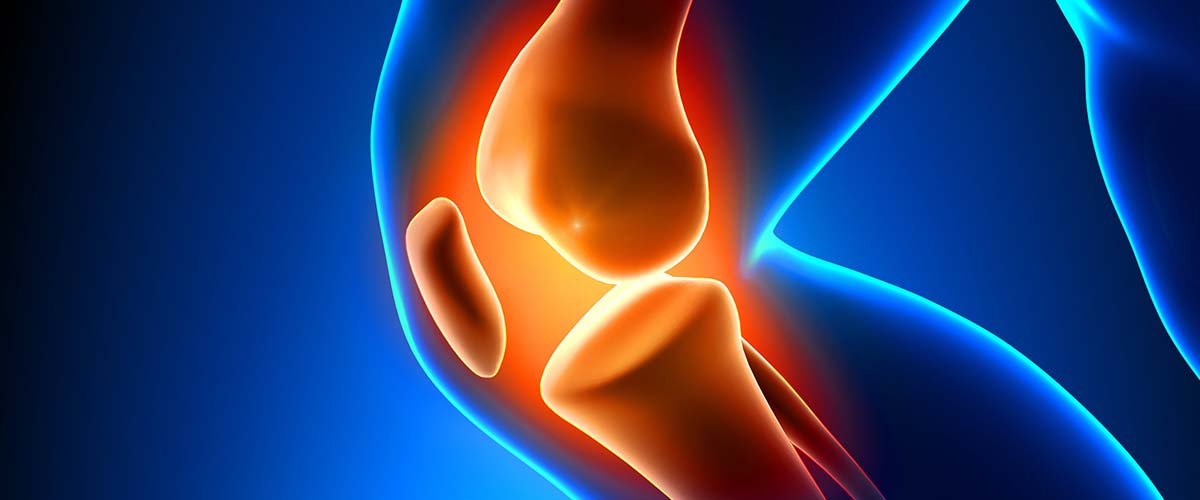
The posterior cruciate ligament (PCL) sits inside the knee, just behind the ACL, and keeps the shin bone from sliding backward under the thigh bone. It is stronger than the ACL and is torn far less often, usually by a hard blow to the front of a bent knee. Many isolated PCL tears heal well without surgery, while more severe and combined ligament injuries may need reconstruction. Dr. Andrew Dold, a board-certified, fellowship-trained sports medicine surgeon in Frisco, Texas, treats the full range of PCL injuries, including complex multi-ligament knee injuries.
- Common causes: a bent knee hitting a car dashboard, or a fall onto a bent knee in sports
- Isolated, lower-grade tears are often treated with bracing and physical therapy
- Complete tears combined with other ligament injuries usually need surgery
- Dr. Dold has published research on complex knee ligament injuries, including The Posteromedial Corner of the Knee (JAAOS, 2017)
Causes
- A dashboard injury, when the bent knee strikes the dashboard in a car accident
- A fall onto a bent knee with the foot pointed down, common in football, soccer and other sports
- Severe twisting or hyperextension injuries, which often damage other ligaments too
PCL tear grades
| Grade | What it means |
|---|---|
| Grade 1 | Partial tear; the ligament is stretched but still functions |
| Grade 2 | Partial tear; the ligament is looser |
| Grade 3 | Complete tear; the knee is unstable, and other ligaments are often injured too |
Symptoms
- Pain and swelling that develop soon after the injury
- Knee stiffness and difficulty walking
- A feeling that the knee is unstable or may give out
- Pain at the back of the knee or when kneeling
Isolated PCL tears can cause surprisingly mild symptoms at first, so they are sometimes missed. Any knee injury with significant swelling or instability should be examined.
Diagnosis
Dr. Dold examines the knee for a backward sag of the shin bone and tests the other ligaments, since PCL tears often occur together with injuries to the ACL, the MCL or the posterolateral corner. X-rays, available in our office, look for an avulsion fracture, where the ligament has pulled off a piece of bone. An MRI shows the ligaments, meniscus and cartilage, and stress X-rays can measure how loose the knee is.
Non-surgical treatment
Most isolated grade 1 and 2 PCL tears are treated without surgery:
- Rest, ice, compression and elevation
- A brace, sometimes one that supports the back of the shin bone, with crutches as needed
- Physical therapy focused on quadriceps strength, which helps stabilize the knee
- A gradual, guided return to sport
When surgery is needed
Surgery is recommended for PCL tears combined with other ligament injuries, for avulsion fractures, and for knees that stay unstable despite rehabilitation. Depending on the injury, Dr. Dold performs:
- PCL reconstruction: the torn ligament is replaced with a tendon graft, taken from your own body or from a donor
- PCL avulsion fixation: when the ligament has pulled off a piece of bone, the fragment is fixed back in place
- Posterolateral corner reconstruction: rebuilding the ligaments on the outer back side of the knee, which are often injured with the PCL
- Multi-ligament knee reconstruction: treating the PCL together with the ACL, the MCL and the posteromedial corner as needed
Watch Dr. Dold: PCL reconstruction video
Recovery timeline
These are general ranges. Your own timeline depends on the severity of the injury, any associated injuries and how rehabilitation progresses.
| Treatment | Typical recovery |
|---|---|
| Isolated, lower-grade tear treated without surgery | About 6 to 12 weeks |
| After PCL reconstruction | Full recovery typically takes about 6 to 12 months |
| Multi-ligament reconstruction | Often at the longer end of that range |
Watch Dr. Dold: ACL vs. PCL
Some of these videos show real surgery, so some viewers may prefer not to watch.
More videos on Dr. Dold’s YouTube channel.
What the research shows
- Diagnosis: a careful exam is accurate for most isolated PCL tears; the posterior drawer test with assessment of the shinbone “step-off” is the most reliable test. MRI confirms the tear and shows associated injuries, and stress X-rays measure how loose the knee is, which helps grade the injury.
- The PCL can heal: unlike the ACL, many PCL tears regain continuity on follow-up MRI. A dynamic PCL brace, which pushes the shinbone forward while the ligament heals, reduced laxity and preserved function in acute isolated tears.
- Most isolated tears do well without surgery: long-term studies show similar activity levels and function after non-operative and operative care of isolated grade I and II tears. Over many years, some knees develop cartilage wear, so follow-up and strengthening matter.
- When reconstruction is considered: complete (grade III) tears with persistent instability, PCL tears combined with other ligament injuries (especially the posterolateral corner), and displaced bone avulsions are usually treated surgically. Reconstruction provides more consistent stability, and combined reconstruction improves function in multiligament injuries.
- Technique: single-bundle and double-bundle reconstruction, transtibial and inlay techniques, and autograft and allograft all have good results, without a clear winner in comparative studies. Avulsion fractures can be fixed arthroscopically or open with similar outcomes.
- Rehabilitation protects the knee from sagging backward, with gradual knee bending and quadriceps strengthening; a randomized trial found that early immobilization after reconstruction improved stability.
Why see Dr. Dold
- Board certified by the American Board of Orthopaedic Surgery, with subspecialty certification in Sports Medicine
- Sports medicine and arthroscopy fellowship at NYU Langone / Hospital for Joint Diseases; orthopedic residency at the University of Toronto
- Fellow of the American College of Surgeons (FACS), the American Academy of Orthopaedic Surgeons (FAAOS), the American Orthopaedic Association (FAOA) and the Royal College of Surgeons of Canada (FRCSC)
- Published research on knee ligament and meniscus surgery, including The Posteromedial Corner of the Knee (JAAOS, 2017) and transtibial meniscal root repair (KSSTA, 2017)
- Team physician and surgical consultant to Rugby Canada; has cared for professional athletes from the NFL, NBA, NHL, MLS, PGA Tour and Major League Rugby
- D Magazine Best Doctors (Collin County), 2019–2026 · Rated 4.9 on Google
Related pages: ACL tears · MCL tears · Posteromedial corner injuries · Knee conditions
Frequently asked questions
Does a torn PCL need surgery?
Not always. Many isolated grade 1 and 2 PCL tears heal well with bracing and physical therapy. Surgery is usually recommended for complete tears with other ligament injuries, avulsion fractures, or a knee that stays unstable.
How is a PCL tear different from an ACL tear?
The ACL keeps the shin bone from sliding forward and is often torn with a cutting or pivoting movement. The PCL keeps it from sliding backward and is usually torn by a blow to the front of a bent knee. PCL tears are much less common.
How long does a PCL tear take to heal?
Isolated, lower-grade tears often recover in about 6 to 12 weeks. After PCL reconstruction, full recovery typically takes 6 to 12 months. Individual recovery varies.
Can I play sports with a torn PCL?
Some athletes return to sport with a partially torn PCL after rehabilitation. Whether that is safe for you depends on the grade of the tear and whether other structures are injured.
What is a multi-ligament knee injury?
It is an injury to two or more of the knee’s major ligaments, such as the PCL with the ACL or the posterolateral corner. These are serious injuries that usually require surgical reconstruction.
Can I be seen the same day?
Yes. Same-day appointments are available for new injuries, and walk-in visits are welcome Monday, Wednesday and Friday, 8:30 to 10:30 am.
Research cited on this page
- Shelbourne KD, Clark M, Gray T. Minimum 10-year follow-up of patients after an acute, isolated posterior cruciate ligament injury treated nonoperatively. Am J Sports Med. 2013;41(7):1526-1533. PubMed
At an average of 14 years after an isolated PCL tear treated without surgery, quadriceps strength averaged 97% of the other leg, and 89% of knees had normal or nearly normal X-rays. - Devitt BM, Dissanayake R, Clair J, et al. Isolated posterior cruciate reconstruction results in improved functional outcome but low rates of return to preinjury level of sport: a systematic review and meta-analysis. Orthop J Sports Med. 2018;6(10):2325967118804478. PubMed
Isolated PCL reconstruction improved knee function and stability scores, but only about 44% of patients returned to their pre-injury level of sport. - Rubinstein RA, Shelbourne KD, McCarroll JR, et al. The accuracy of the clinical examination in the setting of posterior cruciate ligament injuries. Am J Sports Med. 1994;22(4):550-7. PubMed
Clinical study: the posterior drawer test with assessment of the tibial step-off was the most sensitive and specific test; examiners agreed on the grade 81% of the time. - James EW, Williams BT, LaPrade RF. Stress radiography for the diagnosis of knee ligament injuries: a systematic review. Clin Orthop Relat Res. 2014;472(9):2644-57. PubMed
Systematic review: stress radiography is used to quantify PCL laxity, with varied techniques and accuracy. - Shelbourne KD, Jennings RW, Vahey TN. Magnetic resonance imaging of posterior cruciate ligament injuries: assessment of healing. Am J Knee Surg. 1999;12(4):209-13. PubMed
MRI study: most high-grade PCL tears regained continuity on follow-up MRI, often with altered shape. - Boks SS, Vroegindeweij D, Koes BW, et al. Follow-up of posttraumatic ligamentous and meniscal knee lesions detected at MR imaging: systematic review. Radiology. 2006;238(3):863-71. PubMed
Systematic review: the ACL and PCL can regain continuity after partial or complete rupture. - Jacobi M, Reischl N, Wahl P, et al. Acute isolated injury of the posterior cruciate ligament treated by a dynamic anterior drawer brace: a preliminary report. J Bone Joint Surg Br. 2010;92(10):1381-4. PubMed
Prospective study: a dynamic anterior-drawer brace for acute isolated PCL tears reduced laxity and preserved function at 2 years, supporting the PCL’s healing capacity. - Heinrichs CH, Schmoelz W, Mayr R, et al. Biomechanical evaluation of a novel dynamic posterior cruciate ligament brace. Clin Biomech (Bristol). 2016;33:20-25. PubMed
Biomechanical study: a dynamic PCL brace reduced posterior tibial translation to normal values. - Zappalà G, Delmedico M, Ciclamini D, et al. Effectiveness of Dynamic Brace in Posterior Tibial Translation in Acute PCL Lesion: A Pilot, Single Center Exploratory Study. Healthcare (Basel). 2026;14(7). PubMed
Study: a dynamic brace reduced stressed posterior tibial translation from 7.1 to 2.7 mm. - Welch T, Keller T, Maldonado R, et al. The effect of a dynamic PCL brace on patellofemoral compartment pressures in PCL-and PCL/PLC-deficient knees. J Exp Orthop. 2017;4(1):10. PubMed
Biomechanical study: a dynamic PCL brace reduced kneecap joint pressures in PCL-deficient knees. - Shelbourne KD, Benner RW, Ringenberg JD, et al. Optimal management of posterior cruciate ligament injuries: current perspectives. Orthop Res Rev. 2017;9:13-22. PubMed
Systematic review: long-term activity and function were similar after non-operative and operative management of isolated PCL injuries. - Grassmayr MJ, Parker DA, Coolican MR, et al. Posterior cruciate ligament deficiency: biomechanical and biological consequences and the outcomes of conservative treatment. A systematic review. J Sci Med Sport. 2008;11(5):433-43. PubMed
Systematic review: isolated PCL deficiency often allows return to activity, but articular damage may occur over time. - Ahn S, Lee YS, Song YD, et al. Does surgical reconstruction produce better stability than conservative treatment in the isolated PCL injuries?. Arch Orthop Trauma Surg. 2016;136(6):811-9. PubMed
Systematic review: reconstruction gave more consistent stability than non-operative care, with more complications to consider. - Kim JG, Lee YS, Yang BS, et al. Rehabilitation after posterior cruciate ligament reconstruction: a review of the literature and theoretical support. Arch Orthop Trauma Surg. 2013;133(12):1687-95. PubMed
Systematic review of rehabilitation after PCL reconstruction: protection against posterior sag with gradual return of knee bending. - Yoon KH, Park SW, Lee SH, et al. Does cast immobilization contribute to posterior stability after posterior cruciate ligament reconstruction?. Arthroscopy. 2013;29(3):500-6. PubMed
Randomized trial: cast immobilization for 5 weeks after reconstruction improved stability on stress X-rays at 2 years. - Kohen RB, Sekiya JK. Single-bundle versus double-bundle posterior cruciate ligament reconstruction. Arthroscopy. 2009;25(12):1470-7. PubMed
Systematic review: no clear advantage of single-bundle versus double-bundle PCL reconstruction. - Qi YS, Wang HJ, Wang SJ, et al. A systematic review of double-bundle versus single-bundle posterior cruciate ligament reconstruction. BMC Musculoskelet Disord. 2016;17:45. PubMed
Systematic review: whether single-bundle or double-bundle reconstruction is better remains uncertain. - Zhao JX, Zhang LH, Mao Z, et al. Outcome of posterior cruciate ligament reconstruction using the single- versus double bundle technique: a meta-analysis. J Int Med Res. 2015;43(2):149-60. PubMed
Meta-analysis: limited data suggest better stability with double-bundle reconstruction for isolated tears; low-quality evidence. - Lee DY, Kim DH, Kim HJ, et al. Posterior Cruciate Ligament Reconstruction With Transtibial or Tibial Inlay Techniques: A Meta-analysis of Biomechanical and Clinical Outcomes. Am J Sports Med. 2018;46(11):2789-2797. PubMed
Meta-analysis: transtibial and tibial inlay techniques both restore knee function; which is better remains unclear. - May JH, Gillette BP, Morgan JA, et al. Transtibial versus inlay posterior cruciate ligament reconstruction: an evidence-based systematic review. J Knee Surg. 2010;23(2):73-9. PubMed
Systematic review: no prospective studies directly compare transtibial and inlay reconstruction. - Song JG, Kim HJ, Han JH, et al. Clinical Outcome of Posterior Cruciate Ligament Reconstruction With and Without Remnant Preservation. Arthroscopy. 2015;31(9):1796-806. PubMed
Systematic review: reconstruction preserving the PCL remnant gave satisfactory outcomes. - Hudgens JL, Gillette BP, Krych AJ, et al. Allograft versus autograft in posterior cruciate ligament reconstruction: an evidence-based systematic review. J Knee Surg. 2013;26(2):109-15. PubMed
Systematic review comparing allograft and autograft for isolated PCL reconstruction. - Tian P, Hu WQ, Li ZJ, et al. Comparison of autograft and allograft tendons in posterior cruciate ligament reconstruction: A meta-analysis. Medicine (Baltimore). 2017;96(27):e7434. PubMed
Meta-analysis: insufficient evidence that allograft is better than autograft for PCL reconstruction. - Hammoud S, Reinhardt KR, Marx RG. Outcomes of posterior cruciate ligament treatment: a review of the evidence. Sports Med Arthrosc Rev. 2010;18(4):280-91. PubMed
Systematic review: generally good results after PCL reconstruction, but firm recommendations on technique cannot be made. - Petrillo S, Volpi P, Papalia R, et al. Management of combined injuries of the posterior cruciate ligament and posterolateral corner of the knee: a systematic review. Br Med Bull. 2017;123(1):47-57. PubMed
Systematic review: combined PCL and posterolateral corner reconstruction improved all clinical scores. - Rochecongar G, Plaweski S, Azar M, et al. Management of combined anterior or posterior cruciate ligament and posterolateral corner injuries: a systematic review. Orthop Traumatol Surg Res. 2014;100(8 Suppl):S371-8. PubMed
Systematic review: combined PCL and posterolateral corner injuries had satisfactory but lower outcomes than isolated cruciate reconstruction. - Hooper PO, Silko C, Malcolm TL, et al. Management of Posterior Cruciate Ligament Tibial Avulsion Injuries: A Systematic Review. Am J Sports Med. 2018;46(3):734-742. PubMed
Systematic review: arthroscopic and open fixation of PCL avulsion fractures give similar outcomes. - Sundararajan SR, Joseph JB, Ramakanth R, et al. Arthroscopic reduction and internal fixation (ARIF) versus open reduction internal fixation (ORIF) to elucidate the difference for tibial side PCL avulsion fixation: a randomized controlled trial (RCT). Knee Surg Sports Traumatol Arthrosc. 2021;29(4):1251-1257. PubMed
Randomized trial: both arthroscopic and open fixation of PCL avulsion fractures gave good results. - D’Ambrosi R, Farinelli L, Kambhampati SBS, et al. Low rate of growth disturbance after posterior cruciate ligament reconstruction or repair in skeletally immature patients: A systematic review. J ISAKOS. 2025;10:100378. PubMed
Systematic review: PCL reconstruction in children has a low risk of growth disturbance.
Medically reviewed by Andrew P. Dold, MD, FAOA, FAAOS, FACS, FRCSC. Last reviewed October 2026. This page is general information, not medical advice. Individual results vary.