








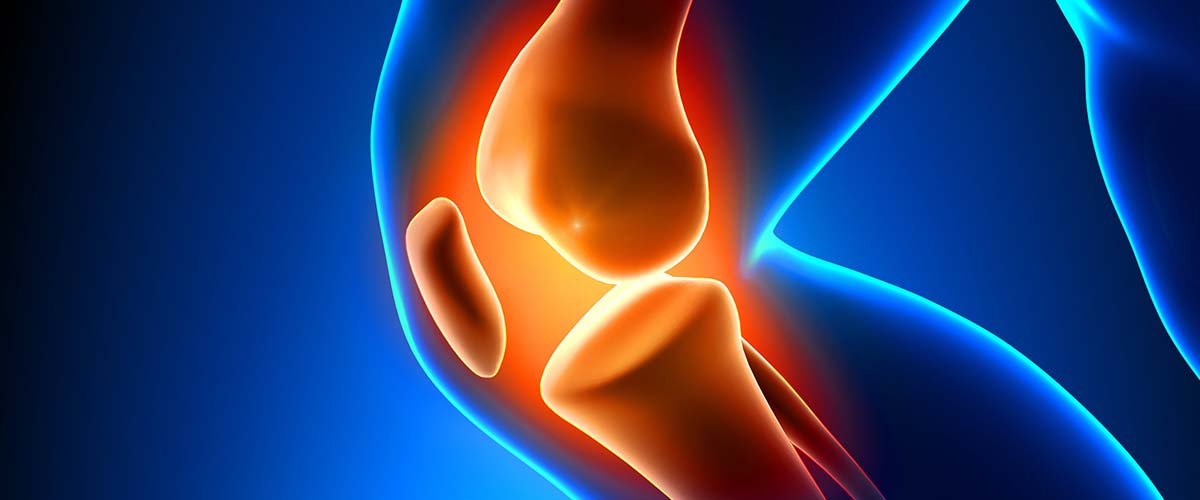
The posteromedial corner (PMC) is a group of structures on the inner back side of the knee, behind the medial collateral ligament (MCL). It works with the MCL to keep the knee from buckling inward and from twisting abnormally. PMC injuries are often missed because they are overshadowed by MCL, ACL or PCL tears, yet an untreated injury can lead to ongoing instability and can strain a reconstructed ACL or PCL. Dr. Andrew Dold is the lead author of a review of this injury in the Journal of the American Academy of Orthopaedic Surgeons.1
The Posteromedial Corner of the Knee: Anatomy, Pathology, and Management Strategies
Dold AP, Swensen S, Strauss E, Alaia M. Journal of the American Academy of Orthopaedic Surgeons, 2017.1
Key points from Dr. Dold’s review:
- The posteromedial corner is made up of five structures behind the MCL, which modern MRI can identify.
- An injury to both the MCL and the posterior oblique ligament causes a rotational instability called anteromedial rotatory instability.
- Like posterolateral corner injuries, untreated PMC injuries put extra strain on ACL and PCL reconstructions and can contribute to graft failure and poor results.
- Early results show that anatomic reconstruction can restore stability and improve function.
- Understanding the anatomy, exam findings and imaging is key to treating these injuries.
What is the posteromedial corner?
The PMC includes five structures that sit behind the MCL:1
- Posterior oblique ligament (POL), the main stabilizer of the corner
- Semimembranosus tendon and its expansions, which add dynamic stability
- Oblique popliteal ligament
- Posteromedial joint capsule
- Back (posterior horn) of the medial meniscus
How do PMC injuries happen?
PMC injuries usually occur with a force that pushes the knee inward combined with twisting, often in contact sports, and they frequently happen together with MCL, ACL or PCL tears as part of a multi-ligament knee injury. Injury to both the MCL and the posterior oblique ligament causes the knee to rotate abnormally, called anteromedial rotatory instability.1
Diagnosis
The hallmark of a posteromedial corner injury on exam is anteromedial rotatory instability: the inner side of the knee opens and the front-inner part of the shinbone slides forward and rotates. Dr. Dold tests for this by stressing the knee at about 30° of bending while turning the foot outward, and with an anteromedial drawer test at 90°. He also stresses the knee with it fully straight and slightly bent to tell an isolated MCL injury apart from a combined MCL and PMC injury, and checks the PCL, because the posteromedial structures help control backward movement of the shinbone.1
X-rays look for avulsion fractures and signs of a more serious multi-ligament injury, and standing alignment X-rays help with planning. Stress X-rays can measure how much the knee opens compared with the other side. MRI is the imaging test of choice: the thin PMC structures can be hard to see directly, but swelling and thickening reveal the injury, and MRI shows associated ligament and meniscus damage.1
Treatment
In Dr. Dold’s review, the treatment approach depends on the type of injury:1
- Isolated, lower-grade injuries of the MCL and posteromedial corner can be treated without surgery, with a hinged brace and rehabilitation, much like MCL tears.
- Tibial-sided avulsions, where a sleeve of tissue including the MCL and posteromedial corner pulls off the shinbone, may benefit from early fixation.
- Multi-ligament injuries: when the soft tissues allow, the torn cruciate ligaments are reconstructed early, and the medial side is repaired or reconstructed depending on the quality of the tissue. Donor (allograft) tissue is often used to avoid harvesting the patient’s own tendons.
- Chronic injuries with symptomatic rotational instability are considered for reconstruction. Patients with significant knock-knee alignment may need a corrective osteotomy as well.
Surgery usually starts with an examination under anesthesia and arthroscopy, so meniscus tears and cartilage can be treated at the same time. Repair restores the structures from deep to superficial, often including the meniscus attachments, the posterior oblique ligament and the semimembranosus tendon, using suture anchors or other fixation.1
In a systematic review of 355 surgically repaired knees, about 90% achieved good or near-normal stability, with a failure rate of about 6%.2 Anatomic reconstruction techniques restored stability more reliably than non-anatomic techniques,3 and after reconstruction of the MCL and posterior oblique ligament, about 88% to 91% of patients returned to recreational sports within 6 to 12 months.4 In a group of knee-dislocation patients described in Dr. Dold’s review, 80% of those who had the posteromedial corner repaired regained stability compared with 96% of those who had it reconstructed.1
What the research shows
- Anatomy and diagnosis: the posteromedial corner includes the posterior oblique ligament and capsule, which control rotation, while the MCL controls side-to-side (valgus) stability. Exam with the knee straight and slightly bent, valgus stress X-rays compared with the other knee, and MRI help grade the injury and identify associated ACL, PCL and meniscus injuries.
- Rotational instability: injury to the posteromedial corner allows the inner tibia to rotate and shift forward (anteromedial rotatory instability), which can strain an ACL graft if left untreated.
- Many isolated injuries heal with bracing: isolated grade I and II medial injuries do well without surgery. When the MCL is injured along with the ACL, allowing the MCL to heal in a brace before ACL reconstruction is a common strategy.
- When surgery is needed: combined grade III medial and posteromedial injuries, especially with cruciate tears, persistent instability, or bony avulsions usually need repair or reconstruction. Reviews show that anatomic reconstruction restores stability more consistently than older non-anatomic techniques; repair alone works in many acute cases.
- Grafts: autograft and allograft reconstructions give comparable results.
Why see Dr. Dold
- Board certified by the American Board of Orthopaedic Surgery, with subspecialty certification in Sports Medicine
- Sports medicine and arthroscopy fellowship at NYU Langone / Hospital for Joint Diseases; orthopedic residency at the University of Toronto
- Fellow of the American College of Surgeons (FACS), the American Academy of Orthopaedic Surgeons (FAAOS), the American Orthopaedic Association (FAOA) and the Royal College of Surgeons of Canada (FRCSC)
- Published research on knee ligament and meniscus surgery, including The Posteromedial Corner of the Knee (JAAOS, 2017) and transtibial meniscal root repair (KSSTA, 2017)
- Team physician and surgical consultant to Rugby Canada; has cared for professional athletes from the NFL, NBA, NHL, MLS, PGA Tour and Major League Rugby
- D Magazine Best Doctors (Collin County), 2019–2026 · Rated 4.9 on Google
Frequently asked questions
What is a posteromedial corner injury?
An injury to the structures on the inner back side of the knee behind the MCL, including the posterior oblique ligament, semimembranosus tendon, oblique popliteal ligament, joint capsule and back of the medial meniscus.1
Why do posteromedial corner injuries matter?
They can cause rotational instability, and if left untreated they place extra strain on ACL and PCL reconstructions, which can contribute to graft failure.1
Does a posteromedial corner injury need surgery?
Not always. Lower-grade isolated injuries often heal with bracing and rehabilitation. Surgery is considered for ongoing instability or multi-ligament injuries.1
How is a posteromedial corner injury diagnosed?
With a careful knee exam, including stress testing with the knee straight and slightly bent, and an MRI, which can identify the structures of the corner.1
What did Dr. Dold’s research show?
His JAAOS review describes the anatomy of the corner, how combined MCL and posterior oblique ligament injuries cause rotational instability, and early evidence that anatomic reconstruction can restore stability and improve function.1
Research cited on this page
- Dold AP, Swensen S, Strauss E, Alaia M. The Posteromedial Corner of the Knee: Anatomy, Pathology, and Management Strategies. J Am Acad Orthop Surg. 2017;25(11):752-761. PubMed
- DeLong JM, Waterman BR. Surgical Repair of Medial Collateral Ligament and Posteromedial Corner Injuries of the Knee: A Systematic Review. Arthroscopy. 2015;31(11):2249-2255. PubMed
- DeLong JM, Waterman BR. Surgical Techniques for the Reconstruction of Medial Collateral Ligament and Posteromedial Corner Injuries of the Knee: A Systematic Review. Arthroscopy. 2015;31(11):2258-2272. PubMed
- D’Ambrosi R, Corona K, Guerra G, et al. Midterm Outcomes, Complications, and Return to Sports After Medial Collateral Ligament and Posterior Oblique Ligament Reconstruction for Medial Knee Instability: A Systematic Review. Orthop J Sports Med. 2021;9(11):23259671211056070. PubMed
- LaPrade RF, Engebretsen AH, Ly TV, et al. The anatomy of the medial part of the knee. J Bone Joint Surg Am. 2007;89(9):2000-10. PubMed
Anatomic study: the medial knee ligaments, including the superficial MCL and posterior oblique ligament, have consistent attachments. - Wijdicks CA, Ewart DT, Nuckley DJ, et al. Structural properties of the primary medial knee ligaments. Am J Sports Med. 2010;38(8):1638-46. PubMed
Biomechanical study: the superficial MCL, posterior oblique ligament and deep MCL all bear clinically important loads. - Wijdicks CA, Griffith CJ, Johansen S, et al. Injuries to the medial collateral ligament and associated medial structures of the knee. J Bone Joint Surg Am. 2010;92(5):1266-80. PubMed
Review: diagnosis is mainly by exam with valgus stress at full extension and at 20–30 degrees of flexion. - DePhillipo NN, Kane PW, Engebretsen L. Stress Radiographs for Ligamentous Knee Injuries. Arthroscopy. 2021;37(1):15-16. PubMed
Technique: valgus stress radiographs compared with the other knee grade medial knee injury severity. - Engebretsen L, Lind M. Anteromedial rotatory laxity. Knee Surg Sports Traumatol Arthrosc. 2015;23(10):2797-804. PubMed
Review: injury to the posteromedial corner underlies anteromedial rotatory laxity, in which the inner tibia subluxes forward. - Stevens KJ, Albtoush OM, Lutz AM. The Stieda fracture revisited. Skeletal Radiol. 2021;50(5):945-953. PubMed
MRI study: Stieda (MCL avulsion) fractures are strongly associated with posteromedial corner and other ligament injuries. - Roth J, Taylor DC. Management of acute isolated medial and posteromedial instability of the knee. Sports Med Arthrosc Rev. 2015;23(2):71-6. PubMed
Review: isolated grade I and II medial injuries do well non-operatively; isolated grade III injuries are less common and more controversial. - Elliott M, Johnson DL. Management of medial-sided knee injuries. Orthopedics. 2015;38(3):180-4. PubMed
Review: medial-side injuries often come with other ligament, meniscus and cartilage injuries. - Stannard JP. Medial and posteromedial instability of the knee: evaluation, treatment, and results. Sports Med Arthrosc Rev. 2010;18(4):263-8. PubMed
Review: combined grade III MCL and posteromedial corner injuries with ACL or PCL tears should usually be repaired or reconstructed. - Shultz CL, Poehlein E, Morriss NJ, et al. Nonoperative Management, Repair, or Reconstruction of the Medial Collateral Ligament in Combined Anterior Cruciate and Medial Collateral Ligament Injuries-Which Is Best? A Systematic Review and Meta-analysis. Am J Sports Med. 2024;52(2):522-534. PubMed
Meta-analysis: in combined ACL and MCL injuries, delayed ACL reconstruction allows the MCL to heal; persistent laxity is addressed surgically. - Mowers C, Jackson GR, Condon JJ, et al. Medial Collateral Ligament Reconstruction and Repair Show Similar Improvement in Outcome Scores, But Repair Shows Higher Rates of Knee Stiffness and Failure: A Systematic Review. Arthroscopy. 2023;39(10):2231-2240. PubMed
Systematic review: MCL reconstruction and repair both improved function scores. - Blackwood NO, Blitz JA, Vopat B, et al. Medial Collateral Ligament Reconstruction With Autograft Versus Allograft: A Systematic Review. Am J Sports Med. 2024;52(13):3419-3426. PubMed
Systematic review: autograft and allograft MCL reconstruction gave comparable outcomes. - Laprade RF, Wijdicks CA. Surgical technique: development of an anatomic medial knee reconstruction. Clin Orthop Relat Res. 2012;470(3):806-14. PubMed
Technique study: anatomic medial knee reconstruction improved IKDC scores from 43.5 to 76.2 and reduced stress gapping from 6.2 to 1.3 mm. - Tollefson LV, Shoemaker EP, Rasmussen MT, et al. Anatomic Reconstruction of the Medial Collateral Ligament and the Posterior Oblique Ligament With Allograft for High-Grade Valgus Laxity. Arthrosc Tech. 2025;14(8):103691. PubMed
Technical note: reconstruction is typically recommended over repair for high-grade posteromedial corner injuries that fail conservative care. - Mancini EJ, Kohen R, Esquivel AO, et al. Comparison of ACL Strain in the MCL-Deficient and MCL-Reconstructed Knee During Simulated Landing in a Cadaveric Model. Am J Sports Med. 2017;45(5):1090-1094. PubMed
Biomechanical study: an incompetent MCL increases strain on the ACL during valgus landing. - Koga H, Muneta T, Yagishita K, et al. Surgical management of grade 3 medial knee injuries combined with cruciate ligament injuries. Knee Surg Sports Traumatol Arthrosc. 2012;20(1):88-94. PubMed
Study: a surgical strategy for grade 3 medial injuries combined with cruciate tears restored medial stability. - Moatshe G, Vap AR, Getgood A, et al. Medial-Sided Injuries in the Multiple Ligament Knee Injury. J Knee Surg. 2020;33(5):431-439. PubMed
Review: anatomic posteromedial corner reconstructions are biomechanically and clinically validated. - Fanelli GC, Stannard JP, Stuart MJ, et al. Management of complex knee ligament injuries. Instr Course Lect. 2011;60:523-35. PubMed
Instructional review: recommendations for complex knee ligament injuries, including early surgical management and reconstruction of damaged structures.
Medically reviewed by Andrew P. Dold, MD, FAOA, FAAOS, FACS, FRCSC. Last reviewed October 2026. This page is general information, not medical advice. Individual results vary.