








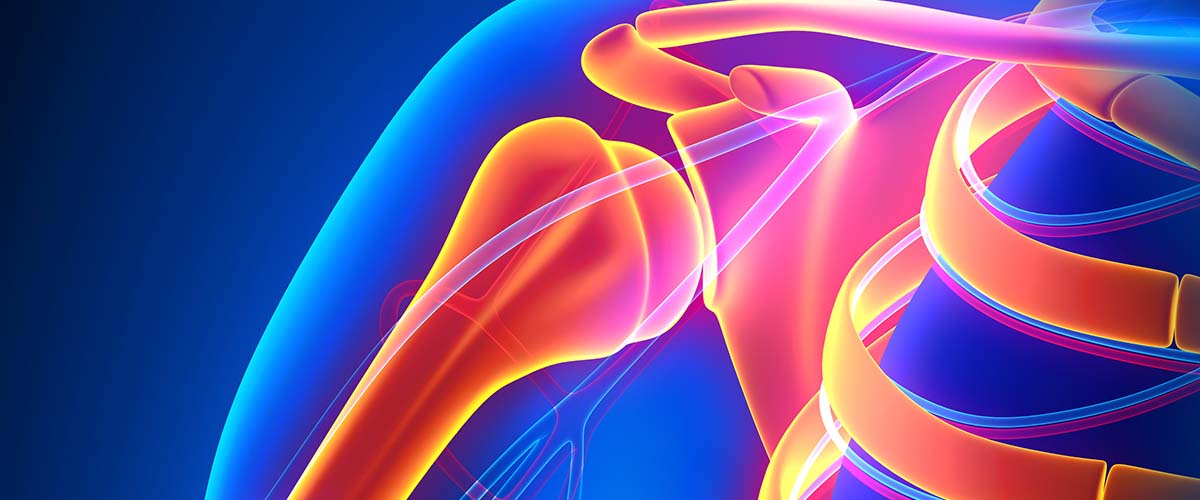
The biceps tendon attaches the biceps muscle to the shoulder at the top and to the elbow at the bottom. At the shoulder, the long head of the biceps tendon runs through the shoulder joint, which makes it prone to inflammation (biceps tendonitis), fraying and tears. Most biceps problems at the shoulder improve with non-surgical treatment; when they don’t, a minimally invasive biceps tenodesis can relieve pain and restore strength. Dr. Andrew Dold, a board-certified, fellowship-trained sports medicine surgeon in Frisco, Texas, treats the full range of biceps tendon problems at the shoulder and elbow.
- Biceps tendonitis causes pain at the front of the shoulder, especially with lifting and overhead activities
- A torn biceps tendon at the shoulder can cause a sudden pop, bruising and a “Popeye” bulge in the upper arm
- Biceps problems often occur together with rotator cuff tears, impingement or SLAP tears
- Most patients improve with rest, medication and physical therapy
- When surgery is needed, biceps tenodesis reattaches the tendon to the upper arm bone
Causes
- Overuse: repetitive lifting, throwing, swimming and overhead work gradually wear and fray the tendon
- Injury: a fall on an outstretched arm or lifting something heavy can tear the tendon
- Other shoulder problems: rotator cuff tears, impingement and SLAP tears often affect the biceps tendon too
- Risk factors: age, overhead sports, smoking and corticosteroid use
Symptoms
- Aching pain at the front of the shoulder, which may travel down the arm
- Pain with lifting, reaching overhead or throwing
- A clicking or snapping sensation in the shoulder
- With a tear: a sudden sharp pain or pop, bruising, cramping and a bulge in the upper arm (the “Popeye” sign)
- Weakness turning the palm up or bending the elbow
Diagnosis
Dr. Dold examines the shoulder for tenderness along the biceps groove and tests the rotator cuff, the labrum and the biceps itself. X-rays, available in our office, look for bone spurs and arthritis. An MRI or ultrasound shows the biceps tendon, the rotator cuff and the labrum, so that every source of pain can be addressed.
Non-surgical treatment
Most biceps tendonitis and many proximal biceps tears are treated without surgery:
- Rest from aggravating activities and ice
- Anti-inflammatory medication when appropriate
- Physical therapy to restore motion and strengthen the shoulder and rotator cuff
- An injection for persistent pain in some cases
When surgery is needed
Surgery is considered when pain and weakness continue despite non-surgical treatment, when the tendon is badly frayed or unstable, or when another shoulder problem needs repair at the same time. Options include:
- Biceps tenodesis: the damaged portion of the tendon is released from the shoulder joint and reattached to the upper arm bone (humerus), relieving pain while preserving strength and the normal shape of the arm. It is often performed arthroscopically, through small incisions
- Biceps tenotomy: the tendon is released without reattachment. It is a simpler procedure with a quick recovery, often chosen for older or lower-demand patients, but it can leave a cosmetic bulge or cramping
- SLAP repair: when the labrum where the biceps attaches is torn, it can be repaired. See SLAP tears
- Distal biceps repair: a rupture of the biceps tendon at the elbow is usually repaired surgically. See distal biceps tendon rupture
Recovery timeline after biceps tenodesis
These are general ranges. Your own timeline depends on any other procedures performed at the same time and how rehabilitation progresses.
| Stage | Typical timing |
|---|---|
| Sling | About 2 to 4 weeks |
| Physical therapy | Begins early with gentle motion, then progresses to strengthening |
| Return to full activity | About 3 to 4 months |
Recovery is usually longer when a rotator cuff repair or other procedure is done at the same surgery.
Why see Dr. Dold
- Board certified by the American Board of Orthopaedic Surgery, with subspecialty certification in Sports Medicine
- Sports medicine and arthroscopy fellowship at NYU Langone / Hospital for Joint Diseases; orthopedic residency at the University of Toronto
- Fellow of the American College of Surgeons (FACS), the American Academy of Orthopaedic Surgeons (FAAOS), the American Orthopaedic Association (FAOA) and the Royal College of Surgeons of Canada (FRCSC)
- Author of a SLAP repair book chapter (Springer, 2017) and research on shoulder suture anchors (KSSTA, 2013)
- Team physician and surgical consultant to Rugby Canada; has cared for professional athletes from the NFL, NBA, NHL, MLS, PGA Tour and Major League Rugby
- D Magazine Best Doctors (Collin County), 2019–2026 · Rated 4.9 on Google
Related pages: SLAP tears · Rotator cuff tears · Shoulder impingement · Distal biceps rupture
Frequently asked questions
What is biceps tendonitis?
Biceps tendonitis is inflammation or irritation of the long head of the biceps tendon at the front of the shoulder. It causes pain with lifting and overhead activity and often occurs together with rotator cuff problems.
Can a torn biceps tendon at the shoulder heal without surgery?
Many proximal biceps tears are treated without surgery, and most people keep good function. Surgery is considered when pain, cramping or weakness persist, or for active patients who want to restore strength and the normal shape of the arm.
What is the difference between biceps tenodesis and tenotomy?
In a tenodesis, the tendon is reattached to the upper arm bone, preserving strength and the arm’s shape. In a tenotomy, the tendon is released without reattachment; recovery is quicker but a bulge or cramping can occur.
How long is recovery after biceps tenodesis?
Most patients wear a sling for about 2 to 4 weeks and return to full activity in about 3 to 4 months. Recovery is longer if other repairs are done at the same time. Individual recovery varies.
Is a biceps tear at the elbow different?
Yes. A distal biceps rupture at the elbow causes more loss of strength, and surgical repair is usually recommended, ideally within a few weeks of the injury.
Can I be seen the same day?
Yes. Same-day appointments are available for new injuries, and walk-in visits are welcome Monday, Wednesday and Friday, 8:30 to 10:30 am.
Medically reviewed by Andrew P. Dold, MD, FAOA, FAAOS, FACS, FRCSC. This page is general information, not medical advice. Individual results vary.