







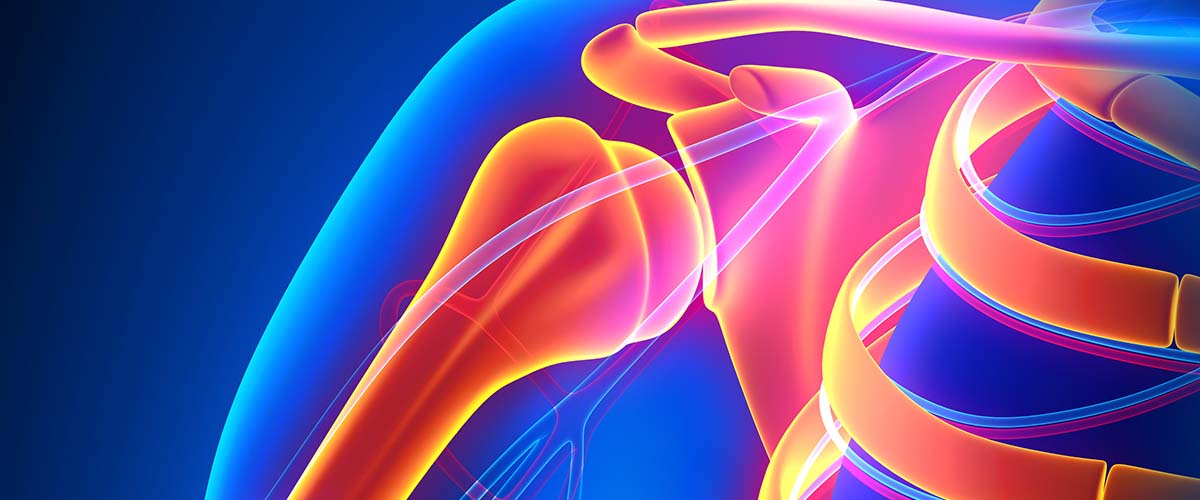
A SLAP tear (Superior Labrum, Anterior to Posterior) is an injury to the top of the labrum, the rim of cartilage around the shoulder socket, where the long head of the biceps tendon attaches. The term was coined in 1990 to describe a tear that starts at the back of the upper labrum and extends forward, involving the biceps anchor.1 SLAP tears occur in throwing and overhead athletes and after falls or traction injuries. Dr. Andrew Dold, a board-certified, fellowship-trained sports medicine surgeon in Frisco, Texas, treats SLAP tears with rehabilitation first and, when needed, SLAP repair or biceps tenodesis.
- Physical therapy is the first treatment for most patients
- SLAP repair is mainly for young, active patients and overhead athletes
- Biceps tenodesis is often a better choice for patients in their late 30s and older, and after a failed repair
- Overhead throwers, especially pitchers, have the hardest time returning to their previous level after surgery
SLAP repair book chapter
Dr. Dold is the first author of a chapter on treating a type 2 SLAP tear with SLAP repair, published in The Biceps and Superior Labrum Complex: A Clinical Casebook (Springer, 2017). The chapter focuses on repair technique, including care to avoid over-tightening the front of the shoulder.2
Symptoms
- Deep pain in the shoulder, often worse with overhead activity or throwing1
- Painful catching, clicking or popping1
- Loss of throwing velocity or a “dead arm” feeling
- Pain at the front of the shoulder where the biceps tendon runs
Diagnosis
Dr. Dold examines the shoulder with tests that stress the biceps anchor and labrum, and checks for associated problems such as shoulder-blade (scapular) dyskinesis, loss of internal rotation, rotator cuff injury or instability. An MRI or MR arthrogram helps show the tear, but SLAP tears can be hard to see on imaging,1 and normal variations of the upper labrum can look like a tear.
Treatment without surgery
Most patients start with physical therapy focusing on shoulder-blade control, rotator cuff strength and stretching of the tight back of the shoulder, followed by a gradual return to throwing or overhead sport. Anti-inflammatory medicine and, in selected cases, a cortisone or PRP injection can help control pain during rehabilitation.
In one study, patients who succeeded with non-surgical treatment had significant improvements in pain, function and quality of life, and all returned to sport, although about half of the group eventually chose surgery.3 In professional baseball players, a rehabilitation program that corrected shoulder-blade dyskinesis and loss of internal rotation returned 40% of pitchers to play, compared with 48% of pitchers after surgery, so rehabilitation should be tried first in throwers.4
Surgery
When symptoms persist despite good rehabilitation, Dr. Dold chooses between two arthroscopic or minimally invasive procedures based on your age, sport and tear:
- SLAP repair: the torn labrum and biceps anchor are reattached to the socket with small suture anchors. This is mainly used for young, active patients and overhead athletes.
- Biceps tenodesis: the biceps tendon is detached from the labrum and fixed to the upper arm bone, removing the painful pull on the torn anchor. This is often preferred for older patients and after a failed repair.
Age matters. In a prospective study of 179 SLAP repairs in a young, active population, 37% met criteria for failure and 28% had revision surgery; patients older than 36 were about 3.5 times more likely to fail.5 A meta-analysis comparing the two procedures found higher patient satisfaction (96% vs 76%) and return to sport (81% vs 64%) after biceps tenodesis, with similar function scores.6 Another review found reoperation in 12% after repair compared with 6% after tenodesis.7 For patients whose SLAP repair failed, biceps tenodesis returned 81% to active duty and sports.8
Recovery
After surgery, the arm is protected in a sling for several weeks, followed by staged physical therapy. Return to throwing and overhead sport takes several months and follows a structured throwing program. Dr. Dold will give you a specific plan.
Watch Dr. Dold: SLAP tear videos
Watch Dr. Dold: SLAP tears
Some of these videos show real surgery, so some viewers may prefer not to watch.
More videos on Dr. Dold’s YouTube channel.
What the research shows
SLAP tears are a good example of why surgery should not be the first step. Here is what the research shows.
Rehabilitation first
Many athletes with SLAP tears return to sport with a structured rehabilitation program, especially when they complete it before returning to throwing. Exam tests and MRI each have limits, so the diagnosis is based on the full picture.
A sham-controlled trial
In a Norwegian randomized trial of patients with type II SLAP tears (mostly non-athletes in their 40s), neither labral repair nor biceps tenodesis gave a significant benefit over sham surgery at 2 years. This trial is an important reason why surgery is reserved for patients whose symptoms persist despite good rehabilitation and whose exam, imaging and goals clearly point to the SLAP tear.
Repair or tenodesis
When surgery is needed, meta-analyses find biceps tenodesis gives similar or better satisfaction and return to sport than SLAP repair in many patients, and it is the usual choice after a failed repair. SLAP repair remains an option for young overhead athletes.
Throwers
Return to play after SLAP surgery is lower in overhead throwers, especially pitchers, than in other athletes, which is why rehabilitation is tried first.
Why see Dr. Dold
- Board certified by the American Board of Orthopaedic Surgery, with subspecialty certification in Sports Medicine
- Sports medicine and arthroscopy fellowship at NYU Langone / Hospital for Joint Diseases; orthopedic residency at the University of Toronto
- Fellow of the American College of Surgeons (FACS), the American Academy of Orthopaedic Surgeons (FAAOS), the American Orthopaedic Association (FAOA) and the Royal College of Surgeons of Canada (FRCSC)
- Author of a SLAP repair book chapter (Springer, 2017) and research on shoulder suture anchors (KSSTA, 2013)
- Team physician and surgical consultant to Rugby Canada; has cared for professional athletes from the NFL, NBA, NHL, MLS, PGA Tour and Major League Rugby
- D Magazine Best Doctors (Collin County), 2019–2026 · Rated 4.9 on Google
Frequently asked questions
Does a SLAP tear always need surgery?
No. Most patients start with physical therapy, and many improve enough to return to their activities.3,4
What is the difference between SLAP repair and biceps tenodesis?
SLAP repair reattaches the torn labrum and biceps anchor; tenodesis moves the biceps tendon to the upper arm bone so it no longer pulls on the torn area. Tenodesis is often preferred for older patients.6
Why does age matter?
In a large prospective study, patients older than 36 were about 3.5 times more likely to have a failed SLAP repair.5
Can pitchers return after SLAP surgery?
It is harder for pitchers than for other athletes. In professional baseball, less than half of pitchers returned to play after surgery, which is why rehabilitation is tried first.4
Has Dr. Dold published on SLAP tears?
Yes. He is the first author of a SLAP repair chapter in The Biceps and Superior Labrum Complex: A Clinical Casebook (Springer, 2017).2
Considering surgery? Read about shoulder arthroscopy in Frisco, the minimally invasive procedure Dr. Dold uses for rotator cuff, labral and biceps problems.
Research cited on this page
- Snyder SJ, Karzel RP, Del Pizzo W, et al. SLAP lesions of the shoulder. Arthroscopy. 1990;6(4):274-279. PubMed
- Dold A, Weinberg M, Gyftopoulos S, Jazrawi L. Type 2 SLAP tear in a 22 year old male with associated Buford complex treated with SLAP repair with care to avoid overconstraining anteriorly. In: Strauss E, Verma N, eds. The Biceps and Superior Labrum Complex: A Clinical Casebook. Springer; 2017.
- Edwards SL, Lee JA, Bell JE, et al. Nonoperative treatment of superior labrum anterior posterior tears: improvements in pain, function, and quality of life. Am J Sports Med. 2010;38(7):1456-1461. PubMed
- Fedoriw WW, Ramkumar P, McCulloch PC, et al. Return to play after treatment of superior labral tears in professional baseball players. Am J Sports Med. 2014;42(5):1155-1160. PubMed
- Provencher MT, McCormick F, Dewing C, et al. A prospective analysis of 179 type 2 superior labrum anterior and posterior repairs: outcomes and factors associated with success and failure. Am J Sports Med. 2013;41(4):880-886. PubMed
- Hurley ET, Fat DL, Duigenan CM, et al. Biceps tenodesis versus labral repair for superior labrum anterior-to-posterior tears: a systematic review and meta-analysis. J Shoulder Elbow Surg. 2018;27(10):1913-1919. PubMed
- Civan O, Bilsel K, Kapicioglu M, et al. Repair versus biceps tenodesis for the slap tears: A systematic review. J Orthop Surg (Hong Kong). 2021;29(2):23094990211004794. PubMed
- McCormick F, Nwachukwu BU, Solomon D, et al. The efficacy of biceps tenodesis in the treatment of failed superior labral anterior posterior repairs. Am J Sports Med. 2014;42(4):820-825. PubMed
- Schrøder CP, Skare Ø, Reikerås O, et al. Sham surgery versus labral repair or biceps tenodesis for type II SLAP lesions of the shoulder: a three-armed randomised clinical trial. Br J Sports Med. 2017;51(24):1759-1766. PubMed
A randomized sham-controlled trial of type II SLAP tears (mostly non-athletes in their 40s) found neither labral repair nor biceps tenodesis gave significant benefit over sham surgery. - Brox JI, Skare Ø, Mowinckel P, et al. Sick leave and return to work after surgery for type II SLAP lesions of the shoulder: a secondary analysis of a randomised sham-controlled study. BMJ Open. 2020;10(4):e035259. PubMed
In the same trial, time off work did not differ between sham surgery, labral repair and biceps tenodesis. - Steinmetz RG, Guth JJ, Matava MJ, et al. Return to play following nonsurgical management of superior labrum anterior-posterior tears: a systematic review. J Shoulder Elbow Surg. 2022;31(6):1323-1333. PubMed
Non-surgical treatment of SLAP tears in athletes can succeed, especially when athletes complete their rehabilitation before returning to play. - Hegedus EJ, Goode AP, Cook CE, et al. Which physical examination tests provide clinicians with the most value when examining the shoulder? Update of a systematic review with meta-analysis of individual tests. Br J Sports Med. 2012;46(14):964-78. PubMed
A meta-analysis found no single shoulder exam test can reliably diagnose a labral tear on its own. - Gismervik SØ, Drogset JO, Granviken F, et al. Physical examination tests of the shoulder: a systematic review and meta-analysis of diagnostic test performance. BMC Musculoskelet Disord. 2017;18(1):41. PubMed
Individual SLAP exam tests performed poorly, but combining tests improved diagnostic value. - Jones GL, Galluch DB. Clinical assessment of superior glenoid labral lesions: a systematic review. Clin Orthop Relat Res. 2007;455:45-51. PubMed
SLAP-specific exam tests performed worse in independent studies than in the studies that first described them. - Hurley ET, Baker R, Danilkowicz RM, et al. Similar outcomes between biceps tenodesis and SLAP repair for SLAP tears in younger patients – A meta-analysis. J ISAKOS. 2024;9(1):79-83. PubMed
A 2024 meta-analysis found tenodesis and SLAP repair had similar return to play, function and revision rates in younger patients. - Shin MH, Baek S, Kim TM, et al. Biceps Tenodesis Versus Superior Labral Anterior and Posterior (SLAP) Lesion Repair for the Treatment of SLAP Lesion in Overhead Athletes: A Systematic Review and Meta-analysis. Am J Sports Med. 2022;50(14):3987-3997. PubMed
In overhead athletes, biceps tenodesis was not inferior to SLAP repair for shoulder scores or return to sport. - Recker AJ, Waters TL, Bullock G, et al. Biceps Tenodesis Has Greater Expected Value Than Repair for Isolated Type II SLAP Tears: A Meta-analysis and Expected-Value Decision Analysis. Arthroscopy. 2022;38(10):2887-2896.e4. PubMed
A decision analysis and meta-analysis favored biceps tenodesis over repair for isolated type II SLAP tears. - Ren YM, Duan YH, Sun YB, et al. Is arthroscopic repair superior to biceps tenotomy and tenodesis for type II SLAP lesions? A meta-analysis of RCTs and observational studies. J Orthop Surg Res. 2019;14(1):48. PubMed
Both repair and tenodesis helped patients with type II SLAP tears; tenodesis gave better shoulder scores and satisfaction. - Thayaparan A, Yu J, Horner NS, et al. Return to Sport After Arthroscopic Superior Labral Anterior-Posterior Repair: A Systematic Review. Sports Health. 2019;11(6):520-527. PubMed
About 70% of patients returned to sport after SLAP repair, and pitchers returned significantly less often than other athletes. - DeFroda SF, Vadhera AS, Quigley RJ, et al. Moderate Return to Play and Previous Performance After SLAP Repairs in Competitive Overhead Athletes: A Systematic Review. Arthroscopy. 2022;38(10):2909-2918. PubMed
Return to sport after SLAP repair in competitive overhead athletes was moderate; pitchers and athletes needing rotator cuff repair did worse. - Lack BT, Childers JT, Mowers CC, et al. Biceps Tenodesis and SLAP Repair Show Similar Outcomes in Overhead Throwing Athletes With Baseball Pitchers Exhibiting Worse Rates of Return to Sport: A Systematic Review. Arthroscopy. 2025;41(9):3715-3729.e2. PubMed
In 547 overhead throwers across 16 studies, return-to-play rates varied after both repair and tenodesis, and pitchers did worse than position players. - Rowe DG, Hurley ET, Bethell MA, et al. Return to Play After Arthroscopic Superior Labral Repair: A Systematic Review. Am J Sports Med. 2025;53(3):727-733. PubMed
Nearly a quarter of athletes did not return to play after SLAP repair, though return to duty in military patients was high. - Fortier LM, Menendez ME, Kerzner B, et al. SLAP Tears: Treatment Algorithm. Arthroscopy. 2022;38(12):3103-3105. PubMed
A 2022 review described biceps tenodesis as the first-line option after a failed SLAP repair and traditionally for middle-aged patients. - McCormick F, Bhatia S, Chalmers P, et al. The management of type II superior labral anterior to posterior injuries. Orthop Clin North Am. 2014;45(1):121-8. PubMed
A review noted that overhead athletes and older patients have less predictable results after SLAP repair.
Medically reviewed by Andrew P. Dold, MD, FAOA, FAAOS, FACS, FRCSC. Last reviewed October 2026. This page is general information, not medical advice. Individual results vary.