








Rotator cuff arthropathy (also called rotator cuff tear arthropathy) is a type of shoulder arthritis that develops after a large, long-standing rotator cuff tear. Without a working rotator cuff to hold the ball of the shoulder centered in the socket, the ball rides upward, rubs against the bone above it, and the joint gradually wears out. The result is pain, weakness and often difficulty lifting the arm. Dr. Andrew Dold, a board-certified sports medicine and shoulder surgeon in Frisco, Texas, evaluates rotator cuff and shoulder arthritis problems and explains every treatment option.
- Arthritis that follows a massive, usually irreparable rotator cuff tear
- Most common in older adults, more often in the dominant arm
- Symptoms: pain (often at night), weakness, grinding, trouble raising the arm
- Many patients start with physical therapy, activity changes and injections
- When pain and function are poor despite treatment, reverse total shoulder replacement is the most common surgical option
What causes rotator cuff arthropathy?
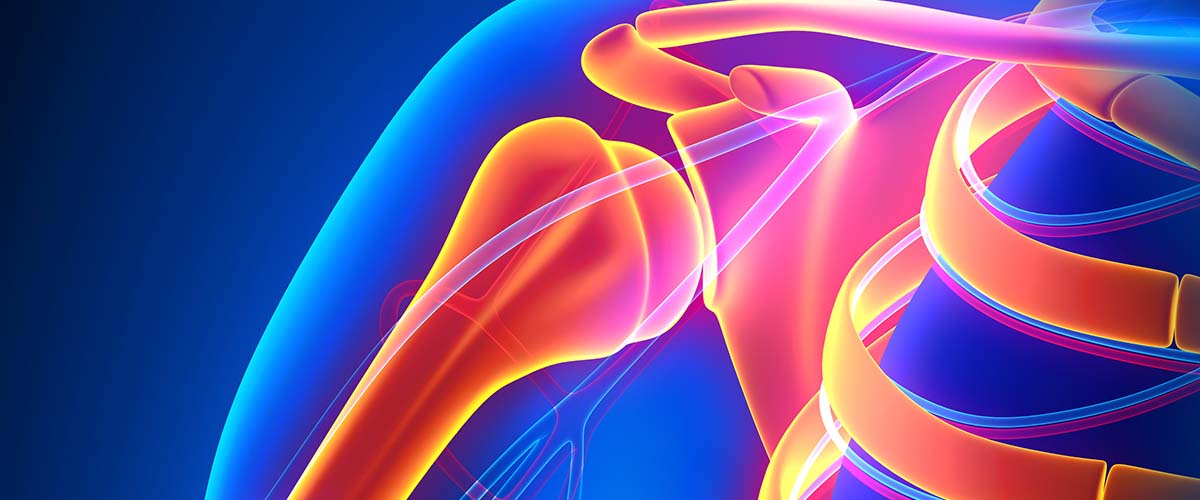
The rotator cuff is a group of four tendons that keeps the ball of the upper arm (humeral head) centered in the shallow shoulder socket (glenoid). When a large rotator cuff tear is left unrepaired for a long time, or cannot be repaired, the tendons can retract and the muscle can waste away. The stronger deltoid muscle then pulls the ball upward, so it rubs against the acromion (the bone on top of the shoulder). Over time this abnormal movement, loss of joint fluid and wear lead to arthritis. The exact reasons why some people with large tears develop arthropathy and others do not are not fully understood.
Rotator cuff arthropathy is different from ordinary shoulder osteoarthritis, in which the rotator cuff is usually intact. That difference matters, because it changes which treatments will work.
Symptoms of rotator cuff arthropathy
- Shoulder pain, often worse at night and when lying on the affected side
- Weakness, especially lifting the arm overhead or out to the side
- Grinding, clicking or crackling in the shoulder
- Stiffness and loss of motion
- In advanced cases, being unable to raise the arm at all on your own (called pseudoparalysis)
- Difficulty with daily tasks such as reaching shelves, combing hair or dressing
How is it diagnosed?
Dr. Dold examines your shoulder’s motion and the strength of each rotator cuff muscle. X-rays usually show the typical pattern: the ball of the shoulder sitting high in the joint, close to the acromion, with arthritis and wear of the joint surfaces. An MRI or CT scan may be used to assess the remaining tendons, the muscle quality and the bone, which helps with treatment planning.
Non-surgical treatment
Treatment starts with your symptoms and goals, not just the X-ray. Many patients get meaningful relief from:
- Physical therapy focused on the deltoid and remaining shoulder muscles to improve function
- Activity changes to avoid painful overhead and heavy lifting
- Anti-inflammatory medicines when safe for you
- Injections, such as corticosteroid injections, for flare-ups of pain
Surgical treatment
Because the rotator cuff is no longer working, a standard (“anatomic”) shoulder replacement usually is not a good option for rotator cuff arthropathy. When pain and function remain poor despite non-surgical care, the most common operation is a reverse total shoulder replacement. In a reverse replacement, the ball and socket are switched: a ball is attached to the socket side and a cup to the arm bone. This design lets the deltoid muscle lift the arm without a working rotator cuff, which can relieve pain and improve the ability to raise the arm. The right choice depends on your pain, how well your shoulder works, your health and your goals.
Living with shoulder pain and weakness from a long-standing rotator cuff tear? Schedule an appointment or call 469-850-0680 for an evaluation and a clear explanation of every option, both non-surgical and surgical.
For a large rotator cuff tear before arthritis has set in, other options such as rotator cuff repair may still be possible, which is one reason to have a painful, weak shoulder evaluated early.
What the research shows
- Non-surgical care first: a structured program that strengthens the deltoid and remaining shoulder muscles has helped many patients with massive, irreparable tears, though the studies are mostly observational. For pain that limits sleep and daily life, a suprascapular nerve block or pulsed radiofrequency treatment of that nerve has improved pain in randomized trials of chronic shoulder pain.
- Reverse total shoulder replacement is the most studied operation for cuff tear arthropathy. In large series, pain improved and the ability to raise the arm roughly doubled (for example, forward elevation from about 73 to 138 degrees), and most patients were satisfied. A Cochrane review notes that randomized trials comparing replacement with other treatments are still lacking.
- Durability and complications: long-term studies show good implant survival, but scapular notching, loosening and other complications increase over time, and complication rates are higher in patients 65 and younger. These factors are part of deciding the right timing.
- Before arthritis develops: for massive, irreparable tears without significant arthritis, joint-preserving options include partial or graft-bridging repair, superior capsular reconstruction, tendon transfers (lower trapezius or latissimus dorsi) and the subacromial balloon spacer. Evidence for these is mostly from case series and small trials.
Why see Dr. Dold
- Board certified by the American Board of Orthopaedic Surgery, with subspecialty certification in Sports Medicine
- Sports medicine and arthroscopy fellowship at NYU Langone / Hospital for Joint Diseases; orthopedic residency at the University of Toronto
- Fellow of the American College of Surgeons (FACS), the American Academy of Orthopaedic Surgeons (FAAOS), the American Orthopaedic Association (FAOA) and the Royal College of Surgeons of Canada (FRCSC)
- Author of a SLAP repair book chapter (Springer, 2017) and research on shoulder suture anchors (KSSTA, 2013)
- Team physician and surgical consultant to Rugby Canada; has cared for professional and Olympic athletes from the NFL, NBA, NHL, MLS, PGA Tour, Major League Rugby and USA Gymnastics
- D Magazine Best Doctors (Collin County), 2019–2026 · Rated 4.9 on Google
Frequently asked questions
What is rotator cuff arthropathy?
It is a type of shoulder arthritis that develops after a large, long-standing rotator cuff tear. Without the rotator cuff holding the ball centered in the socket, the joint moves abnormally and wears out.
Is rotator cuff arthropathy the same as shoulder arthritis?
It is one form of shoulder arthritis, but in ordinary shoulder osteoarthritis the rotator cuff is usually intact. In rotator cuff arthropathy the cuff is torn and not working, which changes the treatment options.
Can rotator cuff arthropathy be treated without surgery?
Yes, many patients improve with physical therapy, activity changes, anti-inflammatory medicine and injections. Surgery is considered when pain and function stay poor despite these treatments.
Why can’t I lift my arm?
When the rotator cuff is torn and the joint is worn, the shoulder may not be able to raise the arm on its own. A reverse shoulder replacement is designed to let the deltoid muscle lift the arm instead.
What is a reverse shoulder replacement?
It is a shoulder replacement in which the ball and socket are switched. This lets the deltoid muscle do the work of the missing rotator cuff, which can relieve pain and improve the ability to raise the arm.
Can a rotator cuff tear lead to arthritis?
Yes. A large tear that is left untreated or cannot be repaired can, over years, lead to rotator cuff arthropathy. Not everyone with a large tear develops it.
Can I avoid surgery for rotator cuff arthropathy?
Many patients manage well with a deltoid-strengthening program, activity changes and occasional injections. Surgery is considered when pain or weakness keeps limiting daily life despite these measures.
Research cited on this page
- Neer CS, Craig EV, Fukuda H. Cuff-tear arthropathy. J Bone Joint Surg Am. 1983;65(9):1232-44. PubMed
Original description of cuff-tear arthropathy as a distinct condition following massive rotator cuff tears. - Shepet KH, Liechti DJ, Kuhn JE. Nonoperative treatment of chronic, massive irreparable rotator cuff tears: a systematic review with synthesis of a standardized rehabilitation protocol. J Shoulder Elbow Surg. 2021;30(6):1431-1444. PubMed
Systematic review: despite low-quality evidence, non-surgical treatment has been effective for chronic, massive, irreparable cuff tears; a structured rehabilitation program is proposed. - Fahy K, Galvin R, Lewis J, et al. Exercise as effective as surgery in improving quality of life, disability, and pain for large to massive rotator cuff tears: A systematic review & meta-analysis. Musculoskelet Sci Pract. 2022;61:102597. PubMed
Meta-analysis: exercise may be as effective as surgery for large and massive cuff tears, but high-quality research is lacking. - Ainsworth R, Lewis JS. Exercise therapy for the conservative management of full thickness tears of the rotator cuff: a systematic review. Br J Sports Med. 2007;41(4):200-10. PubMed
Systematic review: observational evidence supports exercise focused on the deltoid for massive cuff tears. - Gofeld M, Restrepo-Garces CE, Theodore BR, et al. Pulsed radiofrequency of suprascapular nerve for chronic shoulder pain: a randomized double-blind active placebo-controlled study. Pain Pract. 2013;13(2):96-103. PubMed
Randomized trial: pulsed radiofrequency of the suprascapular nerve improved pain and function in chronic shoulder pain over 6 months. - Bergamaschi ECQA, Sakata RK, Giraldes ALA, et al. Comparative Randomized Study Between Pulsed Radiofrequency and Suprascapular Nerve Block for the Treatment of Chronic Shoulder Pain. Clin J Pain. 2024;40(3):182-186. PubMed
Randomized trial: pulsed radiofrequency of the suprascapular nerve gave lower pain than a nerve block over several weeks. - Craig RS, Goodier H, Singh JA, et al. Shoulder replacement surgery for osteoarthritis and rotator cuff tear arthropathy. Cochrane Database Syst Rev. 2020;4(4):CD012879. PubMed
Cochrane review: no high-quality randomized trials compare shoulder replacement with other treatments for cuff tear arthropathy. - Wall B, Nové-Josserand L, O’Connor DP, et al. Reverse total shoulder arthroplasty: a review of results according to etiology. J Bone Joint Surg Am. 2007;89(7):1476-85. PubMed
Cohort of 191 reverse replacements: Constant score improved from 23 to 60, and most patients were satisfied or very satisfied. - Sirveaux F, Favard L, Oudet D, et al. Grammont inverted total shoulder arthroplasty in the treatment of glenohumeral osteoarthritis with massive rupture of the cuff. Results of a multicentre study of 80 shoulders. J Bone Joint Surg Br. 2004;86(3):388-95. PubMed
Multicenter study: reverse shoulder replacement for cuff tear arthropathy improved forward elevation from 73 to 138 degrees with minimal pain. - Walch G, Bacle G, Lädermann A, et al. Do the indications, results, and complications of reverse shoulder arthroplasty change with surgeon’s experience?. J Shoulder Elbow Surg. 2012;21(11):1470-7. PubMed
Large series: improved results and a falling complication rate with experience; cuff tear arthropathy is the main indication for reverse replacement. - Burden EG, Batten TJ, Smith CD, et al. Reverse total shoulder arthroplasty. Bone Joint J. 2021;103-B(5):813-821. PubMed
Meta-analysis: reverse shoulder replacement for cuff tear arthropathy improved patient-reported outcomes with low complication rates across implant designs. - Ortmaier R, Hitzl W, Matis N, et al. Reverse shoulder arthroplasty combined with latissimus dorsi transfer: A systemic review. Orthop Traumatol Surg Res. 2017;103(6):853-859. PubMed
Systematic review: all studies of reverse replacement for cuff tear arthropathy reported significant improvement in function and motion. - Smith KL, Karimi A, Harlow ER, et al. Defining patient satisfaction after reverse total shoulder arthroplasty: a systematic review. J Shoulder Elbow Surg. 2024;33(10):2298-2305. PubMed
Systematic review: patients are generally satisfied after reverse replacement for cuff tear arthropathy or massive cuff tears. - Spiry C, Berhouet J, Agout C, et al. Long-term impact of scapular notching after reverse shoulder arthroplasty. Int Orthop. 2021;45(6):1559-1566. PubMed
Long-term study: scapular notching progresses over time, and severe notching was associated with glenoid loosening. - Vancolen SY, Elsawi R, Horner NS, et al. Reverse total shoulder arthroplasty in the younger patient (≤65 years): a systematic review. J Shoulder Elbow Surg. 2020;29(1):202-209. PubMed
Systematic review: reverse replacement improves function in patients 65 or younger, but complication rates are higher in this group. - Rojas J, Choi K, Joseph J, et al. Aseptic Glenoid Baseplate Loosening After Reverse Total Shoulder Arthroplasty: A Systematic Review and Meta-Analysis. JBJS Rev. 2019;7(5):e7. PubMed
Meta-analysis: factors associated with glenoid baseplate loosening after reverse replacement. - Grey B, Rodseth RN, Roche SJ. Humeral Stem Loosening Following Reverse Shoulder Arthroplasty: A Systematic Review and Meta-Analysis. JBJS Rev. 2018;6(5):e5. PubMed
Meta-analysis: humeral stem loosening becomes more common with longer follow-up. - Kostretzis L, Konstantinou P, Pinto I, et al. Stemless reverse total shoulder arthroplasty: a systematic review of contemporary literature. Musculoskelet Surg. 2021;105(3):209-224. PubMed
Systematic review: stemless reverse replacements have low complication and reintervention rates at mid-term follow-up. - Steinhaus ME, Gowd AK, Hurwit DJ, et al. Return to work after shoulder arthroplasty: a systematic review and meta-analysis. J Shoulder Elbow Surg. 2019;28(5):998-1008. PubMed
Meta-analysis: most patients return to work after shoulder replacement, at about 2.3 months on average. - Dickerson P, Pill SG, Longstaffe R, et al. Systematic review of reversing pseudoparalysis of the shoulder due to massive, irreparable rotator cuff tears. J Shoulder Elbow Surg. 2020;29(7S):S87-S91. PubMed
Systematic review: reverse replacement and superior capsular reconstruction reliably reverse pseudoparalysis in most patients with massive irreparable tears. - Gao I, Sochacki KR, Freehill MT, et al. Superior Capsular Reconstruction: A Systematic Review of Surgical Techniques and Clinical Outcomes. Arthroscopy. 2021;37(2):720-746. PubMed
Systematic review of superior capsular reconstruction techniques for massive irreparable tears. - Srikumaran U, Russo R, Familiari F. Subacromial Balloon Spacer for Massive Irreparable Rotator Cuff Tears. Arthroscopy. 2023;39(3):576-577. PubMed
Randomized trial summary: the subacromial balloon spacer for massive irreparable tears was associated with improved function and high satisfaction. - Clouette J, Leroux T, Shanmugaraj A, et al. The lower trapezius transfer: a systematic review of biomechanical data, techniques, and clinical outcomes. J Shoulder Elbow Surg. 2020;29(7):1505-1512. PubMed
Systematic review: lower trapezius tendon transfer is generally safe and can restore function in massive posterosuperior tears. - Longo UG, Franceschetti E, Petrillo S, et al. Latissimus dorsi tendon transfer for massive irreparable rotator cuff tears: a systematic review. Sports Med Arthrosc Rev. 2011;19(4):428-37. PubMed
Systematic review of latissimus dorsi tendon transfer for massive irreparable tears. - Mercurio M, Castricini R, Castioni D, et al. Better functional outcomes and a lower infection rate can be expected after superior capsular reconstruction in comparison with latissimus dorsi tendon transfer for massive, irreparable posterosuperior rotator cuff tears: a systematic review. J Shoulder Elbow Surg. 2023;32(4):892-906. PubMed
Systematic review: superior capsular reconstruction showed better function than latissimus dorsi transfer. - Lewington MR, Ferguson DP, Smith TD, et al. Graft Utilization in the Bridging Reconstruction of Irreparable Rotator Cuff Tears: A Systematic Review. Am J Sports Med. 2017;45(13):3149-3157. PubMed
Systematic review: graft-bridging repair of large to massive tears may give better function than partial repair.
Medically reviewed by Andrew P. Dold, MD, FAOA, FAAOS, FACS, FRCSC. Last reviewed October 2026. This page is general information, not medical advice. Individual results vary.