







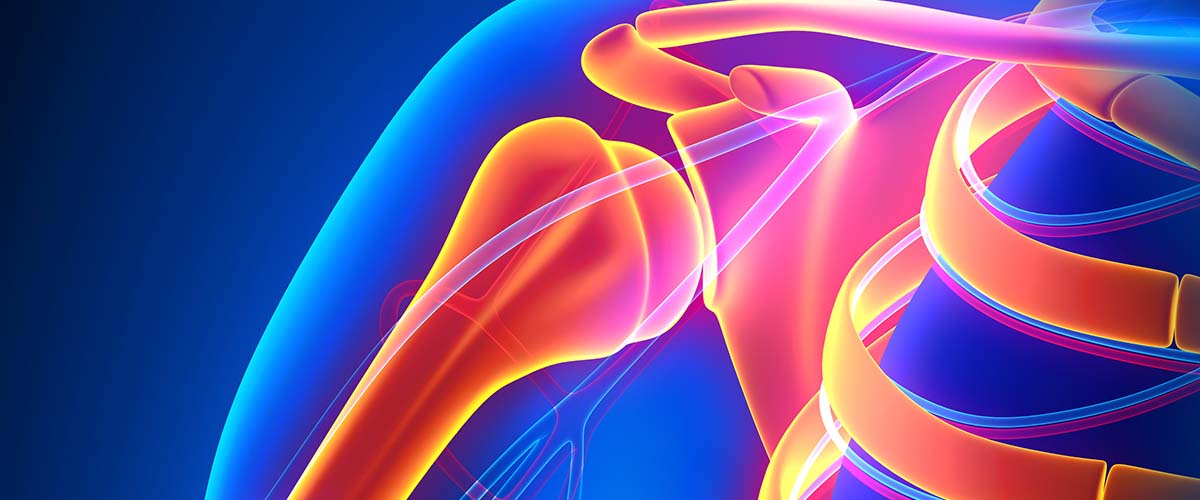
The REGENETEN Bioinductive Implant is a small, thin collagen patch placed on top of the rotator cuff tendon during arthroscopic shoulder surgery. It is designed to support the body’s natural healing response and the formation of new tendon-like tissue. Dr. Andrew Dold, a board-certified sports medicine and shoulder surgeon in Frisco, Texas, may use REGENETEN for selected rotator cuff tears, either on its own for some partial-thickness tears or together with a rotator cuff repair.
- A thin collagen implant placed arthroscopically
- Made of highly purified type I collagen; it is gradually absorbed by the body
- According to the manufacturer, it is replaced by a layer of new tendon-like tissue within about 6 months
- Used for some partial-thickness rotator cuff tears, and to augment some full-thickness repairs
- Not every tear needs it; Dr. Dold decides based on your tear and tendon quality
What is the REGENETEN implant?
REGENETEN, made by Smith+Nephew, is a scaffold made of highly purified type I collagen. It is placed over the surface of the rotator cuff tendon and held in place with small staples and anchors. Over the following months the collagen is absorbed, and the manufacturer reports that it is replaced by new tendon-like tissue, adding thickness to the tendon. The aim is to help the tendon heal and to protect it from progressing to a larger tear or from re-tearing after repair. As with any treatment, results vary from person to person.
Who may benefit?
- Partial-thickness rotator cuff tears that have not improved with physical therapy and injections
- Full-thickness rotator cuff tears being repaired, especially when the tendon is thin or the tear is large, where the implant can be added to the repair
- Active patients who want to protect the long-term health of the tendon
Most rotator cuff problems, such as tendonitis and impingement, are treated first without surgery.
What happens during the procedure?
The implant is placed arthroscopically through the same small incisions used for rotator cuff surgery. Dr. Dold first evaluates and treats the problems inside the shoulder; for a full-thickness tear, he repairs the tendon back to the bone with suture anchors. The REGENETEN implant is then laid over the tendon and secured with small staples into the tendon and anchors into the bone. It typically adds only a short time to the operation, and most patients go home the same day.
Watch Dr. Dold explain the REGENETEN implant
Recovery
Your recovery depends mainly on what was done to the tendon. If the implant is added to a full rotator cuff repair, you will follow the usual repair protocol: most patients wear a sling for about 4 to 6 weeks, then progress through physical therapy, with full recovery usually taking about 6 months. When the implant is used for a partial-thickness tear without a full repair, the early rehabilitation is often faster. Dr. Dold will give you a specific plan.
Watch Dr. Dold: REGENETEN repair
Some of these videos show real surgery, so some viewers may prefer not to watch.
More videos on Dr. Dold’s YouTube channel.
What the research shows
The bioinductive collagen implant has been studied in partial-thickness tears, full-thickness repairs and revision surgery. The evidence is encouraging but not uniform:
- Full-thickness tears: in a randomized trial of 124 patients, adding the implant to a posterosuperior rotator cuff repair lowered the MRI retear rate at 2 years from 35.1% to 12.3%, without additional complications. Clinical scores were similar between groups. A meta-analysis reported an overall retear rate of 8.3% after augmented full-thickness repair.
- Partial-thickness tears: prospective studies and a large registry show improved pain and function at 2 years, with new tendon-like tissue filling the tear on MRI in most patients. Long-term data are still limited.
- Tendon thickness: several studies show the tendon becomes thicker after the implant, and biopsy studies show the new tissue resembles native tendon.
- Mixed results: not every study shows a benefit. A matched study in high-risk patients and a study of revision repairs found no reduction in retears. Results for large tears are less favorable than for medium-sized tears.
- Safety: complications are uncommon. A large series found significant stiffness in 2.8% of repairs, more often in partial-thickness tears, and rare cases of implant migration or inflammation have been reported.
Dr. Dold uses the implant selectively, based on your tear pattern, tendon quality and risk of retear, and discusses the benefits and limits of the evidence with you.
Why see Dr. Dold
- Board certified by the American Board of Orthopaedic Surgery, with subspecialty certification in Sports Medicine
- Sports medicine and arthroscopy fellowship at NYU Langone / Hospital for Joint Diseases; orthopedic residency at the University of Toronto
- Fellow of the American College of Surgeons (FACS), the American Academy of Orthopaedic Surgeons (FAAOS), the American Orthopaedic Association (FAOA) and the Royal College of Surgeons of Canada (FRCSC)
- Author of a SLAP repair book chapter (Springer, 2017) and research on shoulder suture anchors (KSSTA, 2013)
- Team physician and surgical consultant to Rugby Canada; has cared for professional and Olympic athletes from the NFL, NBA, NHL, MLS, PGA Tour, Major League Rugby and USA Gymnastics
- D Magazine Best Doctors (Collin County), 2019–2026 · Rated 4.9 on Google
Frequently asked questions
What is the REGENETEN implant made of?
It is made of highly purified type I collagen. It is gradually absorbed by the body over the following months.
Is REGENETEN an injection?
No. It is a thin collagen implant placed on the tendon during arthroscopic surgery.
Who is a candidate for REGENETEN?
It may be used for some partial-thickness rotator cuff tears that have not improved with non-surgical care, and to augment some full-thickness rotator cuff repairs. Dr. Dold decides based on your tear and tendon quality.
Does REGENETEN replace rotator cuff repair?
Not for full-thickness tears. In those cases the tendon is repaired to the bone and the implant is added on top. For some partial-thickness tears, it may be used without a full repair.
How long is recovery with REGENETEN?
Recovery depends on what was done. With a full rotator cuff repair, most patients wear a sling for about 4 to 6 weeks and full recovery takes about 6 months. Recovery is often faster when the implant is used for a partial tear without a full repair.
Is REGENETEN covered by insurance?
Coverage varies by insurance plan, so it is worth checking with your insurer before surgery.
Does REGENETEN reduce the chance of a re-tear?
In a randomized trial, adding the implant to a rotator cuff repair lowered the 2-year MRI retear rate from about 35% to 12%. Not all studies have found a benefit, especially in revision surgery, so it is used selectively.
Research cited on this page
- Ruiz Ibán MA, García Navlet M, Moros Marco S, et al. Augmentation of a Posterosuperior Cuff Repair With a Bovine Bioinductive Collagen Implant Shows a Lower Retear Rate but Similar Outcomes Compared With No Augmentation: 2-Year Results of a Randomized Controlled Trial. Arthroscopy. 2025;41(10):3869-3879. PubMed
Randomized trial (124 patients): adding a bioinductive collagen implant to posterosuperior cuff repair lowered the 2-year MRI retear rate from 35.1% to 12.3%, with similar clinical scores and no added complications. - Warren JR, Domingo-Johnson ER, Sorensen AA, et al. Bioinductive patch as an augmentation for rotator cuff repair, a systematic review and meta-analysis. J Shoulder Elbow Surg. 2024;33(11):2515-2529. PubMed
Meta-analysis: the bioinductive patch appears safe; overall retear after augmented full-thickness repair was 8.3%, with outcome improvements similar to standard repair. - Hurley ET, Twomey-Kozack J, Doyle TR, et al. Bioinductive Collagen Implant Has Potential to Improve Rotator Cuff Healing: A Systematic Review. Arthroscopy. 2025;41(2):333-342.e2. PubMed
Systematic review of 21 studies: consistently good results, low retear rates and increased tendon thickness with the bioinductive implant. - Jenkins R, Mon NO, Ruotolo C. Patch Augmentation in the Treatment of Partial-Thickness Rotator Cuff Tears Facilitates Tendon Healing and Improves Patient Outcomes: A Systematic Review. Arthroscopy. 2025;41(11):4826-4835. PubMed
Systematic review: patch augmentation was associated with increased tendon thickness and improved function scores. - Benthami Kbibi M, Verhaegen F, Debeer P. The Clinical Efficacy of the Regeneten Bioinductive Implant in Rotator Cuff Repair: A Systematic Review. Acta Orthop Belg. 2024;90(4):777-788. PubMed
Systematic review of clinical efficacy: MRI showed increased tendon thickness from 6 months, with the implant integrating into the native tendon. - Schlegel TF, Abrams JS, Angelo RL, et al. Isolated bioinductive repair of partial-thickness rotator cuff tears using a resorbable bovine collagen implant: two-year radiologic and clinical outcomes from a prospective multicenter study. J Shoulder Elbow Surg. 2021;30(8):1938-1948. PubMed
Prospective study: isolated bioinductive repair of intermediate- and high-grade partial-thickness tears improved scores at 2 years, with new tissue fill-in on MRI in 95–100%. - Bushnell BD, Bishai SK, Krupp RJ, et al. Treatment of Partial-Thickness Rotator Cuff Tears With a Resorbable Bioinductive Bovine Collagen Implant: 1-Year Results From a Prospective Multicenter Registry. Orthop J Sports Med. 2021;9(8):23259671211027850. PubMed
Registry analysis: the implant improved patient-reported outcomes across all grades of partial-thickness tears. - Dai A, Campbell A, Bloom D, et al. Collagen-Based Bioinductive Implant for Treatment of Partial Thickness Rotator Cuff Tears. Bull Hosp Jt Dis (2013). 2020;78(3):195-201. PubMed
Review: collagen bioinductive implants are safe and effective for reducing pain and improving function in partial-thickness tears, with new tissue on imaging. - Longo UG, Marino M, Lalli A, et al. Arthroscopic management of isolated partial-thickness rotator cuff tears. Knee Surg Sports Traumatol Arthrosc. 2024;32(9):2358-2375. PubMed
Meta-analysis on partial-thickness tears: bioinductive collagen implants hold promise but lack long-term efficacy data. - Bushnell BD, Connor PM, Harris HW, et al. Retear rates and clinical outcomes at 1 year after repair of full-thickness rotator cuff tears augmented with a bioinductive collagen implant: a prospective multicenter study. JSES Int. 2021;5(2):228-237. PubMed
Prospective study (1 year): favorable retear rate and improved function with the implant augmenting full-thickness repair. - Bushnell BD, Connor PM, Harris HW, et al. Two-year outcomes with a bioinductive collagen implant used in augmentation of arthroscopic repair of full-thickness rotator cuff tears: final results of a prospective multicenter study. J Shoulder Elbow Surg. 2022;31(12):2532-2541. PubMed
Two-year results: retear in 11.5% of medium and 35.0% of large tears; tendon thickness increased. - Camacho-Chacon JA, Cuenca-Espierrez J, Roda-Rojo V, et al. Bioinductive collagen implants facilitate tendon regeneration in rotator cuff tears. J Exp Orthop. 2022;9(1):53. PubMed
Histology study: biopsies at 6 months showed tissue resembling native tendon after implant use. - Delgado C, Rodríguez G, Ortega C, et al. Biological augmentation in revision surgery: effect of a bioinductive collagen patch (REGENETEN) in patients with rotator cuff retear and a previous arthroscopic rotator cuff repair. J Shoulder Elbow Surg. 2026;35(4):917-926. PubMed
Revision repair study: augmentation improved function, with over 70% of revision repairs intact at 1 year. - Lau J, Ting RS, Lam PH, et al. The effectiveness of arthroscopically inserted onlay bioinductive implant on revision rotator cuff repair in workers’ compensation patients: a case-controlled cohort study with minimum 2-year follow-up. J Shoulder Elbow Surg. 2026;35(6):1492-1501. PubMed
Comparative study in revision repair: no advantage of the onlay implant; retear 50% vs 38% at 2 years. - Rab P, Shirinskiy IJ, Kimmeyer M, et al. Augmentation of full-thickness rotator cuff tears with a bioinductive collagen implant does not reduce retear rates – a propensity matched cohort study. BMC Musculoskelet Disord. 2025;26(1):855. PubMed
Matched cohort in high-risk patients: augmentation was not associated with a reduced retear rate at 1 year. - Bushnell BD, Jarvis BT, Jarvis RC, et al. Minimal Stiffness After Rotator Cuff Repair With Bioinductive Collagen Implants. J Am Acad Orthop Surg Glob Res Rev. 2025;9(10). PubMed
Large cohort (432 repairs): significant postoperative stiffness in 2.8%, more often with partial-thickness tears. - Senra AR, Leite MJ, Dias R, et al. Acromial Cupping with Lodged Bioinductive Collagen Implant Following Rotator Cuff Repair: A Case Report. JBJS Case Connect. 2025;15(3). PubMed
Case report: implant migration with acromial lodging, without symptoms. - Iban MÁR, Reina MJE, Del Caño CD, et al. The role of new synthetic membranes in rotator cuff augmentation. J Exp Orthop. 2026;13(1):e70634. PubMed
Review of newer scaffolds: REGENETEN has the most clinical evidence; complications are uncommon but include stiffness, inflammation and migration. - McIntyre LF, Nherera LM, Schlegel TF. Resorbable Bioinductive Collagen Implant Is Cost Effective in the Treatment of Rotator Cuff Tears. Arthrosc Sports Med Rehabil. 2023;5(2):e367-e374. PubMed
Economic analysis: implant plus standard repair improved healing at a modest added cost and was cost-effective. - Brash AI, Jazrawi L. Rotator cuff disease, repair and augmentation. Bull Hosp Jt Dis (2013). 2026;84(2):37-42. PubMed
Review: augmentation reliably reduces structural failure, while its clinical benefits remain under investigation. - Thon S, Savoie FH. Rotator Cuff Repair: Patch the Shoulder. Arthroscopy. 2019;35(4):1014-1015. PubMed
Review: early clinical studies of the collagen patch reported healing rates of 89% to 96% in small samples. - Kaplan DJ, Dold AP, Fralinger DJ, et al. Endoscopic Gluteus Medius Repair Augmented With Bioinductive Implant. Arthrosc Tech. 2016;5(4):e821-e825. PubMed
Dr. Dold co-authored this technique paper on endoscopic gluteus medius repair augmented with a bioinductive implant. - Looney AM, Fortier LM, Leider JD, et al. Bioinductive Collagen Implant Augmentation for the Repair of Chronic Lower Extremity Tendinopathies: A Report of Two Cases. Cureus. 2021;13(6):e15567. PubMed
Case reports: bioinductive implant augmentation for refractory chronic patellar and other lower-extremity tendinopathies.
REGENETEN is a trademark of Smith+Nephew. Dr. Dold is a consultant for Smith+Nephew.
Medically reviewed by Andrew P. Dold, MD, FAOA, FAAOS, FACS, FRCSC. Last reviewed October 2026. This page is general information, not medical advice. Individual results vary.