







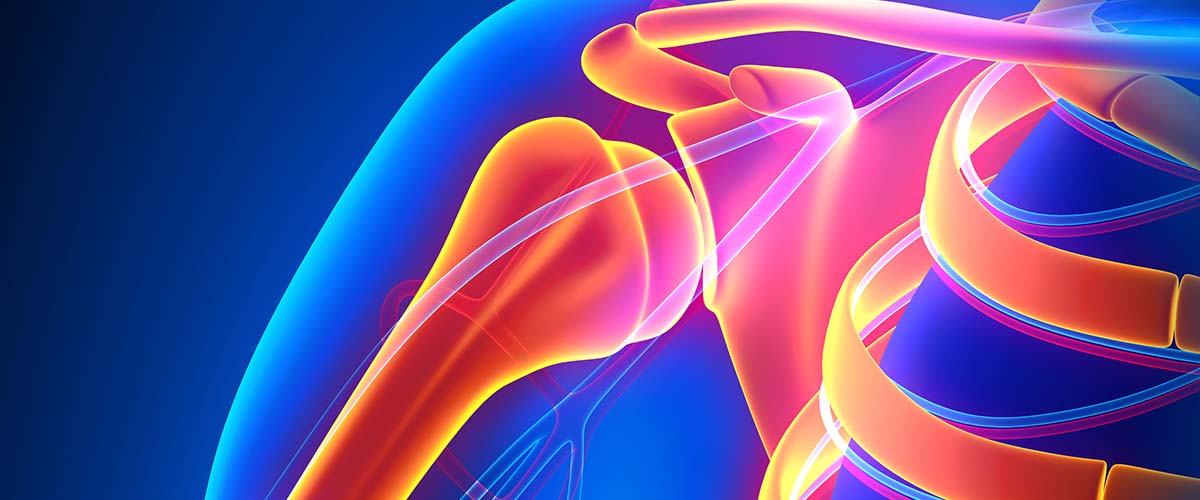
The biceps tendon attaches the biceps muscle to the shoulder at the top and to the elbow at the bottom. At the shoulder, the long head of the biceps tendon runs through the shoulder joint, which makes it prone to inflammation (biceps tendonitis), fraying and tears. Most biceps problems at the shoulder improve with non-surgical treatment; when they don’t, a minimally invasive biceps tenodesis can relieve pain and restore strength. Dr. Andrew Dold, a board-certified, fellowship-trained sports medicine surgeon in Frisco, Texas, treats the full range of biceps tendon problems at the shoulder and elbow.
- Biceps tendonitis causes pain at the front of the shoulder, especially with lifting and overhead activities
- A torn biceps tendon at the shoulder can cause a sudden pop, bruising and a “Popeye” bulge in the upper arm
- Biceps problems often occur together with rotator cuff tears, impingement or SLAP tears
- Most patients improve with rest, medication and physical therapy
- When surgery is needed, biceps tenodesis reattaches the tendon to the upper arm bone
Causes
- Overuse: repetitive lifting, throwing, swimming and overhead work gradually wear and fray the tendon
- Injury: a fall on an outstretched arm or lifting something heavy can tear the tendon
- Other shoulder problems: rotator cuff tears, impingement and SLAP tears often affect the biceps tendon too
- Risk factors: age, overhead sports, smoking and corticosteroid use
Symptoms
- Aching pain at the front of the shoulder, which may travel down the arm
- Pain with lifting, reaching overhead or throwing
- A clicking or snapping sensation in the shoulder
- With a tear: a sudden sharp pain or pop, bruising, cramping and a bulge in the upper arm (the “Popeye” sign)
- Weakness turning the palm up or bending the elbow
Diagnosis
Dr. Dold examines the shoulder for tenderness along the biceps groove and tests the rotator cuff, the labrum and the biceps itself. X-rays, available in our office, look for bone spurs and arthritis. An MRI or ultrasound shows the biceps tendon, the rotator cuff and the labrum, so that every source of pain can be addressed.
Non-surgical treatment
Most biceps tendonitis and many proximal biceps tears are treated without surgery:
- Rest from aggravating activities and ice
- Anti-inflammatory medication when appropriate
- Physical therapy to restore motion and strengthen the shoulder and rotator cuff
- An injection for persistent pain in some cases
When surgery is needed
Surgery is considered when pain and weakness continue despite non-surgical treatment, when the tendon is badly frayed or unstable, or when another shoulder problem needs repair at the same time. Options include:
- Biceps tenodesis: the damaged portion of the tendon is released from the shoulder joint and reattached to the upper arm bone (humerus), relieving pain while preserving strength and the normal shape of the arm. It is often performed arthroscopically, through small incisions
- Biceps tenotomy: the tendon is released without reattachment. It is a simpler procedure with a quick recovery, often chosen for older or lower-demand patients, but it can leave a cosmetic bulge or cramping
- SLAP repair: when the labrum where the biceps attaches is torn, it can be repaired. See SLAP tears
- Distal biceps repair: a rupture of the biceps tendon at the elbow is usually repaired surgically. See distal biceps tendon rupture
Recovery timeline after biceps tenodesis
These are general ranges. Your own timeline depends on any other procedures performed at the same time and how rehabilitation progresses.
| Stage | Typical timing |
|---|---|
| Sling | About 2 to 4 weeks |
| Physical therapy | Begins early with gentle motion, then progresses to strengthening |
| Return to full activity | About 3 to 4 months |
Recovery is usually longer when a rotator cuff repair or other procedure is done at the same surgery.
What the research shows
- Diagnosis: no single exam test reliably identifies biceps tendon problems; combining tests (such as the uppercut test and tenderness in the bicipital groove) improves accuracy, and ultrasound is reliable for confirming tendon pathology. Part of the tendon lies in the groove where arthroscopy cannot see it, so the exam matters.
- Injections: a corticosteroid injection into the biceps tendon sheath is an effective treatment for biceps tendinosis, and ultrasound guidance makes the injection more accurate and more effective than a “blind” injection.
- Tenodesis vs. tenotomy: multiple meta-analyses and randomized trials show similar pain relief and function after either procedure. Tenotomy (releasing the tendon) is quicker and may relieve pain sooner, but it carries a higher chance of a visible “Popeye” bulge (about 4 times higher in one trial). Tenodesis (reattaching the tendon) avoids most cosmetic deformity and is often preferred for younger, active or muscular patients.
- Technique: open and arthroscopic tenodesis, and suprapectoral and subpectoral positions, have produced similar results in systematic reviews and a randomized trial.
- SLAP tears and athletes: for many SLAP tears, tenodesis has shown similar or higher satisfaction and return to sport than SLAP repair, with fewer reoperations. In overhead throwers, return to play is more variable, and pitchers return less often.
- Realistic expectations: most patients return to activity after tenodesis, but about one in four do not return at the same level.
Why see Dr. Dold
- Board certified by the American Board of Orthopaedic Surgery, with subspecialty certification in Sports Medicine
- Sports medicine and arthroscopy fellowship at NYU Langone / Hospital for Joint Diseases; orthopedic residency at the University of Toronto
- Fellow of the American College of Surgeons (FACS), the American Academy of Orthopaedic Surgeons (FAAOS), the American Orthopaedic Association (FAOA) and the Royal College of Surgeons of Canada (FRCSC)
- Author of a SLAP repair book chapter (Springer, 2017) and research on shoulder suture anchors (KSSTA, 2013)
- Team physician and surgical consultant to Rugby Canada; has cared for professional athletes from the NFL, NBA, NHL, MLS, PGA Tour and Major League Rugby
- D Magazine Best Doctors (Collin County), 2019–2026 · Rated 4.9 on Google
Related pages: SLAP tears · Rotator cuff tears · Shoulder impingement · Distal biceps rupture
Frequently asked questions
What is biceps tendonitis?
Biceps tendonitis is inflammation or irritation of the long head of the biceps tendon at the front of the shoulder. It causes pain with lifting and overhead activity and often occurs together with rotator cuff problems.
Can a torn biceps tendon at the shoulder heal without surgery?
Many proximal biceps tears are treated without surgery, and most people keep good function. Surgery is considered when pain, cramping or weakness persist, or for active patients who want to restore strength and the normal shape of the arm.
What is the difference between biceps tenodesis and tenotomy?
In a tenodesis, the tendon is reattached to the upper arm bone, preserving strength and the arm’s shape. In a tenotomy, the tendon is released without reattachment; recovery is quicker but a bulge or cramping can occur.
How long is recovery after biceps tenodesis?
Most patients wear a sling for about 2 to 4 weeks and return to full activity in about 3 to 4 months. Recovery is longer if other repairs are done at the same time. Individual recovery varies.
Is a biceps tear at the elbow different?
Yes. A distal biceps rupture at the elbow causes more loss of strength, and surgical repair is usually recommended, ideally within a few weeks of the injury.
Can I be seen the same day?
Yes. Same-day appointments are available for new injuries, and walk-in visits are welcome Monday, Wednesday and Friday, 8:30 to 10:30 am.
Is biceps tenodesis better than tenotomy?
Both give similar pain relief and function in research studies. Tenotomy is simpler but more often leaves a visible Popeye bulge; tenodesis avoids most cosmetic deformity and is often chosen for younger, active patients.
Considering surgery? Read about shoulder arthroscopy in Frisco, the minimally invasive procedure Dr. Dold uses for rotator cuff, labral and biceps problems.
Research cited on this page
- Bélanger V, Dupuis F, Leblond J, et al. Accuracy of examination of the long head of the biceps tendon in the clinical setting: A systematic review. J Rehabil Med. 2019;51(7):479-491. PubMed
Meta-analysis: high-resolution ultrasound reliably confirms long head of biceps tendon problems; individual exam tests are not reliable enough on their own. - Rosas S, Krill MK, Amoo-Achampong K, et al. A practical, evidence-based, comprehensive (PEC) physical examination for diagnosing pathology of the long head of the biceps. J Shoulder Elbow Surg. 2017;26(8):1484-1492. PubMed
Systematic review: combining the uppercut test with bicipital groove tenderness gives the most accurate exam for biceps tendon problems. - Jordan RW, Saithna A. Physical examination tests and imaging studies based on arthroscopic assessment of the long head of biceps tendon are invalid. Knee Surg Sports Traumatol Arthrosc. 2017;25(10):3229-3236. PubMed
Systematic review: arthroscopy sees only part of the biceps tendon, so problems lower in the groove can be missed. - Hanchard NC, Lenza M, Handoll HH, et al. Physical tests for shoulder impingements and local lesions of bursa, tendon or labrum that may accompany impingement. Cochrane Database Syst Rev. 2013;2013(4):CD007427. PubMed
Cochrane review: insufficient evidence to guide which physical tests to use for shoulder tendon and labral problems in primary care. - Aly AR, Rajasekaran S, Ashworth N. Ultrasound-guided shoulder girdle injections are more accurate and more effective than landmark-guided injections: a systematic review and meta-analysis. Br J Sports Med. 2015;49(16):1042-9. PubMed
Meta-analysis: ultrasound-guided shoulder injections are more accurate, with improved effectiveness for the biceps tendon sheath. - Hashiuchi T, Sakurai G, Morimoto M, et al. Accuracy of the biceps tendon sheath injection: ultrasound-guided or unguided injection? A randomized controlled trial. J Shoulder Elbow Surg. 2011;20(7):1069-73. PubMed
Randomized trial: biceps tendon sheath injections were more accurate under ultrasound guidance than without it. - Yiannakopoulos CK, Megaloikonomos PD, Foufa K, et al. Ultrasound-guided versus palpation-guided corticosteroid injections for tendinosis of the long head of the biceps: A randomized comparative study. Skeletal Radiol. 2020;49(4):585-591. PubMed
Randomized trial: corticosteroid injection is an effective treatment for long head of biceps tendinosis; ultrasound guidance improves accuracy and comfort. - Fan D, Liu X, Ma J, et al. Ultrasound Guidance Is Not Superior in Subacromial Bursa and Intraarticular Injections but Superior in Bicipital Groove: A Meta-analysis of Randomized Controlled Trials. Arthroscopy. 2022;38(5):1642-1657. PubMed
Meta-analysis: ultrasound guidance improves pain relief for bicipital groove injections. - Belk JW, Kraeutler MJ, Houck DA, et al. Biceps tenodesis versus tenotomy: a systematic review and meta-analysis of level I randomized controlled trials. J Shoulder Elbow Surg. 2021;30(5):951-960. PubMed
Meta-analysis: tenodesis and tenotomy give similar improvements in function; tenotomy has a higher rate of cosmetic (Popeye) deformity. - Zhou P, Liu J, Deng X, et al. Biceps tenotomy versus tenodesis for lesions of the long head of the biceps tendon: A systematic review and meta-analysis of randomized controlled trials. Medicine (Baltimore). 2021;100(3):e23993. PubMed
Meta-analysis: no significant benefit of tenodesis over tenotomy except the Constant score; tenotomy has more Popeye deformity but is quicker. - Pozzetti Daou J, Nagaya DY, Matsunaga FT, et al. Does Biceps Tenotomy or Tenodesis Have Better Results After Surgery? A Systematic Review and Meta-analysis. Clin Orthop Relat Res. 2021;479(7):1561-1573. PubMed
Meta-analysis: tenotomy and tenodesis both give satisfactory results with no difference in pain. - Woodmass JM, McRae SMB, Lapner PL, et al. Effect of age, gender, and body mass index on incidence and satisfaction of a Popeye deformity following biceps tenotomy or tenodesis: secondary analysis of a randomized clinical trial. J Shoulder Elbow Surg. 2021;30(8):1733-1740. PubMed
Randomized trial: the odds of a perceived Popeye deformity were 4.3 times higher after tenotomy than tenodesis. - Belay ES, Wittstein JR, Garrigues GE, et al. Biceps tenotomy has earlier pain relief compared to biceps tenodesis: a randomized prospective study. Knee Surg Sports Traumatol Arthrosc. 2019;27(12):4032-4037. PubMed
Randomized trial: outcomes were similar; tenotomy had more cosmetic deformity but earlier pain improvement. - Hufeland M, Wicke S, Verde PE, et al. Biceps tenodesis versus tenotomy in isolated LHB lesions: a prospective randomized clinical trial. Arch Orthop Trauma Surg. 2019;139(7):961-970. PubMed
Randomized trial: no significant difference in elbow flexion or supination strength 12 months after tenodesis versus tenotomy. - Na Y, Zhu Y, Shi Y, et al. A meta-analysis comparing tenotomy or tenodesis for lesions of the long head of the biceps tendon with concomitant reparable rotator cuff tears. J Orthop Surg Res. 2019;14(1):370. PubMed
Meta-analysis: with rotator cuff repair, tenodesis reduced Popeye deformity and improved the Constant score versus tenotomy. - De Carli A, Vadalà A, Zanzotto E, et al. Reparable rotator cuff tears with concomitant long-head biceps lesions: tenotomy or tenotomy/tenodesis?. Knee Surg Sports Traumatol Arthrosc. 2012;20(12):2553-8. PubMed
Randomized trial: with rotator cuff repair, adding tenodesis did not improve function over tenotomy. - Patel BH, Agarwalla A, Lu Y, et al. Isolated Biceps Tenodesis and Tenotomy: A Systematic Review of Indications and Patient Satisfaction. Orthopedics. 2021;44(6):333-340. PubMed
Systematic review: patient satisfaction is high after isolated tenodesis and tenotomy. - Abraham VT, Tan BH, Kumar VP. Systematic Review of Biceps Tenodesis: Arthroscopic Versus Open. Arthroscopy. 2016;32(2):365-71. PubMed
Systematic review: open and arthroscopic tenodesis both give satisfactory outcomes. - Hurley DJ, Hurley ET, Pauzenberger L, et al. Open Compared with Arthroscopic Biceps Tenodesis: A Systematic Review. JBJS Rev. 2019;7(5):e4. PubMed
Systematic review: open and arthroscopic tenodesis both give excellent outcomes with no significant difference. - Belk JW, Thon SG, Hart J, et al. Subpectoral versus suprapectoral biceps tenodesis yields similar clinical outcomes: a systematic review. J ISAKOS. 2021;6(6):356-362. PubMed
Systematic review: subpectoral and suprapectoral tenodesis give similar outcomes. - Forsythe B, Zuke WA, Agarwalla A, et al. Arthroscopic Suprapectoral and Open Subpectoral Biceps Tenodeses Produce Similar Outcomes: A Randomized Prospective Analysis. Arthroscopy. 2020;36(1):23-32. PubMed
Randomized trial: arthroscopic suprapectoral and open subpectoral tenodesis had similar outcomes and complication rates. - Hurley ET, Fat DL, Duigenan CM, et al. Biceps tenodesis versus labral repair for superior labrum anterior-to-posterior tears: a systematic review and meta-analysis. J Shoulder Elbow Surg. 2018;27(10):1913-1919. PubMed
Meta-analysis: for SLAP tears, tenodesis gave higher satisfaction and return to sport than SLAP repair, with similar function. - Civan O, Bilsel K, Kapicioglu M, et al. Repair versus biceps tenodesis for the slap tears: A systematic review. J Orthop Surg (Hong Kong). 2021;29(2):23094990211004794. PubMed
Systematic review: tenodesis for SLAP tears gave higher return to pre-injury sport and lower reoperation rates than repair. - Hurley ET, Baker R, Danilkowicz RM, et al. Similar outcomes between biceps tenodesis and SLAP repair for SLAP tears in younger patients – A meta-analysis. J ISAKOS. 2024;9(1):79-83. PubMed
Meta-analysis: in younger patients, tenodesis and SLAP repair had similar return to play, function and revision rates. - Frantz TL, Shacklett AG, Martin AS, et al. Biceps Tenodesis for Superior Labrum Anterior-Posterior Tear in the Overhead Athlete: A Systematic Review. Am J Sports Med. 2021;49(2):522-528. PubMed
Systematic review: tenodesis in overhead athletes gives encouraging function and return to sport, particularly in recreational athletes. - Lack BT, Childers JT, Mowers CC, et al. Biceps Tenodesis and SLAP Repair Show Similar Outcomes in Overhead Throwing Athletes With Baseball Pitchers Exhibiting Worse Rates of Return to Sport: A Systematic Review. Arthroscopy. 2025;41(9):3715-3729.e2. PubMed
Systematic review of 547 overhead throwers: return to play is variable after SLAP repair or tenodesis, and lower for pitchers. - Cassidy JT, Hurley ET, Moore D, et al. The majority of patients return to athletic activity following biceps tenodesis. Knee Surg Sports Traumatol Arthrosc. 2021;29(1):216-222. PubMed
Systematic review: return to activity after tenodesis is high, but about one in four patients do not return at the same level.
Medically reviewed by Andrew P. Dold, MD, FAOA, FAAOS, FACS, FRCSC. Last reviewed October 2026. This page is general information, not medical advice. Individual results vary.