








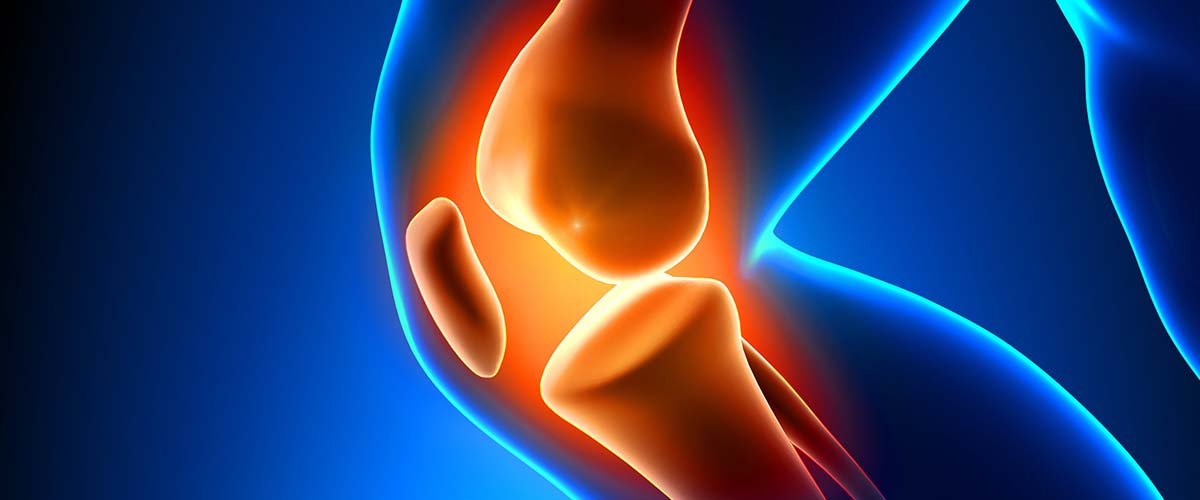
A kneecap dislocation happens when the kneecap (patella) slips out of the groove at the end of the thigh bone, usually toward the outside of the knee. Some people dislocate once; others go on to have repeated episodes or a constant feeling that the kneecap is about to slip, called patellar instability. It is especially common in teenagers and young athletes. Dr. Andrew Dold, a board-certified, fellowship-trained sports medicine surgeon in Frisco, Texas, treats first-time dislocations and recurrent patellar instability, including MPFL reconstruction when surgery is needed.
- Dislocations usually happen with a pivot, twist or awkward fall, often without contact
- Most first-time dislocations are treated without surgery
- The medial patellofemoral ligament (MPFL), the main ligament holding the kneecap in place, is torn in most dislocations
- Surgery is considered for repeated dislocations, loose pieces of cartilage or bone, or underlying alignment problems
- After surgery, the chance of the kneecap dislocating again is low (under 10%, according to the American Academy of Orthopaedic Surgeons)
What causes the kneecap to dislocate?
The kneecap is held in its groove by ligaments, mainly the MPFL on the inner side, and by the shape of the groove itself. A dislocation can happen when the knee twists while the foot is planted, with a direct blow, or with an awkward fall. Some knees are more likely to dislocate because of:
- A shallow or flat groove in the thigh bone (trochlear dysplasia)
- A kneecap that sits higher than normal (patella alta)
- Alignment of the leg that pulls the kneecap outward, including where the patellar tendon attaches to the shin bone
- Loose ligaments or a previous dislocation that stretched the MPFL
Symptoms
- A sudden shift of the kneecap, often with a pop, and the knee giving way
- The kneecap may stay out of place or slide back on its own
- Pain and rapid swelling
- Tenderness along the inner side of the kneecap
- Apprehension or fear that the kneecap will slip again, and episodes of instability
- Catching or locking if a piece of cartilage or bone has broken off
Diagnosis
Dr. Dold examines the knee, checks how the kneecap tracks and how stable it is, and reviews your history of previous episodes. X-rays, which can be taken in our office, check for fractures and the shape of the groove and kneecap. An MRI shows the torn MPFL, bone bruising and any cartilage damage or loose pieces, and a CT scan is sometimes used to measure alignment when surgery is being planned.
Non-surgical treatment
Most first-time dislocations, without a loose fragment, are treated without surgery:
- A short period of protection in a brace, with crutches as needed
- Rest, ice, compression and elevation to settle the swelling
- Physical therapy to restore motion and strengthen the quadriceps, hip and core muscles that help control the kneecap
- A patellar-stabilizing brace or sleeve when returning to sport
The goal is a return to normal activities within about 1 to 3 months.
When surgery is needed
Surgery is considered when the kneecap keeps dislocating, when a piece of cartilage or bone has broken off, or when anatomy such as a high kneecap or abnormal alignment makes another dislocation likely. Depending on the cause, Dr. Dold performs:
- MPFL reconstruction: the torn ligament is rebuilt with a tendon graft to restore the main restraint that holds the kneecap in place
- Tibial tubercle osteotomy (TTO): the bony attachment of the patellar tendon on the shin bone is moved to realign the kneecap; often combined with MPFL reconstruction. Learn more about knee osteotomy
- Cartilage repair: loose fragments are fixed back in place or removed, and damaged cartilage behind the kneecap can be treated at the same surgery. See cartilage repair and transplant
Recovery timeline
These are general ranges. Your own timeline depends on the injury, the procedure and how rehabilitation progresses.
| Treatment | Typical recovery |
|---|---|
| First dislocation, treated without surgery | Return to normal activities in about 1 to 3 months |
| After MPFL reconstruction | Return to sport around 4 to 6 months |
| MPFL reconstruction with tibial tubercle osteotomy | Often longer, because the bone needs time to heal |
Why see Dr. Dold
- Board certified by the American Board of Orthopaedic Surgery, with subspecialty certification in Sports Medicine
- Sports medicine and arthroscopy fellowship at NYU Langone / Hospital for Joint Diseases; orthopedic residency at the University of Toronto
- Fellow of the American College of Surgeons (FACS), the American Academy of Orthopaedic Surgeons (FAAOS), the American Orthopaedic Association (FAOA) and the Royal College of Surgeons of Canada (FRCSC)
- Published research on knee ligament and meniscus surgery, including The Posteromedial Corner of the Knee (JAAOS, 2017) and transtibial meniscal root repair (KSSTA, 2017)
- Team physician and surgical consultant to Rugby Canada; has cared for professional athletes from the NFL, NBA, NHL, MLS, PGA Tour and Major League Rugby
- D Magazine Best Doctors (Collin County), 2019–2026 · Rated 4.9 on Google
Related pages: Knee conditions · Knee osteotomy · Jumper’s knee · Runner’s knee
Frequently asked questions
Will my kneecap dislocate again?
Many people who dislocate once never do again, but the risk is higher in young athletes and in knees with a shallow groove, a high-riding kneecap or alignment problems. Dr. Dold can assess your individual risk. After MPFL reconstruction, the re-dislocation rate is low, under 10%.
Do I need surgery after my first kneecap dislocation?
Usually not. Most first-time dislocations are treated with a brace and physical therapy. Surgery is recommended earlier if a piece of cartilage or bone has broken off or if the kneecap keeps slipping.
What is MPFL reconstruction?
MPFL reconstruction rebuilds the medial patellofemoral ligament, the main ligament that keeps the kneecap from sliding outward, using a tendon graft.
How long is recovery after MPFL reconstruction?
Most patients return to sport around 4 to 6 months after surgery, after completing physical therapy. Recovery can take longer if a tibial tubercle osteotomy is also performed. Individual recovery varies.
Can teenagers have kneecap stabilization surgery?
Yes. Kneecap dislocations are common in teenage athletes, and the surgical technique is chosen based on the patient’s age and whether the growth plates are still open.
Can I be seen the same day?
Yes. Same-day appointments are available for new injuries, and walk-in visits are welcome Monday, Wednesday and Friday, 8:30 to 10:30 am.
Medically reviewed by Andrew P. Dold, MD, FAOA, FAAOS, FACS, FRCSC. This page is general information, not medical advice. Individual results vary.