








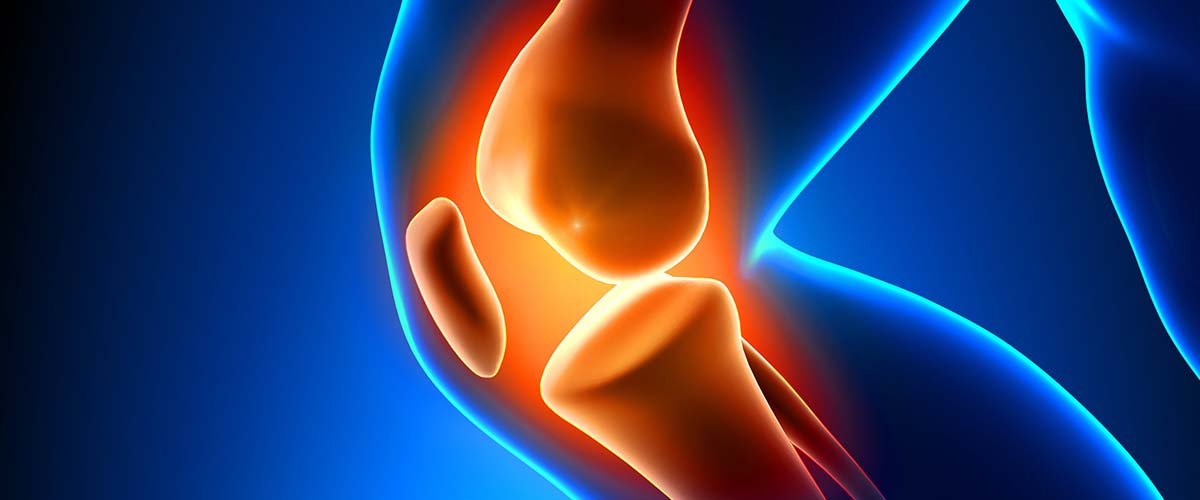
The quadriceps tendon connects the large thigh muscle (the quadriceps) to the top of the kneecap. Together with the kneecap and the patellar tendon below it, it forms the extensor mechanism, which straightens the knee and lets you stand, walk and climb stairs. A complete quadriceps tendon rupture breaks this chain, and it almost always needs surgical repair. Dr. Andrew Dold, a board-certified, fellowship-trained sports medicine surgeon in Frisco, Texas, repairs quadriceps tendon ruptures and guides patients through a structured recovery.
- Usually affects people over 40, often after a fall or a stumble
- You typically cannot straighten the knee or lift the leg with the knee straight
- A complete tear needs surgical repair, ideally within about 2 weeks
- Most patients regain good motion and return to their usual activities
- Full recovery takes about 6 to 9 months
How does the quadriceps tendon tear?
The tendon usually tears when the quadriceps muscle contracts hard while the knee is bending, for example when you stumble and try to catch yourself. In a systematic review of 319 patients, the average age was 57, and a simple fall was the most common cause (61.5%).1 Tears usually occur 1 to 2 cm above the kneecap or, in older people, right where the tendon attaches to the bone.1
Systemic illnesses and steroid medicines or injections can weaken tendons and increase the risk of rupture.2
Symptoms
- A tearing or popping sensation above the kneecap
- Pain and swelling
- Inability to straighten the knee or perform a straight-leg raise
- The knee buckling or giving way when you try to stand or walk
- A gap you can feel just above the kneecap
Partial tears may still allow you to straighten the knee, but with weakness.
Diagnosis
Dr. Dold examines the knee, including whether you can straighten it against gravity. X-rays check for a low-riding kneecap and for a fracture of the kneecap, which can cause similar symptoms (see patella fracture). An MRI or ultrasound helps when the diagnosis is unclear, when the tear may be partial or when other knee injuries are suspected.2
Surgical repair
The torn tendon is sewn back to the top of the kneecap with strong sutures, either passed through small tunnels drilled in the kneecap (transosseous repair) or attached with suture anchors. Dr. Dold chooses the technique based on where the tendon tore and the quality of the tissue.
- A meta-analysis found similar clinical and biomechanical results with bone tunnels and suture anchors.3
- Another review found slightly better knee bending with bone tunnels (132° vs 127°) but no difference in function scores.4
- A comparative study reported better patient-reported outcomes with suture anchors and similar failure rates.5
Overall, the type of repair does not appear to change the result much, and most patients regain good motion and return to their pre-injury activities. Re-rupture is uncommon (about 2%).1
Why early repair matters
Results are worse when repair is delayed.1 The tendon pulls back and scars, and a late repair may need a tendon graft to bridge the gap. In a review of chronic quadriceps ruptures, nearly half needed graft reconstruction, and delays were most often due to patients not seeking care promptly.6
Recovery after repair: Dr. Dold’s protocol
The repaired tendon needs protection while it heals to the bone, so knee bending is increased step by step. These are the phases of Dr. Dold’s rehabilitation protocol for quadriceps and patellar tendon repairs:
| Phase | What happens |
|---|---|
| 0–2 weeks | Walk with full weight as tolerated, using crutches, with the hinged brace locked straight at all times except for gentle exercises. Physical therapy starts about 7 to 10 days after surgery. Ankle pumps, quadriceps and buttock tightening exercises. |
| 2–6 weeks | Brace still locked straight for walking. Gentle passive bending increases gradually: 0–30° in weeks 2–3, 0–50° at week 4, 0–70° at week 5 and 0–90° at week 6. No active straightening of the knee yet. |
| 6–12 weeks | Brace opened to 30–40° for walking, then weaned off crutches. Bending to 115° at weeks 7–8, 130° at weeks 9–10 and 140° at weeks 11–12. Active knee straightening begins at about 10 weeks. Stationary bike and light closed-chain strengthening. |
| 12–16 weeks | Walking without the brace, full motion, balance work and strengthening to a 70° squat. No impact yet. |
| 4–6 months | Sport- and work-specific training, including gradual impact and jumping drills. |
| 6–9 months | Gradual return to sport once quadriceps strength is 95% to 100% of the other leg, with good control and no pain or swelling. |
Physical therapy is usually 2 to 3 times a week for the first 3 to 4 months, with daily home exercises. Following the motion limits closely protects the repair from re-tearing. Most patients take aspirin for 21 days after surgery to lower the risk of blood clots.
Possible complications
Complications are uncommon. In a systematic review they included extra bone formation around the knee (6.9%), blood clots (2.5%) and infection (about 1% each for superficial and deep).1 Thigh muscle weakness and some loss of bending can persist, which is why the rehabilitation program is so important.1
What the research shows
Quadriceps tendon rupture is uncommon, so most of the research comes from case series and reviews rather than randomized trials. The findings are consistent on the points that matter most.
Don’t let it be missed
The diagnosis is usually clear on examination, yet quadriceps tendon ruptures are still missed, sometimes for weeks. Ultrasound or MRI confirms the tear when the exam is uncertain. People with kidney disease, those on dialysis and those taking certain medicines are at higher risk, and both tendons can tear at once.
Early repair gives better results
Reviews consistently find that delayed diagnosis and repair lead to poorer results, whatever technique is used. Bone tunnel and suture anchor repairs have similar strength in laboratory studies. Partial tears that still allow you to straighten the knee can sometimes be treated without surgery.
After a knee replacement
A quadriceps tendon tear after knee replacement is a different and more difficult problem, with higher complication rates and it may need augmentation or reconstruction rather than simple repair.
Why see Dr. Dold
- Board certified by the American Board of Orthopaedic Surgery, with subspecialty certification in Sports Medicine
- Sports medicine and arthroscopy fellowship at NYU Langone / Hospital for Joint Diseases; orthopedic residency at the University of Toronto
- Fellow of the American College of Surgeons (FACS), the American Academy of Orthopaedic Surgeons (FAAOS), the American Orthopaedic Association (FAOA) and the Royal College of Surgeons of Canada (FRCSC)
- Published research on knee ligament and meniscus surgery, including The Posteromedial Corner of the Knee (JAAOS, 2017) and transtibial meniscal root repair (KSSTA, 2017)
- Team physician and surgical consultant to Rugby Canada; has cared for professional athletes from the NFL, NBA, NHL, MLS, PGA Tour and Major League Rugby
- D Magazine Best Doctors (Collin County), 2019–2026 · Rated 4.9 on Google
Frequently asked questions
Can a torn quadriceps tendon heal without surgery?
A complete tear does not heal back to the kneecap on its own, and without repair you cannot straighten the knee normally. Small partial tears with intact knee straightening can sometimes be treated with bracing and therapy.
How soon should the tendon be repaired?
Ideally within about 2 weeks. Results are worse with delayed repair, and late tears may need a graft.1,6
Can I walk after quadriceps tendon repair?
Yes. You can put weight on the leg as tolerated right after surgery, with the knee brace locked straight and crutches for support.
How long will I wear a brace?
About 12 weeks. It stays locked straight for walking for the first 6 weeks, is then opened partly, and is usually discontinued at about 12 to 16 weeks.
When does physical therapy start?
About 7 to 10 days after surgery, usually 2 to 3 times a week for the first 3 to 4 months.
When can I return to sport?
Usually between 6 and 9 months, once quadriceps strength is close to the other leg and you can move without pain or swelling.
Will my knee bend fully again?
Most patients regain good knee motion after repair.1 Following the stepwise motion plan helps you regain bending safely without stressing the repair.
What is the difference between a quadriceps tendon and a patellar tendon rupture?
The quadriceps tendon is above the kneecap and the patellar tendon is below it. Quadriceps tendon tears are more common in people over 40, while patellar tendon ruptures are more common in younger athletes. Both are repaired and rehabilitated in a similar way.
Research cited on this page
- Ciriello V, Gudipati S, Tosounidis T, et al. Clinical outcomes after repair of quadriceps tendon rupture: a systematic review. Injury. 2012;43(11):1931-1938. PubMed
- Matava MJ. Patellar Tendon Ruptures. J Am Acad Orthop Surg. 1996;4(6):287-296. PubMed
- Coladonato C, Perez AR, Sonnier JH, et al. Similar Outcomes Are Found Between Quadriceps Tendon Repair With Transosseous Tunnels and Suture Anchors: A Systematic Review and Meta-Analysis. Arthrosc Sports Med Rehabil. 2023;5(6):100807. PubMed
- Mehta AV, Wilson C, King TS, et al. Outcomes following quadriceps tendon repair using transosseous tunnels versus suture anchors: A systematic review. Injury. 2021;52(3):339-344. PubMed
- Yanke AB, Dandu N, Trasolini NA, et al. Suture Anchor-Based Quadriceps Tendon Repair May Result in Improved Patient-Reported Outcomes but Similar Failure Rates Compared to the Transosseous Tunnel Technique. Arthroscopy. 2023;39(6):1483-1489. PubMed
- Touhey DC, Beady ND, Tartibi S, et al. Chronic Quadriceps Tendon Rupture: Surgical Treatment and Outcomes: A Systematic Review. J Knee Surg. 2025;38(11):539-548. PubMed
- Arnold EP, Sedgewick JA, Wortman RJ, et al. Acute Quadriceps Tendon Rupture: Presentation, Diagnosis, and Management. JBJS Rev. 2022;10(2). PubMed
A 2022 review described MRI as the most accurate test for quadriceps tendon rupture and recommended prompt surgery for complete tears. - Petersen W, Bierke S, Häner M. [Quadriceps tendon rupture]. Orthopade. 2021;50(11):959-967. PubMed
A review described the gap above the kneecap as a typical exam finding and ultrasound as a reliable first imaging test. - Amlang MH, Zwipp H. [Damage to large tendons: Achilles, patellar and quadriceps tendons]. Chirurg. 2006;77(7):637-49, quiz 649. PubMed
A review noted that, although the diagnosis is usually clinical, quadriceps and other large tendon ruptures are still frequently missed. - Ibounig T, Simons TA. Etiology, Diagnosis and Treatment of Tendinous Knee Extensor Mechanism Injuries. Scand J Surg. 2016;105(2):67-72. PubMed
Risk factors for quadriceps and patellar tendon rupture include older age, repetitive strain, systemic diseases and certain medicines. - Ristić V, Maljanović M, Popov I, et al. Quadriceps tendon injuries. Med Pregl. 2013;66(3-4):121-5. PubMed
Quadriceps tendon injuries most often occurred in men in their 40s and 50s with predisposing conditions, after minor trauma; patients on dialysis were most vulnerable. - Shah MK. Simultaneous bilateral quadriceps tendon rupture in renal patients. Clin Nephrol. 2002;58(2):118-21. PubMed
Most patients with kidney disease and ruptures of both quadriceps tendons regained good function after repair. - Ilan DI, Tejwani N, Keschner M, et al. Quadriceps tendon rupture. J Am Acad Orthop Surg. 2003;11(3):192-200. PubMed
A review noted that ruptures of both quadriceps tendons at once are uncommon and often linked to underlying medical conditions. - Danaher M, Faucett SC, Endres NK, et al. Repair of Quadriceps and Patellar Tendon Tears. Arthroscopy. 2023;39(2):142-144. PubMed
Biomechanical studies found similar strength with bone tunnel and suture anchor repairs, with less gapping at the repair site with anchors. - Arras C, Krause M, Frosch KH. [Quadriceps Tendon and Patellar Tendon Rupture]. Z Orthop Unfall. 2025;163(2):181-194. PubMed
A 2025 review stated that partial tears can often be treated without surgery, while complete tears need repair followed by early functional rehabilitation. - Lee D, Stinner D, Mir H. Quadriceps and patellar tendon ruptures. J Knee Surg. 2013;26(5):301-8. PubMed
A review described rehabilitation that generally allows immediate weight-bearing with the knee locked straight in a brace after repair. - Pengas IP, Assiotis A, Khan W, et al. Adult native knee extensor mechanism ruptures. Injury. 2016;47(10):2065-2070. PubMed
A review of extensor mechanism ruptures concluded that almost all types benefit from early diagnosis and repair. - Elattar O, McBeth Z, Curry EJ, et al. Management of Chronic Quadriceps Tendon Rupture: A Critical Analysis Review. JBJS Rev. 2021;9(5). PubMed
A review of chronic quadriceps ruptures found delayed diagnosis leads to poorer results regardless of the treatment used. - Oliva F, Marsilio E, Migliorini F, et al. Chronic quadriceps tendon rupture: quadriceps tendon reconstruction using ipsilateral semitendinosus tendon graft. J Orthop Surg Res. 2023;18(1):355. PubMed
Surgery for chronic quadriceps rupture is challenging because the tendon retracts and weakens over time. - Dobbs RE, Hanssen AD, Lewallen DG, et al. Quadriceps tendon rupture after total knee arthroplasty. Prevalence, complications, and outcomes. J Bone Joint Surg Am. 2005;87(1):37-45. PubMed
Complete quadriceps tendon tears after knee replacement had high complication rates and often poor results. - Swartz G, Layson JT, Hameed D, et al. Quadriceps Tendon Ruptures After Total Knee Arthroplasty. J Knee Surg. 2025;38(13):667-671. PubMed
A 2025 review described quadriceps tendon rupture after knee replacement as a difficult complication that often needs additional surgery.
Medically reviewed by Andrew P. Dold, MD, FAOA, FAAOS, FACS, FRCSC. Last reviewed October 2026. This page is general information, not medical advice. Individual results vary.