








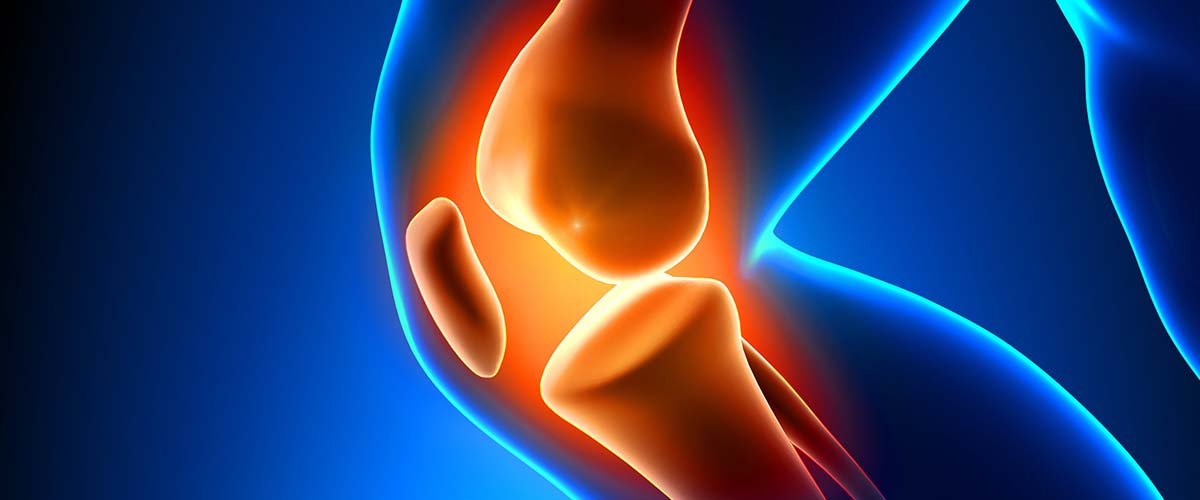
The patellofemoral joint is where the kneecap (patella) glides in a groove at the end of the thighbone. Softening and wear of the cartilage under the kneecap is called chondromalacia patellae; when the wear progresses to arthritis, it is patellofemoral arthritis. It is more common than many people think: in one review, it was present in 25% of population groups over age 20 and 39% of people over 30 with knee symptoms.1
- Pain behind or around the kneecap with stairs, squatting, kneeling and sitting with bent knees
- Hip and thigh strengthening is the foundation of treatment4,6
- A patellofemoral brace and weight loss can reduce pain9,13
- Cartilage repair, often with tubercle realignment, for focal damage in younger patients21,22
- Patellofemoral or total knee replacement for advanced arthritis26,30
Chondromalacia vs patellofemoral arthritis
- Chondromalacia patellae: softening, fissuring or fraying of the cartilage under the kneecap, often in younger, active people and frequently overlapping with patellofemoral pain (runner’s knee).
- Patellofemoral arthritis: more advanced wear, with cartilage loss and bone spurs, usually in adults over 40. It can occur alone or with arthritis elsewhere in the knee.
Contributing factors include kneecap tracking and alignment problems, previous kneecap dislocations or fractures, weakness of the hip and thigh muscles,2 excess body weight and repetitive deep knee bending.
Symptoms
- Aching pain behind or around the kneecap
- Pain going up or down stairs, squatting, kneeling or rising from a chair
- Pain after sitting with the knees bent (the “moviegoer’s sign”)
- Grinding or crackling (crepitus) under the kneecap
- Swelling after activity
Diagnosis
Dr. Dold examines how the kneecap tracks, checks for tenderness and crepitus, and evaluates hip and thigh strength and leg alignment. X-rays, including a kneecap (sunrise) view, show joint space, bone spurs and tilt. MRI shows cartilage damage well, with a sensitivity of about 80% and specificity of about 90% in pooled studies,16,17 though early softening can still be missed.18 CT may be used to measure alignment, such as the position of the tibial tubercle, when surgery is being considered.
Exercise and physical therapy
Strengthening is the foundation of treatment. Evidence for isolated patellofemoral arthritis is limited but supportive:3
- In a randomized trial, an exercise, education, manual therapy and taping program helped more people than education alone; for every 3 people treated, one more reported much improvement.4
- Hip and knee strengthening together reduced pain and improved activity more than knee strengthening alone,6 and quadriceps-focused and hip-focused programs gave equivalent results in a large trial.7
- For chondromalacia, closed-chain exercises such as partial squats were more effective than straight-leg raises.8
- Exercise probably improves pain, function and quality of life in knee arthritis.5
People with patellofemoral arthritis tend to have weaker hip and knee muscles,2 so a progressive program focused on the hips, quadriceps and core usually comes first.
Bracing, taping and weight loss
- Patellofemoral brace: in a randomized trial, a patellofemoral brace reduced pain at 6 weeks and reduced bone marrow lesions under the kneecap,9,10 though another trial found no added benefit beyond a full non-surgical program.11 Adding a brace to exercise advice gave small improvements in a large trial.12
- Taping can help some people in the short term.3,4
- Weight loss lowers the load on the knee, and in people with obesity and knee arthritis, medically supported weight loss reduced knee pain.13,14
Injections
Cortisone injections can calm a flare of arthritis pain for a period of time. Evidence for injections in isolated patellofemoral arthritis is very limited,3 and PRP for chondromalacia has only limited evidence so far.15 Dr. Dold discusses the evidence with you before recommending any injection.
Surgery for cartilage damage and malalignment
For younger, active patients with focal cartilage damage or a kneecap that tracks poorly, surgery aims to unload the damaged area and restore cartilage:
- Tibial tubercle osteotomy (anteromedialization): moving the bony attachment of the patellar tendon forward and inward to shift pressure off damaged cartilage.19 In one series, scores improved and survivorship was 77% at 9 years, though about a quarter of patients would not repeat the surgery.20
- Cartilage restoration: chondrocyte implantation in the kneecap improved pain and function in 110 patients,22 and 91% of knees were rated normal or nearly normal after an arthroscopic version.23 Combined with tubercle realignment, results lasted more than 7 years,21 and realignment of poor tracking improved results.24 Osteochondral allografts are another option for larger defects.25
Arthroscopic “cleanup” alone generally has a limited role in arthritis.
Patellofemoral replacement or total knee replacement
For advanced arthritis that limits daily life despite non-surgical care, joint replacement is considered:
- Patellofemoral replacement (partial knee): resurfaces only the kneecap and groove. Survivorship was 91.7% at 5 years and 83.3% at 10 years across 9,619 implants,26,27 and it may give better function in the first 2 years than total knee replacement,31,32 though a randomized trial found similar function at 12 months.30 It is suited to patients whose arthritis is limited to the patellofemoral joint, because later failures mostly come from arthritis progressing elsewhere in the knee.28,29
- Total knee replacement: a reliable option when arthritis involves more of the knee or in older patients; about 82% of total knee replacements last 25 years in registry data,33 and resurfacing the kneecap reduced reoperations.34
Frequently asked questions
Is chondromalacia patellae the same as runner’s knee?
They overlap. Runner’s knee (patellofemoral pain) describes pain around the kneecap; chondromalacia means the cartilage itself has softened or worn. Many people with patellofemoral pain have normal cartilage.
Can cartilage under the kneecap grow back?
Damaged cartilage does not regrow on its own, but most people get significant relief with targeted strengthening, activity changes and bracing. Cartilage restoration surgery is an option for selected focal defects.
What exercises are good for patellofemoral arthritis?
Hip and thigh strengthening, such as hip abduction exercises and partial squats within a comfortable range, under a physical therapist’s guidance. Deep squats and kneeling may need to be limited during flares.
Do I need a total knee replacement for kneecap arthritis?
Not necessarily. If the arthritis is limited to the kneecap joint, a patellofemoral (partial) replacement may be an option. If arthritis involves more of the knee, a total knee replacement is usually more reliable.
Does a knee brace help?
A patellofemoral brace reduced pain in a randomized trial, though other studies found little added benefit beyond a good exercise program. It is a reasonable option to try.
Research cited on this page
- Kobayashi S, Pappas E, Fransen M, et al. The prevalence of patellofemoral osteoarthritis: a systematic review and meta-analysis. Osteoarthritis Cartilage. 2016;24(10):1697-1707. PubMed
Patellofemoral arthritis was present in 25% of population-based groups over age 20 and 39% of people with knee symptoms over 30. - Siqueira MS, Souto LR, Martinez AF, et al. Muscle activation, strength, and volume in people with patellofemoral osteoarthritis: a systematic review and meta-analysis. Osteoarthritis Cartilage. 2022;30(7):935-944. PubMed
People with patellofemoral arthritis had weaker hip and knee muscles than people without symptoms. - van Jonbergen HP, Poolman RW, van Kampen A. Isolated patellofemoral osteoarthritis. Acta Orthop. 2010;81(2):199-205. PubMed
Evidence for treating isolated patellofemoral arthritis is sparse; physiotherapy, taping and injections may help, with weak recommendations. - Crossley KM, Vicenzino B, Lentzos J, et al. Exercise, education, manual-therapy and taping compared to education for patellofemoral osteoarthritis: a blinded, randomised clinical trial. Osteoarthritis Cartilage. 2015;23(9):1457-64. PubMed
In a randomized trial, exercise, education, manual therapy and taping helped more people (number needed to treat 3) than education alone. - Lawford BJ, Hall M, Hinman RS, et al. Exercise for osteoarthritis of the knee. Cochrane Database Syst Rev. 2024;12(12):CD004376. PubMed
Exercise probably improves pain, function and quality of life in knee arthritis in the short term. - Nascimento LR, Teixeira-Salmela LF, Souza RB, et al. Hip and Knee Strengthening Is More Effective Than Knee Strengthening Alone for Reducing Pain and Improving Activity in Individuals With Patellofemoral Pain: A Systematic Review With Meta-analysis. J Orthop Sports Phys Ther. 2018;48(1):19-31. PubMed
For patellofemoral pain, hip and knee strengthening reduced pain and improved activity more than knee strengthening alone. - Hansen R, Brushøj C, Rathleff MS, et al. Quadriceps or hip exercises for patellofemoral pain? A randomised controlled equivalence trial. Br J Sports Med. 2023;57(20):1287-1294. PubMed
In a randomized trial of 200 people with patellofemoral pain, quadriceps and hip exercise programs gave equivalent results. - Bakhtiary AH, Fatemi E. Open versus closed kinetic chain exercises for patellar chondromalacia. Br J Sports Med. 2008;42(2):99-102; discussion 102. PubMed
For chondromalacia patellae, semi-squat (closed-chain) exercises were more effective than straight-leg raises. - Callaghan MJ, Parkes MJ, Hutchinson CE, et al. A randomised trial of a brace for patellofemoral osteoarthritis targeting knee pain and bone marrow lesions. Ann Rheum Dis. 2015;74(6):1164-70. PubMed
In a randomized trial, a patellofemoral brace reduced knee pain at 6 weeks and reduced bone marrow lesion volume. - Swaminathan V, Parkes MJ, Callaghan MJ, et al. With a biomechanical treatment in knee osteoarthritis, less knee pain did not correlate with synovitis reduction. BMC Musculoskelet Disord. 2017;18(1):347. PubMed
Brace users had clear pain improvement compared with controls. - Yu SP, Williams M, Eyles JP, et al. Effectiveness of knee bracing in osteoarthritis: pragmatic trial in a multidisciplinary clinic. Int J Rheum Dis. 2016;19(3):279-86. PubMed
A non-operative program improved pain and function; adding a patellofemoral or tibiofemoral brace gave no additional benefit. - Holden MA, Nicholls E, Abdali Z, et al. Provision of knee bracing for knee osteoarthritis (PROP OA): multicentre, parallel group, superiority, statistician blinded, randomised controlled trial. BMJ. 2026;392:e086005. PubMed
Adding a compartment-specific brace to exercise advice gave small improvements in a large randomized trial. - Bliddal H, Bays H, Czernichow S, et al. Once-Weekly Semaglutide in Persons with Obesity and Knee Osteoarthritis. N Engl J Med. 2024;391(17):1573-1583. PubMed
In people with obesity and knee arthritis, weight loss with semaglutide reduced knee pain more than placebo. - Shahid A, Thirumaran AJ, Christensen R, et al. Comparison of weight loss interventions in overweight and obese adults with knee osteoarthritis: A systematic review and network meta-analysis of randomized trials. Osteoarthritis Cartilage. 2025;33(4):518-529. PubMed
Diet, exercise and other weight-loss approaches all reduced weight in knee arthritis compared with controls. - Katz NB, Tsitsilianos N, Nowak AS, et al. Advanced Non-Operative Interventions for Anterior Knee Pain. Curr Rev Musculoskelet Med. 2024;17(12):589-615. PubMed
PRP may have evidence for chondromalacia, but it is limited. - Xará-Leite F, Vinha A, Valente C, et al. Magnetic resonance imaging is able to detect patellofemoral focal cartilage injuries: a systematic review with meta-analysis. Knee Surg Sports Traumatol Arthrosc. 2023;31(6):2469-2481. PubMed
MRI detected patellofemoral cartilage lesions with a sensitivity of about 0.8 and specificity of about 0.9. - Vallotton JA, Meuli RA, Leyvraz PF, et al. Comparison between magnetic resonance imaging and arthroscopy in the diagnosis of patellar cartilage lesions: a prospective study. Knee Surg Sports Traumatol Arthrosc. 1995;3(3):157-62. PubMed
MRI had a sensitivity of 84.7% and specificity of 97.2% for patellar cartilage lesions compared with arthroscopy. - Khoo P, Ghoshal A, Byrne D, et al. A novel clinical test for assessing patellar cartilage changes and its correlation with magnetic resonance imaging and arthroscopy. Physiother Theory Pract. 2019;35(8):781-786. PubMed
A clinical patellar test was more sensitive but less specific than MRI for chondromalacia. - Sherman SL, Erickson BJ, Cvetanovich GL, et al. Tibial Tuberosity Osteotomy: Indications, Techniques, and Outcomes. Am J Sports Med. 2014;42(8):2006-17. PubMed
Tibial tubercle osteotomy is used for patellar instability, focal patellofemoral cartilage lesions and patellofemoral arthritis. - Rosso F, Rossi R, Governale G, et al. Tibial Tuberosity Anteromedialization for Patellofemoral Chondral Disease: Prognostic Factors. Am J Sports Med. 2017;45(7):1589-1598. PubMed
After tibial tubercle anteromedialization, scores improved and survivorship was 77% at 108 months; 25.6% would not repeat the surgery. - Gillogly SD, Arnold RM. Autologous chondrocyte implantation and anteromedialization for isolated patellar articular cartilage lesions: 5- to 11-year follow-up. Am J Sports Med. 2014;42(4):912-20. PubMed
Chondrocyte implantation with anteromedialization improved symptoms and function at over 7 years; 83% rated the surgery good or excellent. - Gomoll AH, Gillogly SD, Cole BJ, et al. Autologous chondrocyte implantation in the patella: a multicenter experience. Am J Sports Med. 2014;42(5):1074-81. PubMed
After chondrocyte implantation in the patella, 110 patients had clinically important improvements in pain and function. - Filardo G, Kon E, Berruto M, et al. Arthroscopic second generation autologous chondrocytes implantation associated with bone grafting for the treatment of knee osteochondritis dissecans: Results at 6 years. Knee. 2012;19(5):658-63. PubMed
After arthroscopic chondrocyte implantation in the patella, 91% of knees were rated normal or nearly normal. - Henderson IJ, Lavigne P. Periosteal autologous chondrocyte implantation for patellar chondral defect in patients with normal and abnormal patellar tracking. Knee. 2006;13(4):274-9. PubMed
Patellar chondrocyte implantation did better when combined with realignment of abnormal tracking. - Familiari F, Cinque ME, Chahla J, et al. Clinical Outcomes and Failure Rates of Osteochondral Allograft Transplantation in the Knee: A Systematic Review. Am J Sports Med. 2018;46(14):3541-3549. PubMed
Osteochondral allografts in the knee had mean survival of 86.7% at 5 years and 78.7% at 10 years. - van der List JP, Chawla H, Zuiderbaan HA, et al. Survivorship and functional outcomes of patellofemoral arthroplasty: a systematic review. Knee Surg Sports Traumatol Arthrosc. 2017;25(8):2622-2631. PubMed
Across 9,619 patellofemoral replacements, survivorship was 91.7% at 5, 83.3% at 10, 74.9% at 15 and 66.6% at 20 years. - Vella-Baldacchino M, Chughtai D, Kow J, et al. Outcomes of patellofemoral joint arthroplasty: a systematic review of revision timelines and complication rates. J Orthop Surg Res. 2025;20(1):289. PubMed
Registry survival of patellofemoral replacement was 90.3% at 5 years and 82.2% at 10 years. - Lustig S. Patellofemoral arthroplasty. Orthop Traumatol Surg Res. 2014;100(1 Suppl):S35-43. PubMed
Early problems after patellofemoral replacement relate to maltracking; later failures mostly come from arthritis progressing elsewhere in the knee. - Lonner JH. Patellofemoral arthroplasty. J Am Acad Orthop Surg. 2007;15(8):495-506. PubMed
Patellofemoral replacement should be limited to patients without arthritis in the rest of the knee. - Joseph MN, Achten J, Parsons NR, et al. The PAT randomized clinical trial. Bone Joint J. 2020;102-B(3):310-318. PubMed
In a randomized trial, patellofemoral and total knee replacement had similar function at 12 months. - Peng G, Liu M, Guan Z, et al. Patellofemoral arthroplasty versus total knee arthroplasty for isolated patellofemoral osteoarthritis: a systematic review and meta-analysis. J Orthop Surg Res. 2021;16(1):264. PubMed
Patellofemoral replacement gave better function and activity in the first 2 years, with similar complications and satisfaction. - Elbardesy H, McLeod A, Gul R, et al. Midterm results of modern patellofemoral arthroplasty versus total knee arthroplasty for isolated patellofemoral arthritis: systematic review and meta-analysis of comparative studies. Arch Orthop Trauma Surg. 2022;142(5):851-859. PubMed
At 5 years, patellofemoral and total knee replacement had similar activity scores and satisfaction; patellofemoral replacement had less blood loss. - Evans JT, Walker RW, Evans JP, et al. How long does a knee replacement last? A systematic review and meta-analysis of case series and national registry reports with more than 15 years of follow-up. Lancet. 2019;393(10172):655-663. PubMed
Pooled registry data show about 82% of total knee replacements last 25 years. - Longo UG, Ciuffreda M, Mannering N, et al. Patellar Resurfacing in Total Knee Arthroplasty: Systematic Review and Meta-Analysis. J Arthroplasty. 2018;33(2):620-632. PubMed
Resurfacing the kneecap during total knee replacement reduced reoperations (1% vs 6.9%).
Medically reviewed by Andrew P. Dold, MD, FAOA, FAAOS, FACS, FRCSC. Last reviewed October 2026. This page is general information, not medical advice. Your own diagnosis and treatment plan depend on your exam and imaging.