








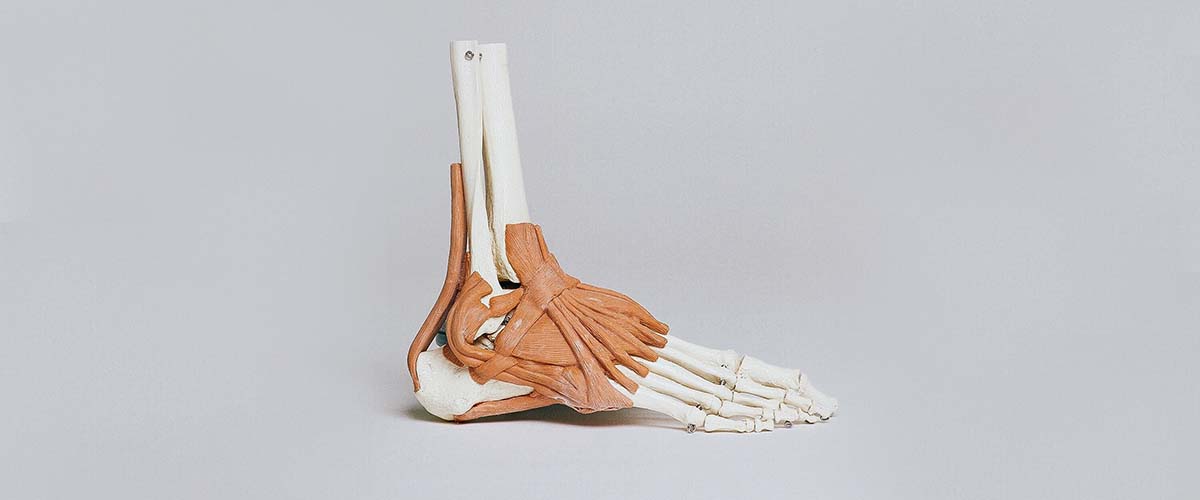
Toe injuries are common, from stubbing a toe on furniture to a sports injury on artificial turf. Most broken lesser toes heal well with simple treatment,1,5 but injuries to the big toe deserve more attention because the big toe carries much of your weight when you push off. Turf toe, a sprain or tear of the ligaments under the big-toe joint, can cause lasting problems if it isn’t recognized.22
- Most lesser toe fractures heal with buddy taping and a stiff-soled shoe1,2
- Big-toe fractures into the joint or out of alignment may need surgery10
- Turf toe: hyperextension injury of the big-toe joint, common on artificial turf15,18
- Less than 2% of turf toe injuries need surgery19
- A stubbed big toe with bleeding at the nail fold in a child needs prompt care13
Toe fractures
Toe fractures usually come from stubbing or dropping something on the toe. X-rays confirm the fracture and its alignment.
- Lesser toes (2nd to 5th): stable, non-displaced fractures are treated with buddy taping to the neighboring toe and a stiff-soled shoe for about 4 to 6 weeks.1,2 Displaced fractures are gently realigned, then buddy taped.1 Outcomes are generally good regardless of which toe is broken,6 and median recovery was about 6 weeks in one study.7 Fractures through fused small-toe joints can take many months to unite.8
- Big toe: often treated in a walking boot or cast with a toe plate for 2 to 3 weeks, then a stiff shoe.2 Surgery is recommended for fractures with more than 2 mm of step-off in the joint, malrotation, or open or unstable fractures.10
Buddy taping is simple but can irritate the skin, so the tape and gauze should be changed regularly.12
Toe fractures in children and athletes
- Children: a stubbed big toe with bleeding from the nail fold can hide an open growth-plate fracture that needs prompt cleaning, antibiotics and splinting.13
- Athletes: most sport-related toe fractures do well without surgery; displaced growth-plate fractures of the big toe benefit from surgery.9 Stress fractures of the big-toe phalanx have been linked to bunions.11
Toe dislocations
Toe dislocations are usually reduced in the office under a numbing block, then buddy taped. A dislocation of the big-toe joint that cannot be reduced by closed methods needs prompt open reduction.14
Turf toe
Turf toe is a sprain or tear of the plantar plate and ligaments under the big-toe joint from forced hyperextension, as when the toe is planted and the heel lifts.15,16 It is common in football and other field sports, especially on artificial surfaces;17 in the NFL, play on synthetic turf had 16% more lower-extremity injuries than natural grass.18
- Grade 1: stretch of the ligaments; mild pain and swelling
- Grade 2: partial tear; more swelling, bruising and limited motion
- Grade 3: complete tear, sometimes with injury to the sesamoid bones or joint instability
Dr. Dold examines stability and motion, and orders X-rays (including comparison views of both feet) and an MRI to grade the injury. Higher-grade ligament injuries on MRI and higher levels of sport were associated with surgery.20
Turf toe treatment
Most turf toe injuries are treated without surgery: rest, ice, a stiff-soled shoe or carbon-fiber plate, taping to limit upward bending, sometimes a boot, and a staged rehab program.19,21 Less than 2% of turf toe injuries need surgery, and non-surgical rehab can last up to about 10 weeks.19
Surgery to repair the plantar plate is considered for complete (grade 3) tears, unstable joints, sesamoid retraction or fracture, and injuries that fail rehab.17,23,24 Results are good:
- After surgery for grade 3 turf toe in football players, average time missed was 16.5 weeks with good final scores.25
- 90.5% returned to pre-injury sport at a mean of 20.4 weeks after repair.26
- Arthroscopic repair of chronic tears returned all but one patient to pre-injury activity within 6 months.27
- NFL players’ performance after turf toe injury did not differ from before.28
Unrecognized turf toe can lead to weak push-off, persistent pain, deformity and arthritis of the big-toe joint,22 which can progress to hallux rigidus.
Recovery
- Lesser toe fractures: about 4 to 6 weeks of buddy taping and a stiff shoe.2
- Big-toe fractures: about 6 weeks of protection, longer after surgery.
- Turf toe: from a few weeks for grade 1 to several months after surgical repair.19,26
Other foot fractures are covered on the foot fractures page.
Frequently asked questions
Do I need an X-ray for a broken toe?
For a lesser toe with mild symptoms it may not change treatment, but an X-ray is recommended for big-toe injuries, deformity, open wounds, or pain that isn’t improving.
How do I buddy tape a toe?
Place gauze between the injured toe and its neighbor, then tape them together loosely. Change the tape and gauze regularly and watch for skin irritation.
What is turf toe?
A sprain or tear of the ligaments under the big-toe joint from bending it too far upward, common in football and other field sports.
How long does turf toe take to heal?
Mild injuries often recover in a few weeks; more severe injuries can take months. A small minority need surgery, with return to sport typically 4 to 5 months later.
Can a broken toe heal wrong?
Yes. A displaced or rotated fracture, especially of the big toe, can heal crooked and cause pain or shoe problems. That’s why displaced fractures are realigned.
Think you have a fracture? See fracture care in Frisco: same-day appointments and walk-ins Monday, Wednesday and Friday, 8:30–10:30 am.
Research cited on this page
- Hatch RL, Hacking S. Evaluation and management of toe fractures. Am Fam Physician. 2003;68(12):2413-8. PubMed
Stable, non-displaced toe fractures are treated with buddy taping and a rigid-sole shoe; displaced or unstable big-toe fractures often need stabilization. - Bica D, Sprouse RA, Armen J. Diagnosis and Management of Common Foot Fractures. Am Fam Physician. 2016;93(3):183-91. PubMed
Big-toe fractures are treated in a walking boot or cast with toe plate for 2 to 3 weeks, then a rigid shoe; lesser toe fractures with buddy taping and a rigid shoe for 4 to 6 weeks. - Silver S, Williams E, Plunkett ML. Common Foot Fractures. Am Fam Physician. 2024;109(2):119-129. PubMed
Many foot fractures are treated in a walking boot or hard-soled shoe for 3 to 6 weeks. - Ray J, Andrews NA, Dib A, et al. Management of acute lesser toe pain. Postgrad Med. 2021;133(3):320-329. PubMed
Review of acute lesser-toe pain, including toe fractures and dislocations. - Mittlmeier T, Haar P. Sesamoid and toe fractures. Injury. 2004;35 Suppl 2:SB87-97. PubMed
Most toe and sesamoid injuries respond to non-surgical treatment with an excellent prognosis, but careful imaging selects those needing surgery. - Van Vliet-Koppert ST, Cakir H, Van Lieshout EM, et al. Demographics and functional outcome of toe fractures. J Foot Ankle Surg. 2011;50(3):307-10. PubMed
After toe fractures, outcomes did not depend on which toe, the fracture type or joint involvement. - Bin Sahl A, Niaz FZ, Nath U, et al. Evaluating the Effectiveness of Virtual Fracture Clinics in Managing Toe Fractures: Patient Demographics and Outcomes. Cureus. 2024;16(9):e70555. PubMed
Toe fractures managed conservatively had high function scores, with a median recovery of 6 weeks. - Kyung MG, Yoon YS, Kim Y, et al. Prolonged Union in Conservative Treatment of Symphalangeal Toe Fractures: Case Series. Clin Orthop Surg. 2024;16(2):322-325. PubMed
Fractures of fused small-toe joints (symphalangeal) can take many months to unite. - Robertson GAJ, Sinha A, Hodkinson T, et al. Return to sport following toe phalanx fractures: A systematic review. World J Orthop. 2023;14(6):471-484. PubMed
Most sport-related toe fractures do well without surgery; displaced joint (growth plate) fractures of the big toe benefit from surgery. - Godoy-Santos AL, Giordano V, Cesar C, et al. HALLUX PROXIMAL PHALANX FRACTURE IN ADULTS: AN OVERLOOKED DIAGNOSIS. Acta Ortop Bras. 2020;28(6):318-322. PubMed
Surgery is recommended for big-toe proximal phalanx fractures with more than 2 mm of joint step-off, malrotation, or open or unstable fractures. - Yokoe K, Kameyama Y. Relationship between stress fractures of the proximal phalanx of the great toe and hallux valgus. Am J Sports Med. 2004;32(4):1032-4. PubMed
Stress fractures of the big-toe proximal phalanx were associated with hallux valgus. - Won SH, Lee S, Chung CY, et al. Buddy taping: is it a safe method for treatment of finger and toe injuries?. Clin Orthop Surg. 2014;6(1):26-31. PubMed
Buddy taping is widely used but can cause skin problems, which 45% of surgeons reported seeing. - Kensinger DR, Guille JT, Horn BD, et al. The stubbed great toe: importance of early recognition and treatment of open fractures of the distal phalanx. J Pediatr Orthop. 2001;21(1):31-4. PubMed
A stubbed big toe with bleeding from the nail fold can hide an open growth-plate fracture in children that needs prompt treatment. - McGuire RA, Reinert CM. Complex dislocation of first metatarsophalangeal joint. Orthopedics. 1984;7(8):1321-3. PubMed
First MTP joint dislocations that cannot be reduced by closed methods need prompt open reduction. - Ashimolowo T, Dunham G, Sharp JW, et al. Turf Toe: An Update and Comprehensive Review. Radiol Clin North Am. 2018;56(6):847-858. PubMed
Turf toe is a spectrum of injury to the big-toe joint, first described in football players on artificial surfaces. - Perry MT, Pierce JL. Imaging of Turf Toe. Clin Sports Med. 2021;40(4):755-764. PubMed
On imaging, turf toe refers to injury of the plantar plate complex from hyperextension. - Clough TM, Majeed H. Turf Toe Injury – Current Concepts and an Updated Review of Literature. Foot Ankle Clin. 2018;23(4):693-701. PubMed
Turf toe often occurs on artificial surfaces; stress and instability testing guide the need for surgery. - Mack CD, Hershman EB, Anderson RB, et al. Higher Rates of Lower Extremity Injury on Synthetic Turf Compared With Natural Turf Among National Football League Athletes: Epidemiologic Confirmation of a Biomechanical Hypothesis. Am J Sports Med. 2019;47(1):189-196. PubMed
In the NFL, play on synthetic turf had 16% more lower-extremity injuries than natural grass. - Gupta A, Singh PK, Xu AL, et al. Turf Toe Injuries in the Athlete: an Updated Review of Treatment Options, Rehabilitation Protocols, and Return-to-Play Outcomes. Curr Rev Musculoskelet Med. 2023;16(11):563-574. PubMed
Less than 2% of turf toe injuries need surgery; non-surgical rehab lasts up to about 10 weeks and post-surgical rehab up to 20 weeks. - Waldrop NE. Assessment and Treatment of Sports Injuries to the First Metatarsophalangeal Joint. Foot Ankle Clin. 2021;26(1):1-12. PubMed
Most turf toe injuries are treated with rest, immobilization if needed and a dedicated rehab program. - Edwards CR, Ahmad ZY, Vosseller JT, et al. First MTP joint injuries: MR imaging findings in surgically managed patients. Skeletal Radiol. 2023;52(9):1729-1738. PubMed
Grade 2 or 3 plantar complex and medial ligament injuries on MRI, and collegiate or professional sport, increased the rate of surgery. - Najefi AA, Jeyaseelan L, Welck M. Turf toe: A clinical update. EFORT Open Rev. 2018;3(9):501-506. PubMed
Unrecognized turf toe can lead to weak push-off, persistent pain, deformity and arthritis. - McCormick JJ, Anderson RB. The great toe: failed turf toe, chronic turf toe, and complicated sesamoid injuries. Foot Ankle Clin. 2009;14(2):135-50. PubMed
Failed or chronic turf toe can be treated surgically when conservative care fails. - Kadakia AR, Alshouli MT, Barbosa MP, et al. Turf Toe, Traumatic Hallux Valgus, and Hallux Rigidus -What Can I Do After an Metatarsophalangeal Fusion?. Clin Sports Med. 2020;39(4):801-818. PubMed
Recent reports encourage early surgery for grade III turf toe injuries. - Smith K, Waldrop N. Operative Outcomes of Grade 3 Turf Toe Injuries in Competitive Football Players. Foot Ankle Int. 2018;39(9):1076-1081. PubMed
After surgery for grade 3 turf toe in football players, average time missed was 16.5 weeks with good final scores. - Cho D, Kukadia S, Josephson B, et al. Return to Sport and Radiographic Postoperative Outcomes After Grade 3 Turf Toe Surgical Repair. Am J Sports Med. 2025;53(8):1988-1995. PubMed
After surgical repair, 90.5% returned to pre-injury sport at a mean of 20.4 weeks. - Husebye EE, Stødle AH. Arthroscopic Repair of Chronic Plantar Plate Tears of the First Metatarsophalangeal Joint: A New Surgical Technique With Patient Outcomes. Orthop J Sports Med. 2022;10(12):23259671221137558. PubMed
Arthroscopic repair of chronic big-toe plantar plate tears returned all but one patient to pre-injury activity within 6 months. - Madi NS, Parekh TJ, Parekh SG. Outcome of Turf Toe Injuries in NFL Players. J Foot Ankle Surg. 2023;62(1):115-119. PubMed
NFL players’ performance after turf toe injury did not differ from before injury or from uninjured players.
Medically reviewed by Andrew P. Dold, MD, FAOA, FAAOS, FACS, FRCSC. Last reviewed October 2026. This page is general information, not medical advice. Your own diagnosis and treatment plan depend on your exam and imaging.