









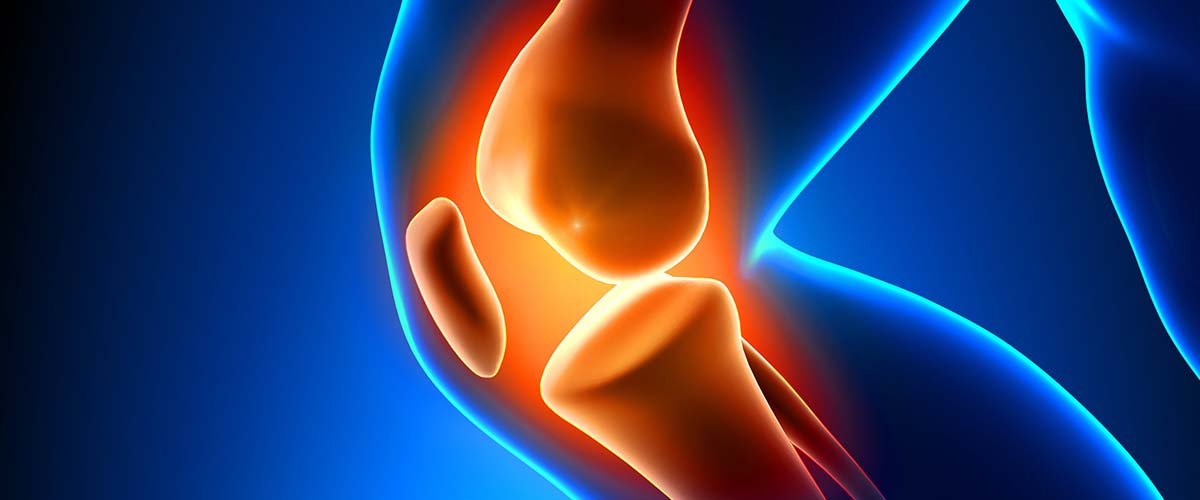
A Baker’s cyst, or popliteal cyst, is a fluid-filled swelling behind the knee. It usually forms when extra joint fluid, produced because of a problem inside the knee such as a meniscus tear or arthritis, collects in a sac connected to the joint. Dr. Andrew Dold, a board-certified, fellowship-trained sports medicine surgeon in Frisco, Texas, focuses on treating the cause of the cyst, which is usually the most effective way to make it go away.
- A swelling behind the knee, often linked to a meniscus tear or arthritis
- Many cysts cause few symptoms and need no specific treatment
- Treating the underlying knee problem is the key
- Aspiration or injection can help some cysts; surgery on the cyst itself is rarely needed
Symptoms
- A bulge or feeling of fullness behind the knee
- Tightness or aching, especially when bending or straightening fully
- Symptoms of the underlying problem, such as catching or joint-line pain
What causes a Baker’s cyst?
In adults, most Baker’s cysts are related to a problem inside the knee that causes extra fluid, such as a meniscus tear, arthritis or inflammatory arthritis. The fluid flows from the joint into the cyst through a small connection.
Diagnosis
Dr. Dold examines the knee and the back of the knee. Ultrasound confirms a fluid-filled cyst, and an MRI shows the cyst and the underlying cause, such as a meniscus tear or cartilage damage.
Treatment
Dr. Dold’s approach is to treat the cause. When the problem inside the knee is treated, for example with physical therapy, an injection for arthritis or arthroscopic treatment of a meniscus tear, the cyst often shrinks.
- Non-surgical options: a systematic review found that ultrasound-guided drainage with a steroid injection into the cyst is an effective non-surgical treatment.1
- Surgery: when surgery is needed, arthroscopic treatment of the problem inside the knee, often combined with enlarging the connection between the cyst and the joint, has been the most commonly used approach.1 In a meta-analysis, procedures that enlarged this connection had a success rate of about 97%.2 Open removal of the cyst is rarely needed.
What the research shows
- Common and usually secondary: ultrasound studies find a Baker’s cyst in roughly a quarter of adults with knee pain, usually alongside arthritis or a meniscus tear. Fluid from the knee passes through a one-way, valve-like opening into the cyst, which is why the cyst usually reflects a problem inside the knee.
- Treat the knee, not just the cyst: reviews agree that treating the underlying arthritis, inflammation or meniscus problem is the priority, and in many cases the cyst does not need direct treatment.
- Aspiration and injection: for a painful cyst, ultrasound-guided drainage combined with a corticosteroid injection is an effective non-surgical treatment, although cysts can refill if the knee problem persists.
- Surgery: for persistent, symptomatic cysts, arthroscopic surgery that treats the joint problem and enlarges the valve-like opening is effective. Open removal of the cyst alone, without treating the knee, is rarely needed.
- Ruptured cyst vs. blood clot: a ruptured cyst causes sudden calf pain and swelling that can look like a blood clot. A Doppler ultrasound distinguishes the two, which matters because blood thinners can cause bleeding into the calf if a clot is wrongly assumed.
- Children: popliteal cysts in children are usually isolated and typically resolve on their own without treatment.
Why see Dr. Dold
- Board certified by the American Board of Orthopaedic Surgery, with subspecialty certification in Sports Medicine
- Sports medicine and arthroscopy fellowship at NYU Langone / Hospital for Joint Diseases; orthopedic residency at the University of Toronto
- Fellow of the American College of Surgeons (FACS), the American Academy of Orthopaedic Surgeons (FAAOS), the American Orthopaedic Association (FAOA) and the Royal College of Surgeons of Canada (FRCSC)
- Published research on knee ligament and meniscus surgery, including The Posteromedial Corner of the Knee (JAAOS, 2017) and transtibial meniscal root repair (KSSTA, 2017)
- Team physician and surgical consultant to Rugby Canada; has cared for professional athletes from the NFL, NBA, NHL, MLS, PGA Tour and Major League Rugby
- D Magazine Best Doctors (Collin County), 2019–2026 · Rated 4.9 on Google
Frequently asked questions
Will a Baker’s cyst go away on its own?
Sometimes, especially when the underlying knee problem settles. Treating the cause is the most reliable way to make it shrink.
Is a Baker’s cyst dangerous?
Usually not. However, a ruptured cyst can cause calf pain and swelling that mimics a blood clot, which should be checked promptly.
Can a Baker’s cyst be drained?
Yes. Ultrasound-guided drainage with a steroid injection is an effective non-surgical option for some cysts.1
Does a Baker’s cyst need surgery?
Rarely by itself. When surgery is done, it usually treats the problem inside the knee and enlarges the connection to the cyst, with high success rates.2
Research cited on this page
- Van Nest DS, Tjoumakaris FP, Smith BJ, et al. Popliteal Cysts: A Systematic Review of Nonoperative and Operative Treatment. JBJS Rev. 2020;8(3):e0139. PubMed
- Zhou XN, Li B, Wang JS, et al. Surgical treatment of popliteal cyst: a systematic review and meta-analysis. J Orthop Surg Res. 2016;11:22. PubMed
- Herman AM, Marzo JM. Popliteal cysts: a current review. Orthopedics. 2014;37(8):e678-84. PubMed
Review: popliteal cysts are confirmed reliably by imaging; MRI is the modern imaging of choice; adult cysts usually accompany a joint problem. - Fritschy D, Fasel J, Imbert JC, et al. The popliteal cyst. Knee Surg Sports Traumatol Arthrosc. 2006;14(7):623-8. PubMed
Review: in adults an underlying knee joint disorder is usually present; in children the cyst is often isolated with a normal knee. - Demange MK. BAKER’S CYST. Rev Bras Ortop. 2011;46(6):630-3. PubMed
Review: treatment should focus on the underlying joint problem, and in most cases the cyst does not need to be addressed directly. - Picerno V, Filippou G, Bertoldi I, et al. Prevalence of Baker’s cyst in patients with knee pain: an ultrasonographic study. Reumatismo. 2014;65(6):264-70. PubMed
Ultrasound study of 400 patients with knee pain: a Baker’s cyst was found in 25.8%, usually with arthritis and joint effusion. - Sansone V, de Ponti A, Paluello GM, et al. Popliteal cysts and associated disorders of the knee. Critical review with MR imaging. Int Orthop. 1995;19(5):275-9. PubMed
Imaging study: cysts were seen in 4.7% of referred patients and always communicated with the knee joint. - Abate M, Di Carlo L, Di Iorio A, et al. Baker’s Cyst with Knee Osteoarthritis: Clinical and Therapeutic Implications. Med Princ Pract. 2021;30(6):585-591. PubMed
Study: Baker’s cysts add to the symptom burden of knee osteoarthritis; conservative treatment improved both, though benefits faded by 6 months in some. - Bandinelli F, Fedi R, Generini S, et al. Longitudinal ultrasound and clinical follow-up of Baker’s cysts injection with steroids in knee osteoarthritis. Clin Rheumatol. 2012;31(4):727-31. PubMed
Longitudinal ultrasound study: cyst size and symptoms decreased significantly after treatment. - Brazier BG, Sudekum SA, DeVito PM, et al. Arthroscopic Treatment of Popliteal Cysts. Arthrosc Tech. 2018;7(11):e1109-e1114. PubMed
Technique review: a one-way valve between the joint and cyst explains recurrence; arthroscopic enlargement of the opening addresses it. - Pankaj A, Chahar D, Pathrot D. Arthroscopic management of popliteal cysts. Indian J Orthop. 2016;50(2):154-8. PubMed
Series: arthroscopic decompression allows simultaneous treatment of joint problems inside the knee. - Stein D, Cantlon M, Mackay B, et al. Cysts about the knee: evaluation and management. J Am Acad Orthop Surg. 2013;21(8):469-79. PubMed
Review: cysts about the knee and their treatment, including decompression or excision. - Akagi R, Saisu T, Segawa Y, et al. Natural history of popliteal cysts in the pediatric population. J Pediatr Orthop. 2013;33(3):262-8. PubMed
MRI study: popliteal cysts in children can be expected to resolve completely without treatment. - Harcke HT, Niedzielski A, Thacker MM. Popliteal cysts in children: another look. J Pediatr Orthop B. 2016;25(6):539-42. PubMed
Pediatric study: most popliteal cysts in children resolved over time without intervention. - Tejero S, Fenero-Delgado BT, López-Lobato R, et al. Ruptured Baker’s cyst: complications due to misdiagnosis. Emergencias. 2018;30(6):412-414. PubMed
Case report: a ruptured Baker’s cyst mimicking a blood clot; Doppler ultrasound is needed before starting blood thinners. - Leow KS, Chew KM, Chawla A, et al. Sonographic assessment of musculoskeletal causes of calf pain and swelling. Emerg Radiol. 2019;26(3):349-359. PubMed
Review: ultrasound assessment of calf pain distinguishes deep vein thrombosis from a ruptured Baker’s cyst and other causes. - Katz RS, Zizic TM, Arnold WP, et al. The pseudothrombophlebitis syndrome. Medicine (Baltimore). 1977;56(2):151-64. PubMed
Classic study: a ruptured popliteal cyst can mimic thrombophlebitis (pseudothrombophlebitis). - Jacobson JA, Ruangchaijatuporn T, Khoury V, et al. Ultrasound of the Knee: Common Pathology Excluding Extensor Mechanism. Semin Musculoskelet Radiol. 2017;21(2):102-112. PubMed
Review: ultrasound reliably evaluates joint recesses and bursae, including Baker’s cysts.
Medically reviewed by Andrew P. Dold, MD, FAOA, FAAOS, FACS, FRCSC. Last reviewed October 2026. This page is general information, not medical advice. Individual results vary.