









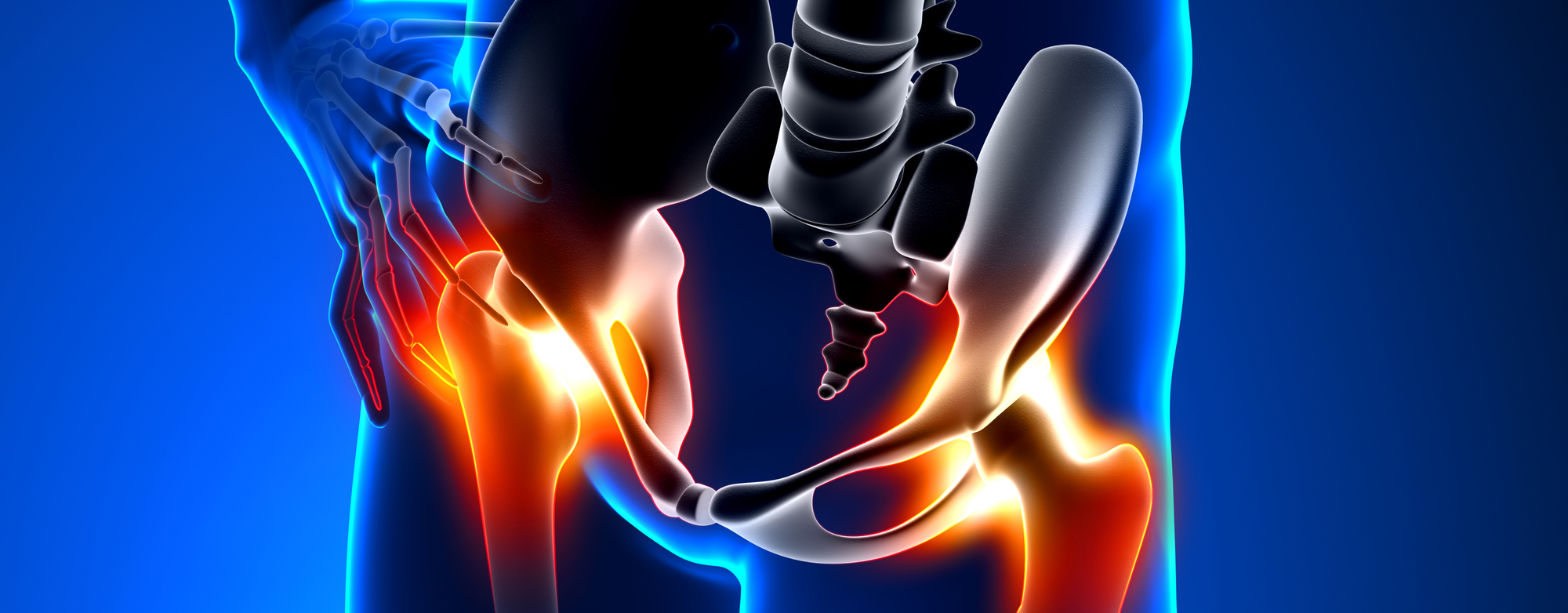
Platelet-rich plasma (PRP) is a concentrate of platelets made from a small sample of your own blood. Platelets contain growth factors involved in the body’s natural healing response. When injected into an injured tendon or joint, PRP is intended to support healing and reduce pain. Dr. Dold has studied and lectured on PRP and uses it for selected hip problems.
- PRP is made from your own blood during a single office visit
- It is most often used for hip tendon problems and early arthritis
- Results vary, and research is still evolving
- PRP is usually not covered by insurance
Hip conditions PRP may be used for
- Gluteal tendinopathy and partial gluteus medius tears (outer hip pain)
- Proximal hamstring tendinopathy (pain at the “sit bone”)
- Mild to moderate hip arthritis
- As part of treatment during some hip surgeries
PRP is not the right choice for every hip problem. For example, it will not repair a complete tendon tear or reverse advanced arthritis. Dr. Dold will tell you whether PRP is reasonable for your condition and how it compares with other options, such as physical therapy, cortisone injections or surgery.
What the research shows
Studies of PRP for tendon problems around the hip, especially gluteal tendinopathy, have shown encouraging results, and some suggest longer-lasting relief than cortisone. For hip arthritis, the evidence is more limited and mixed. The devices used to prepare PRP are cleared by the FDA, but using PRP injections for these conditions is considered off-label, and results cannot be promised.
What to expect
- Blood draw: a small amount of blood is taken from your arm.
- Preparation: the blood is spun in a centrifuge to concentrate the platelets.
- Injection: the PRP is injected into the tendon or joint using live X-ray (fluoroscopic) guidance for accuracy.
The visit takes about 30 to 45 minutes. Soreness for a few days afterward is common. You may be asked to avoid anti-inflammatory medicines such as ibuprofen for 1 week before and 2 weeks after the injection, because they can interfere with the platelets. Most patients follow a guided rehab program afterward, and improvement usually develops gradually over several weeks.
Cost and insurance
Most insurance plans do not cover PRP injections. Our team will explain the cost before your treatment.
Learn more about PRP therapy and other biologic treatments.
A closer look at the studies
Here is a closer look at the studies, including the ones that did not find a benefit, so you can weigh PRP with Dr. Dold.
Gluteal tendinopathy (outer hip pain)
This is where the evidence for PRP around the hip is most encouraging. In a randomized trial of patients with long-standing gluteal tendon pain, one PRP injection improved pain and function more than cortisone at 3 and 6 months. Even so, exercise and education remain the first-line treatment, and PRP is usually considered when they have not been enough.
Hamstring tendinopathy
Studies are small and mixed. Some show improvement after PRP, but a randomized trial found that adding PRP to a needle procedure did not improve results at 1 or 2 years.
Hip arthritis
PRP has relieved hip arthritis pain in some trials, sometimes for longer than other injections. However, a meta-analysis found that no injection, PRP included, clearly outperformed a saline placebo, so expectations should be modest.
PRP across orthopedics
Results vary by condition, by how the PRP is prepared and by study quality. Some large reviews find only marginal benefit. Dr. Dold will be candid about where PRP is reasonable and where another treatment is more likely to help.
Why see Dr. Dold
- Author of a systematic review on platelet-rich plasma (Clinical Journal of Sport Medicine, 2014) and co-author of a review of injectable biologic treatments (JBJS Reviews, 2017); faculty, TOBI Orthobiologics Institute conference (2018)
- Board certified by the American Board of Orthopaedic Surgery, with subspecialty certification in Sports Medicine
- Fellow of the American Orthopaedic Association (FAOA), the American Academy of Orthopaedic Surgeons (FAAOS), the American College of Surgeons (FACS) and the Royal College of Surgeons of Canada (FRCSC)
- Sports medicine and arthroscopy fellowship at NYU Langone / Hospital for Joint Diseases; orthopedic residency at the University of Toronto
- Member of the International Society for Hip Arthroscopy (ISHA)
- D Magazine Best Doctors (Collin County), 2019–2026 · Rated 4.9 on Google
Frequently asked questions
Does PRP work for hip pain?
PRP has shown encouraging results for some hip tendon problems, such as gluteal tendinopathy. Evidence for hip arthritis is more limited. Results vary from person to person.
Is a PRP injection painful?
The injection causes some discomfort, and soreness for a few days afterward is common. Image guidance helps place the injection accurately.
How long does it take for PRP to work?
Improvement is gradual and usually develops over several weeks as part of a rehab program.
Is PRP better than a cortisone shot?
For some tendon conditions, studies suggest PRP may give longer-lasting relief than cortisone. Cortisone often works faster. Dr. Dold will help you weigh the options.
Does insurance cover PRP for the hip?
Usually not. Our team will explain the cost before treatment.
Research cited on this page
- Fitzpatrick J, Bulsara MK, O’Donnell J, et al. The effectiveness of platelet-rich plasma injections in gluteal tendinopathy: a randomized, double-blind controlled trial comparing a single platelet-rich plasma injection with a single corticosteroid injection. Am J Sports Med. 2018;46(4):933-939. PubMed
In chronic gluteal tendinopathy, one PRP injection led to greater improvement at 12 weeks than one cortisone injection (82% vs 57% reached a meaningful improvement). - Mellor R, Bennell K, Grimaldi A, et al. Education plus exercise versus corticosteroid injection use versus a wait and see approach on global outcome and pain from gluteal tendinopathy: prospective, single blinded, randomised clinical trial. BMJ. 2018;361:k1662. PubMed
For outer hip (gluteal tendon) pain, education plus exercise did better than a cortisone injection at 8 weeks, and better than waiting and seeing. - Dallari D, Stagni C, Rani N, et al. Ultrasound-guided injection of platelet-rich plasma and hyaluronic acid, separately and in combination, for hip osteoarthritis: a randomized controlled study. Am J Sports Med. 2016;44(3):664-671. PubMed
In 111 patients with hip arthritis, PRP gave lower pain scores than gel injections at 6 months; the advantage in function was no longer significant at 12 months. - Belk JW, Houck DA, Littlefield CP, et al. Platelet-rich plasma versus hyaluronic acid for hip osteoarthritis yields similarly beneficial short-term clinical outcomes: a systematic review and meta-analysis of level I and II randomized controlled trials. Arthroscopy. 2022;38(6):2035-2046. PubMed
In six studies of hip arthritis, PRP and gel (hyaluronic acid) injections produced similar short-term improvement. - Xiong Y, Gong C, Peng X, et al. Efficacy and safety of platelet-rich plasma injections for the treatment of osteoarthritis: a systematic review and meta-analysis of randomized controlled trials. Front Med (Lausanne). 2023;10:1204144. PubMed
Pooling 24 randomized trials, PRP improved pain in knee and ankle arthritis but showed no significant pain benefit in hip arthritis. - Dold AP, Zywiel MG, Taylor DW, et al. Platelet-rich plasma in the management of articular cartilage pathology: a systematic review. Clin J Sport Med. 2014;24(1):31-43. PubMed
Dr. Dold’s review: limited, mostly low-quality evidence suggested short-term benefit of PRP for knee arthritis, and more high-quality studies were needed. - Fitzpatrick J, Bulsara MK, O’Donnell J, et al. Leucocyte-Rich Platelet-Rich Plasma Treatment of Gluteus Medius and Minimus Tendinopathy: A Double-Blind Randomized Controlled Trial With 2-Year Follow-up. Am J Sports Med. 2019;47(5):1130-1137. PubMed
In a randomized trial of chronic gluteal tendinopathy, a single ultrasound-guided PRP injection improved pain and function more than a cortisone injection at 12 and 24 weeks. - Bremer T, Nicklen P, Fearon A, et al. The efficacy of gluteal tendinopathy treatments: A systematic review. Clin Rehabil. 2025;39(5):600-617. PubMed
A 2025 meta-analysis of gluteal tendinopathy treatments recommended exercise and education as core care; PRP improved short-term function more than cortisone. - Kjeldsen T, Hvidt KJ, Bohn MB, et al. Exercise compared to a control condition or other conservative treatment options in patients with Greater Trochanteric Pain Syndrome: a systematic review and meta-analysis of randomized controlled trials. Physiotherapy. 2024;123:69-80. PubMed
A meta-analysis strongly supported exercise as first-line treatment for outer hip pain (greater trochanteric pain syndrome). - Walker-Santiago R, Wojnowski NM, Lall AC, et al. Platelet-Rich Plasma Versus Surgery for the Management of Recalcitrant Greater Trochanteric Pain Syndrome: A Systematic Review. Arthroscopy. 2020;36(3):875-888. PubMed
For outer hip pain that has not responded to other care, both PRP and surgery led to meaningful improvement in patient-reported outcomes. - Kuhns BD, Becker N, Reyes-Cordova A, et al. Improved Outcomes With Platelet-Rich Plasma for Treating Extra-articular Hip Pathology Especially Greater Trochanteric Pain Syndrome and Hamstring Injury: A Systematic Review of Randomized Controlled Trials. Arthroscopy. 2026;42(1):310-325. PubMed
A 2026 review of 11 randomized trials found PRP improved outcomes compared with controls at one or more time points for gluteal tendon and hamstring problems, with substantial differences between studies. - Nasser AM, Vicenzino B, Grimaldi A, et al. Proximal Hamstring Tendinopathy: A Systematic Review of Interventions. Int J Sports Phys Ther. 2021;16(2):288-305. PubMed
A review of proximal hamstring tendinopathy found insufficient evidence to recommend any single treatment over another. - Davenport KL, Campos JS, Nguyen J, et al. Ultrasound-Guided Intratendinous Injections With Platelet-Rich Plasma or Autologous Whole Blood for Treatment of Proximal Hamstring Tendinopathy: A Double-Blind Randomized Controlled Trial. J Ultrasound Med. 2015;34(8):1455-63. PubMed
A small randomized trial in proximal hamstring tendinopathy found PRP and whole-blood injections both improved symptoms, without clear differences between groups. - Kirschner JS, Cheng J, Hurwitz N, et al. Ultrasound-guided percutaneous needle tenotomy (PNT) alone versus PNT plus platelet-rich plasma injection for the treatment of chronic tendinosis: A randomized controlled trial. PM R. 2021;13(12):1340-1349. PubMed
In hamstring tendinopathy, adding PRP to needle tenotomy did not improve results at 1 or 2 years. - Medina-Porqueres I, Ortega-Castillo M, Muriel-Garcia A. Effectiveness of platelet-rich plasma in the management of hip osteoarthritis: a systematic review and meta-analysis. Clin Rheumatol. 2021;40(1):53-64. PubMed
A review of PRP for hip arthritis found benefits mostly in the first 3 months, with mixed results beyond that. - Nouri F, Babaee M, Peydayesh P, et al. Comparison between the effects of ultrasound guided intra-articular injections of platelet-rich plasma (PRP), high molecular weight hyaluronic acid, and their combination in hip osteoarthritis: a randomized clinical trial. BMC Musculoskelet Disord. 2022;23(1):856. PubMed
A randomized trial found PRP, hyaluronic acid and the combination all improved hip arthritis symptoms, with longer-lasting effects in the PRP groups. - Zhao Z, Ma JX, Ma XL. Different Intra-articular Injections as Therapy for Hip Osteoarthritis: A Systematic Review and Network Meta-analysis. Arthroscopy. 2020;36(5):1452-1464.e2. PubMed
A network meta-analysis of hip arthritis injections ranked cortisone highest for short-term pain relief and PRP highest for relief up to 6 months. - Gazendam A, Ekhtiari S, Bozzo A, et al. Intra-articular saline injection is as effective as corticosteroids, platelet-rich plasma and hyaluronic acid for hip osteoarthritis pain: a systematic review and network meta-analysis of randomised controlled trials. Br J Sports Med. 2021;55(5):256-261. PubMed
A meta-analysis found no hip arthritis injection, including PRP, significantly outperformed saline placebo at 2–6 months. - Rafols C, Monckeberg JE, Numair J, et al. Platelet-Rich Plasma Augmentation of Arthroscopic Hip Surgery for Femoroacetabular Impingement: A Prospective Study With 24-Month Follow-up. Arthroscopy. 2015;31(10):1886-92. PubMed
In a randomized trial of hip arthroscopy, PRP lowered pain at 48 hours and reduced joint swelling at 6 months, but function scores at 2 years were the same. - Di Martino A, Boffa A, Andriolo L, et al. Leukocyte-Rich versus Leukocyte-Poor Platelet-Rich Plasma for the Treatment of Knee Osteoarthritis: A Double-Blind Randomized Trial. Am J Sports Med. 2022;50(3):609-617. PubMed
A double-blind randomized trial found leukocyte-rich and leukocyte-poor PRP gave similar results in knee arthritis. - Scott A, LaPrade RF, Harmon KG, et al. Platelet-Rich Plasma for Patellar Tendinopathy: A Randomized Controlled Trial of Leukocyte-Rich PRP or Leukocyte-Poor PRP Versus Saline. Am J Sports Med. 2019;47(7):1654-1661. PubMed
In patellar tendinopathy, a single PRP injection with exercise was no more effective than saline with exercise. - Franchini M, Cruciani M, Mengoli C, et al. Efficacy of platelet-rich plasma as conservative treatment in orthopaedics: a systematic review and meta-analysis. Blood Transfus. 2018;16(6):502-513. PubMed
A meta-analysis of 36 randomized trials found only marginal benefit of PRP over controls across orthopedic conditions. - Ye Z, Yuan Y, Kuang G, et al. Platelet-rich plasma and corticosteroid injection for tendinopathy: a systematic review and meta-analysis. BMC Musculoskelet Disord. 2025;26(1):339. PubMed
A 2025 meta-analysis found PRP gave better mid-term results than cortisone for tendinopathy, with long-term benefit still uncertain.
Same-day appointments available. Dr. Dold accepts most major insurance plans, including Medicare and Tricare. Please call 469-850-0680 to confirm your coverage.
Medically reviewed by Andrew P. Dold, MD, FAOA, FAAOS, FACS, FRCSC. Last reviewed October 2026. This page is general information, not medical advice.