








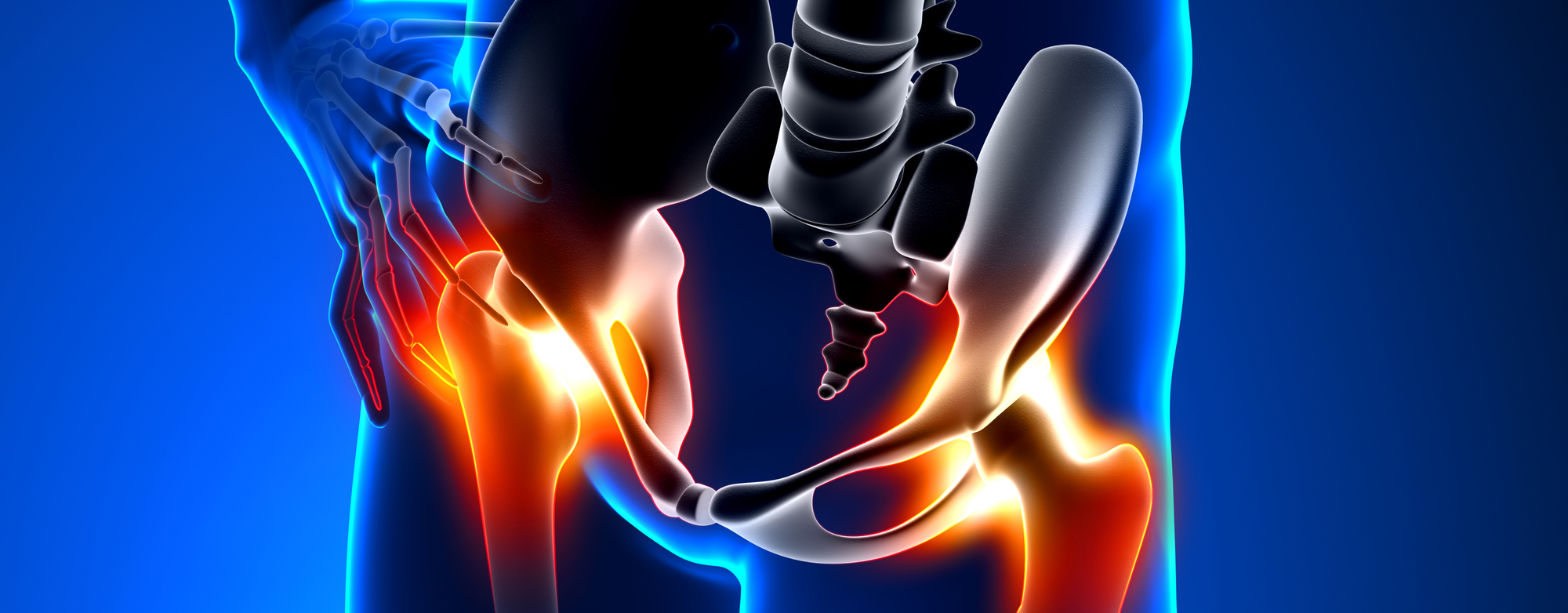
The iliopsoas is the main hip flexor. Its tendon crosses the front of the hip joint before attaching to the thigh bone. When this tendon becomes irritated (iliopsoas tendonitis or bursitis) or catches as it slides over the front of the hip (internal snapping hip), it can cause pain in the front of the hip and groin.
- A snap or clunk in the front of the hip, often when straightening the hip from a bent position
- Painless snapping usually needs no treatment
- Most painful cases improve with therapy and an image-guided injection
- When they don’t, an arthroscopic psoas release can help
Symptoms
- A snapping, clunking or popping feeling deep in the front of the hip, sometimes audible
- Groin or front-of-hip pain with lifting the leg, getting out of a car, or climbing stairs
- Pain with running, kicking, dance or hurdling
Snapping on the outside of the hip is a different problem (external snapping hip), usually related to the IT band. See IT band syndrome.
Diagnosis
Dr. Dold can often reproduce the snap during the exam. A dynamic ultrasound can show the tendon snapping in real time, and an MRI can show related problems such as a labral tear or hip impingement. An image-guided injection into the psoas bursa can confirm the source of the pain and relieve it.
Non-surgical treatment
- Physical therapy focused on hip flexor flexibility, core and hip strength, and movement patterns
- Activity changes while symptoms settle
- Anti-inflammatory medicine
- An image-guided cortisone injection into the psoas bursa
Most patients improve without surgery.
Arthroscopic psoas release
If painful snapping or tendon irritation continues despite non-surgical care, Dr. Dold may recommend an arthroscopic psoas release. Using a camera and small instruments through small incisions, the tendon portion of the iliopsoas is carefully lengthened so it no longer snaps or pinches. The muscle remains attached and continues to work. The procedure is done as outpatient surgery and is often performed together with hip arthroscopy to treat a labral tear or impingement at the same time.
Psoas pain after hip replacement
Occasionally, the iliopsoas tendon can rub on the edge of the hip socket component after a hip replacement, causing groin pain with lifting the leg or climbing stairs (iliopsoas impingement). Dr. Dold evaluates this with an exam, imaging and a diagnostic injection. Many patients improve with therapy and an injection. When pain persists, an arthroscopic psoas release may be an option.
Recovery
Most patients walk with crutches for about 2 to 4 weeks, then begin physical therapy. Some temporary hip flexor weakness is expected and improves with rehab. Return to sport depends on any other procedures performed at the same time.
What the research shows
- Most patients do not need surgery: snapping and iliopsoas tendinitis usually improve with activity changes, stretching and strengthening, anti-inflammatory medicine and, when needed, an ultrasound-guided injection into the iliopsoas bursa.
- Confirming the diagnosis: an ultrasound-guided numbing injection around the tendon helps confirm that the iliopsoas is the source of pain before surgery is considered. Dynamic ultrasound can show the tendon snapping.
- Release when conservative care fails: systematic reviews show that arthroscopic release of the iliopsoas tendon reliably relieves painful snapping and pain from tendon impingement on the labrum. Associated problems inside the joint, such as labral tears or impingement, are common and are treated at the same time.
- Trade-offs: some temporary hip-flexor weakness and muscle shrinkage can follow release, and release combined with other procedures may contribute to hip instability in at-risk hips, so the decision is individualized.
- After hip replacement: iliopsoas irritation is a recognized cause of groin pain. About half of patients improve without surgery; when the implant is well positioned, release gives reliable relief, while a markedly prominent cup may need revision.
Why see Dr. Dold
- Hip arthroscopy research in AJSM and JBJS Reviews; Stryker Advanced Hip Arthroscopy Course (2018)
- Board certified by the American Board of Orthopaedic Surgery, with subspecialty certification in Sports Medicine
- Fellow of the American Orthopaedic Association (FAOA), the American Academy of Orthopaedic Surgeons (FAAOS), the American College of Surgeons (FACS) and the Royal College of Surgeons of Canada (FRCSC)
- Sports medicine and arthroscopy fellowship at NYU Langone / Hospital for Joint Diseases; orthopedic residency at the University of Toronto
- Member of the International Society for Hip Arthroscopy (ISHA)
- D Magazine Best Doctors (Collin County), 2019–2026 · Rated 4.9 on Google
Frequently asked questions
What causes a snapping hip in the front?
Usually the iliopsoas (hip flexor) tendon catching as it slides over the front of the hip joint or pelvis, called internal snapping hip.
Is a snapping hip serious?
Painless snapping is common and usually harmless. Snapping with pain, weakness or catching should be evaluated, because it can be linked to tendon irritation or a labral tear.
Can iliopsoas tendonitis be treated without surgery?
Yes. Most patients improve with physical therapy, activity changes and, if needed, an image-guided injection.
What is a psoas release?
A minimally invasive, arthroscopic procedure that lengthens the tendon portion of the iliopsoas so it no longer snaps or pinches. The muscle stays attached and continues to work.
How long does it take to recover from a psoas release?
Crutches for about 2 to 4 weeks, then physical therapy. Hip flexor strength improves gradually with rehab.
Research cited on this page
- Gouveia K, Shah A, Kay J, et al. Iliopsoas tenotomy during hip arthroscopy: a systematic review of postoperative outcomes. Am J Sports Med. 2021;49(3):817-829. PubMed
Across 21 studies, arthroscopic psoas release resolved a painful snapping hip in 93% of reported cases, with no major complications. Some shrinkage of the psoas muscle on imaging was common. - Longstaffe R, Hendrikx S, Naudie D, et al. Iliopsoas release: a systematic review of clinical efficacy and associated complications. Clin J Sport Med. 2021;31(6):522-529. PubMed
Psoas release was effective for snapping hip, psoas impingement and psoas pain after hip replacement; the arthroscopic approach had fewer recurrences (5% vs 22%) and complications than open surgery. - Ramos N, Dold A, Youm T. Postoperative considerations following hip arthroscopy. JBJS Rev. 2017;5(7):e3. PubMed
A review of recovery and rehabilitation after hip arthroscopy, co-authored by Dr. Dold. - Anderson CN. Iliopsoas: Pathology, Diagnosis, and Treatment. Clin Sports Med. 2016;35(3):419-433. PubMed
Review: first-line treatment for iliopsoas disorders is activity modification, physical therapy, anti-inflammatories and corticosteroid injection; surgery is for persistent symptoms. - Sugrañes J, Jackson GR, Warrier AA, et al. Snapping Hip Syndrome: Pathoanatomy, Diagnosis, Nonoperative Therapy, and Current Concepts in Operative Management. JBJS Rev. 2023;11(6). PubMed
Review: snapping hip syndrome is treated non-operatively first; surgical options are reserved for failure. - Walker P, Ellis E, Scofield J, et al. Snapping Hip Syndrome: A Comprehensive Update. Orthop Rev (Pavia). 2021;13(2):25088. PubMed
Review: most cases of snapping hip resolve with conservative care. - Lyons JC, Peterson LF. The snapping iliopsoas tendon. Mayo Clin Proc. 1984;59(5):327-9. PubMed
Classic study: describes the snapping iliopsoas tendon and how to reproduce it on exam. - Johnston CA, Wiley JP, Lindsay DM, et al. Iliopsoas bursitis and tendinitis. A review. Sports Med. 1998;25(4):271-83. PubMed
Review: iliopsoas bursitis can usually be diagnosed clinically, with ultrasound helpful to confirm. - Flanum ME, Keene JS, Blankenbaker DG, et al. Arthroscopic treatment of the painful “internal” snapping hip: results of a new endoscopic technique and imaging protocol. Am J Sports Med. 2007;35(5):770-9. PubMed
Study: ultrasound-guided anesthetic injection of the psoas bursa confirms the tendon as the pain source; endoscopic release is a safe outpatient procedure. - Smith J, Brennan P, Klug K, et al. Clinical Efficacy of Ultrasound-guided Iliopsoas Corticosteriod Injection for Hip Pain. Kans J Med. 2024;17(6):146-149. PubMed
Study: ultrasound-guided corticosteroid injection into the iliopsoas bursa improved function and reduced disability. - Vandeputte FJ, Driesen R, Timmermans A, et al. Evaluation of Clinical Tests to Diagnose Iliopsoas Tendinopathy. Clin Orthop Relat Res. 2025;483(11):2123-2132. PubMed
Study: a new hip exam maneuver (HEC test) improved diagnostic accuracy for iliopsoas tendinopathy. - Kroger EW, Griesser MJ, Kolovich GP, et al. Efficacy of surgery for internal snapping hip. Int J Sports Med. 2013;34(10):851-5. PubMed
Systematic review: surgical treatment of painful snapping iliopsoas tendon is effective, and associated joint problems are common. - Patel KA, Collins MS, Cazan BA, et al. Iliopsoas Release in Hip Arthroscopy: Assessment of Muscle Atrophy. Orthopedics. 2020;43(3):e171-e176. PubMed
Imaging study: iliopsoas muscle size decreased after release during hip arthroscopy. - Nelson IR, Keene JS. Results of labral-level arthroscopic iliopsoas tenotomies for the treatment of labral impingement. Arthroscopy. 2014;30(6):688-94. PubMed
Study: release at the level of the labrum relieved pain from iliopsoas impingement in 77% of patients. - Mardones R, Via AG, Tomic A, et al. Arthroscopic release of iliopsoas tendon in patients with femoro-acetabular impingement: clinical results at mid-term follow-up. Muscles Ligaments Tendons J. 2016;6(3):378-383. PubMed
Study: arthroscopic iliopsoas release associated with hip impingement surgery gave good clinical results. - Andronic O, Nakano N, Daivajna S, et al. non-arthroplasty iliopsoas impingement in athletes: a narrative literature review. Hip Int. 2019;29(5):460-467. PubMed
Review: standard therapy for iliopsoas impingement is conservative care followed by arthroscopic tenotomy if needed. - Philippon MJ, Devitt BM, Campbell KJ, et al. Anatomic variance of the iliopsoas tendon. Am J Sports Med. 2014;42(4):807-11. PubMed
Anatomic study: two or more distinct tendons are common, which matters when releasing the tendon. - Duplantier NL, McCulloch PC, Nho SJ, et al. Hip Dislocation or Subluxation After Hip Arthroscopy: A Systematic Review. Arthroscopy. 2016;32(7):1428-34. PubMed
Systematic review: hip instability after arthroscopy was associated with factors including capsular insufficiency and iliopsoas tenotomy. - Chalmers BP, Sculco PK, Sierra RJ, et al. Iliopsoas Impingement After Primary Total Hip Arthroplasty: Operative and Nonoperative Treatment Outcomes. J Bone Joint Surg Am. 2017;99(7):557-564. PubMed
Study after hip replacement: non-operative care resolved groin pain in 50%; release worked well when cup prominence was minimal; revision was needed with large prominence. - Zimmerer A, Hauschild M, Nietschke R, et al. Results after arthroscopic treatment of iliopsoas impingement after total hip arthroplasty. Arch Orthop Trauma Surg. 2022;142(2):189-195. PubMed
Study: arthroscopic release gave good results for iliopsoas impingement after hip replacement when non-operative care failed. - Bonano JC, Pierre K, Jamero C, et al. Endoscopic iliopsoas lengthening for treatment of recalcitrant iliopsoas tendinitis after total hip arthroplasty. J Hip Preserv Surg. 2023;10(2):63-68. PubMed
Study: endoscopic iliopsoas release after hip replacement improved outcomes, especially within 2 years of the replacement. - Van Riet A, De Schepper J, Delport HP. Arthroscopic psoas release for iliopsoas impingement after total hip replacement. Acta Orthop Belg. 2011;77(1):41-6. PubMed
Study: when there is no obvious component malposition, psoas release reliably improves pain and function after hip replacement. - May O. Arthroscopic techniques for treating ilio-psoas tendinopathy after hip arthroplasty. Orthop Traumatol Surg Res. 2019;105(1S):S177-S185. PubMed
Review: arthroscopic and endoscopic techniques for iliopsoas tendinopathy after hip replacement. - Howell M, Rae FJ, Khan A, et al. Iliopsoas pathology after total hip arthroplasty: a young person’s complication. Bone Joint J. 2021;103-B(2):305-308. PubMed
Large series: iliopsoas pathology after hip replacement was more common in younger patients.
Same-day appointments available. Dr. Dold accepts most major insurance plans, including Medicare and Tricare. Please call 469-850-0680 to confirm your coverage.
Medically reviewed by Andrew P. Dold, MD, FAOA, FAAOS, FACS, FRCSC. Last reviewed October 2026. This page is general information, not medical advice.