









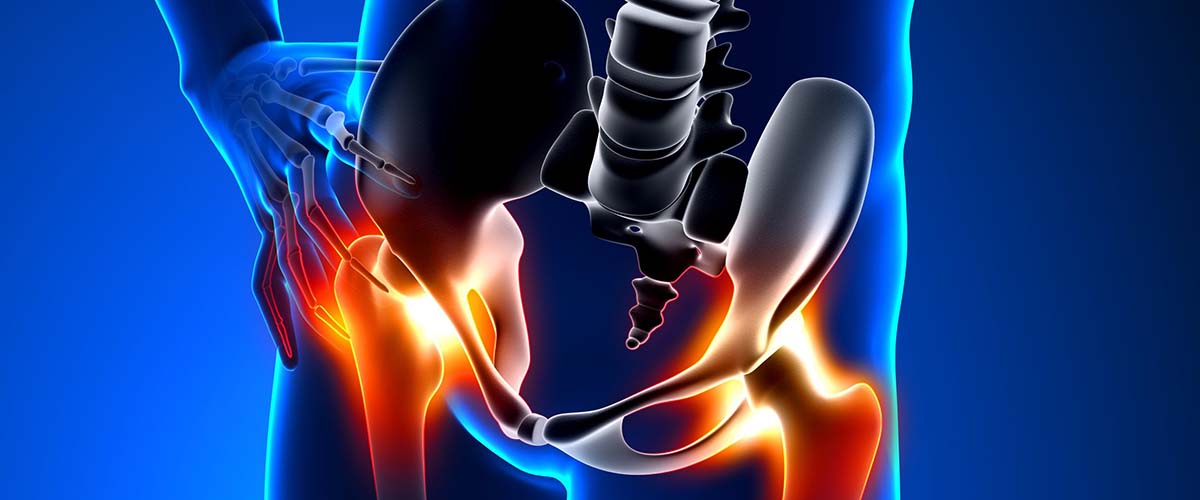
Deep gluteal syndrome is pain deep in the buttock caused by irritation or pinching of the sciatic nerve, the large nerve that runs from the low back, through the buttock and down the back of the leg. The nerve can get trapped by a muscle, a band of scar tissue or nearby bone as it passes through the area under the gluteus maximus (the “deep gluteal space”). Because the pain can travel down the leg, it is easy to mistake for a pinched nerve in the spine. Deep gluteal syndrome is seen in runners, athletes and active adults, and also in people who have had a fall, a hip injury or earlier hip surgery. Dr. Andrew Dold, a board-certified, fellowship-trained sports medicine surgeon in Frisco, Texas, evaluates and treats deep buttock pain and works with patients to find its true source.
- Deep gluteal syndrome means the sciatic nerve is being squeezed or irritated in the buttock, not in the spine
- Typical symptoms are deep buttock pain that is worse with sitting, sometimes with pain, tingling or numbness down the back of the leg
- Piriformis syndrome is one cause; others include scar tissue bands, the hamstring tendons and the space between the hip bones
- The low back and hip joint need to be checked, because they can cause similar pain
- Most people start with physical therapy, activity changes and sometimes an injection; surgery to free the nerve is considered only when these do not help
What is deep gluteal syndrome?
The sciatic nerve leaves the pelvis through an opening called the greater sciatic notch and then travels down the back of the hip, close to several small muscles that rotate the hip, the hamstring tendons and the “sit bone” (ischial tuberosity). Normally the nerve slides and glides a little as the hip moves. If something in this tight space presses on the nerve or tethers it so it cannot glide, the nerve becomes irritated and painful.
“Deep gluteal syndrome” is an umbrella term. It includes the older and better-known diagnosis of piriformis syndrome, but also several other ways the nerve can be trapped in the same region.
Causes
In a systematic review of 28 studies of patients who had surgery for this problem, the most common causes were earlier surgery or procedures in the area (about 30%), piriformis syndrome (26%), trauma such as a fall or fracture (15%) and problems with other muscles such as the hamstrings or the obturator internus (14%).1 In studies of endoscopic (minimally invasive) surgery, bands of fibrous scar tissue and blood vessels pressing on the nerve were the most common finding.2
- Piriformis syndrome: the piriformis is a small muscle that runs from the base of the spine to the top of the thigh bone. If it is tight, thickened or irritated, or if the nerve passes through it in an unusual way, it can squeeze the nerve.
- Scar tissue bands: after a fall, a bruise deep in the buttock or surgery, scar tissue can form around the nerve and stop it from gliding.
- Hamstring syndrome: the hamstring tendons attach to the sit bone right next to the sciatic nerve. Scarring or a partial tear of these tendons can irritate the nerve, often causing pain with sitting and running. A full tear is a different problem; see proximal hamstring tears and avulsions.
- Ischiofemoral impingement: the space between the sit bone and the top of the thigh bone is too narrow, and the quadratus femoris muscle that sits in that space gets pinched, especially with long strides. The nearby nerve can be irritated as well.
- Less common causes include cysts, enlarged blood vessels and, rarely, tumors of the nerve.
Symptoms
A systematic review of piriformis syndrome found that the most common features were buttock pain, tenderness over the greater sciatic notch, pain made worse by sitting, and pain made worse by movements that stretch or tighten the piriformis muscle.3 People with deep gluteal syndrome commonly describe:
- A deep ache in one buttock, often on the side of a wallet in a back pocket or a hard seat
- Trouble sitting for long periods, such as driving or desk work, and shifting to sit on the other side
- Sciatica-like symptoms: pain, burning, tingling or numbness that runs down the back of the thigh and sometimes below the knee
- Pain with running, climbing stairs or crossing the legs
Back pain that is worse than the leg pain, weakness in the foot or ankle, or problems with bladder or bowel control point to other conditions and need prompt medical attention.
How is it diagnosed?
There is no single test for deep gluteal syndrome, so the diagnosis is built from several pieces. Ruling out other causes is a key part of the process, because a pinched nerve in the low back, a hip labral tear, hip impingement, sacroiliac joint pain and outer hip (trochanteric) pain can all cause similar symptoms.
- History and exam: Dr. Dold will ask where the pain is, what makes it worse and whether there was an injury or surgery. He presses on specific spots in the buttock, checks hip motion and strength, and uses seated and lying stretch tests that put tension on the piriformis and other hip rotators. A nerve and back exam helps separate buttock problems from spine problems.
- Imaging: X-rays look at the hip and pelvis bones. An MRI of the pelvis and hip can show swelling of the nerve, muscle changes, hamstring tendon problems, narrowing between the sit bone and thigh bone, cysts or scar tissue. An MRI of the low back may be ordered if the spine could be the source.
- Diagnostic injection: a small amount of numbing medicine, sometimes with a steroid, can be placed near the piriformis muscle or the nerve using ultrasound guidance. If the usual pain goes away for a few hours, that supports the buttock as the source.
- Nerve testing: a nerve conduction study or electromyography (EMG) is sometimes used to check how well the nerve is working.
In published surgical studies, the diagnosis was based on a combination of exam findings, imaging and injection test results.4
Non-surgical treatment
Treatment usually starts without surgery. Your plan depends on the cause, how long symptoms have been present and your activity goals.
- Physical therapy: stretching of the hip rotators, strengthening of the gluteal and core muscles, and gentle “nerve gliding” exercises that help the sciatic nerve move more freely. A therapist may also use hands-on soft-tissue work.
- Activity changes: limiting long periods of sitting, using a cushion, taking standing breaks, removing a wallet from the back pocket and adjusting running volume or stride for a period of time.
- Medicines: short courses of anti-inflammatory medicine, and in some cases medicines aimed at nerve pain, prescribed by your physician.
- Injections: an ultrasound-guided injection of numbing medicine and steroid around the piriformis or the nerve can calm symptoms and help confirm the diagnosis.
Endoscopic sciatic nerve decompression
When symptoms continue despite a thorough course of non-surgical care, and the exam, MRI and injection results all point to the deep gluteal space, surgery to free the nerve may be considered. The procedure is often done endoscopically, which means using a small camera and instruments through a few small incisions at the side of the hip, similar to hip arthroscopy. The surgeon finds the sciatic nerve, releases scar bands or a tight piriformis tendon that is pressing on it, and checks that the nerve can glide freely. Open surgery through a larger incision is another option in some cases.
What the research shows:
- A 2025 systematic review of 7 studies (312 patients) found success rates between 70% and 100% after endoscopic release, with significant improvement in pain and function. Recurrence was 2.5% and revision surgery was needed in 1.6% of cases. In every study, patients had first tried non-surgical treatment.4
- An earlier review of 28 studies reported improvement in pain in all studies at an average of about 2 years, with low complication rates, especially with endoscopic surgery.1
- The quality of the evidence is limited: most studies are case series without a comparison group, and no high-quality trials exist yet. Results were less favorable in patients whose nerve was injured by a major fracture or earlier reconstructive hip surgery.2,1
Possible risks include bleeding, infection, temporary numbness or nerve irritation, and return of scar tissue. Individual results vary. Dr. Dold will review whether surgery makes sense for you, and whether another hip or spine problem needs to be addressed first.
Recovery and return to activity
With non-surgical care, many people notice gradual improvement over several weeks as they follow their exercise program and adjust their sitting and training habits. Nerve pain can settle slowly, so steady progress matters more than day-to-day changes.
Endoscopic nerve release is generally done as an outpatient procedure. Crutches are often used for a short period, and early gentle nerve-gliding exercises are usually started to keep scar tissue from forming again. Physical therapy then rebuilds hip and core strength. Nerve symptoms such as tingling may take longer to fade than the buttock pain. Return to running and sports is gradual and depends on your symptoms, strength and the findings at surgery.
What the research shows
- A diagnosis of exclusion and inclusion: deep gluteal syndrome means the sciatic nerve is irritated or trapped in the buttock rather than at the spine. Buttock pain worse with sitting, tenderness near the sciatic notch and specific exam maneuvers suggest it, and MRI of the pelvis and spine helps rule out disc problems and identify causes such as a tight piriformis, fibrous bands or ischiofemoral impingement. Reviews caution that “piriformis syndrome” is sometimes over-diagnosed.
- Conservative care first: physiotherapy (stretching, nerve gliding, hip and core strengthening) and activity changes such as avoiding prolonged sitting are first-line treatment.
- Injections: ultrasound- or CT-guided injections into the piriformis help confirm the diagnosis and relieve pain. Botulinum toxin injections have shown longer-lasting relief than steroid injections in some studies.
- Surgery for persistent cases: when symptoms persist despite thorough conservative care, endoscopic sciatic nerve decompression with or without piriformis release has improved pain and function in case series.
Why see Dr. Dold
- Board certified by the American Board of Orthopaedic Surgery, with subspecialty certification in Sports Medicine
- Sports medicine and arthroscopy fellowship at NYU Langone / Hospital for Joint Diseases; orthopedic residency at the University of Toronto
- Fellow of the American College of Surgeons (FACS), the American Academy of Orthopaedic Surgeons (FAAOS), the American Orthopaedic Association (FAOA) and the Royal College of Surgeons of Canada (FRCSC)
- Published research on hip arthroscopy, including Post-operative Considerations Following Hip Arthroscopy (JBJS Reviews, 2017) and studies in the American Journal of Sports Medicine; member of the International Society for Hip Arthroscopy (ISHA)
- Team physician and surgical consultant to Rugby Canada; has cared for professional athletes from the NFL, NBA, NHL, MLS, PGA Tour and Major League Rugby
- D Magazine Best Doctors (Collin County), 2019–2026 · Rated 4.9 on Google
Frequently asked questions
Is deep gluteal syndrome the same as piriformis syndrome?
Not exactly. Piriformis syndrome is one cause of deep gluteal syndrome. The broader term also includes nerve trapping by scar tissue, the hamstring tendons and the narrow space between the sit bone and thigh bone.1
Why does it hurt more when I sit?
Sitting puts pressure directly on the buttock and the structures around the sciatic nerve. Pain with sitting is one of the most common features of piriformis syndrome.3
How do I know if my sciatica is from my back or my hip?
The symptoms can overlap. Dr. Dold will examine your back, hip and buttock and may order imaging of the hip, pelvis and spine. A diagnostic injection in the buttock can also help show where the pain is coming from. See also hip pain.
Will I need surgery?
Most people start with physical therapy, activity changes and sometimes an injection. Surgery is considered when these do not help and the tests consistently point to the deep gluteal space.4
How successful is endoscopic sciatic nerve release?
Published case series report success rates between 70% and 100%, but the studies are mostly small and without comparison groups. Individual results vary.4,2
Can I get a second opinion on my buttock or sciatic pain?
Yes. Dr. Dold can review your outside imaging and records. Learn more about a second opinion for hip pain.
Do you accept my insurance?
Dr. Dold accepts most major insurance plans, including Medicare and Tricare. Please call 469-850-0680 to confirm your coverage.
Research cited on this page
- Kay J, de Sa D, Morrison L, et al. Surgical Management of Deep Gluteal Syndrome Causing Sciatic Nerve Entrapment: A Systematic Review. Arthroscopy. 2017;33(12):2263-2278.e1. PubMed
- Metikala S, Sharma V. Endoscopic Sciatic Neurolysis for Deep Gluteal Syndrome: A Systematic Review. Cureus. 2022;14(3):e23153. PubMed
- Hopayian K, Song F, Riera R, et al. The clinical features of the piriformis syndrome: a systematic review. Eur Spine J. 2010;19(12):2095-2109. PubMed
- Elzeiny A, Giai Via R, Donis A, et al. Endoscopy for sciatic nerve entrapment in deep gluteal syndrome. A systematic review of literature. Eur J Orthop Surg Traumatol. 2025;35(1):223. PubMed
- Kizaki K, Uchida S, Shanmugaraj A, et al. Deep gluteal syndrome is defined as a non-discogenic sciatic nerve disorder with entrapment in the deep gluteal space: a systematic review. Knee Surg Sports Traumatol Arthrosc. 2020;28(10):3354-3364. PubMed
Systematic review: deep gluteal syndrome is defined as non-disc sciatic nerve entrapment in the deep gluteal space, with a diagnostic pathway of history, exam and imaging. - Martin HD, Reddy M, Gómez-Hoyos J. Deep gluteal syndrome. J Hip Preserv Surg. 2015;2(2):99-107. PubMed
Review: history and exam can localize the entrapment site; delayed diagnosis prolongs disability. - Hu YE, Ho GWK, Tortland PD. Deep Gluteal Syndrome: A Pain in the Buttock. Curr Sports Med Rep. 2021;20(6):279-285. PubMed
Review: understanding deep gluteal anatomy is key to accurate diagnosis and treatment. - Hernando MF, Cerezal L, Pérez-Carro L, et al. Deep gluteal syndrome: anatomy, imaging, and management of sciatic nerve entrapments in the subgluteal space. Skeletal Radiol. 2015;44(7):919-34. PubMed
Imaging review: MRI is the diagnostic procedure of choice for deep gluteal syndrome. - Sharma S, Kaur H, Verma N, et al. Looking beyond Piriformis Syndrome: Is It Really the Piriformis?. Hip Pelvis. 2023;35(1):1-5. PubMed
Review: piriformis syndrome may be over-diagnosed; other pelvic causes should be considered. - Taneja AK, Bredella MA, Torriani M. Ischiofemoral impingement. Magn Reson Imaging Clin N Am. 2013;21(1):65-73. PubMed
Review: ischiofemoral impingement is hip pain from narrowing between the ischium and lesser trochanter, affecting the quadratus femoris. - Hernando MF, Cerezal L, Pérez-Carro L, et al. Evaluation and management of ischiofemoral impingement: a pathophysiologic, radiologic, and therapeutic approach to a complex diagnosis. Skeletal Radiol. 2016;45(6):771-87. PubMed
Review: evaluation and treatment of ischiofemoral impingement. - Hopayian K, Mirzaei M, Shamsi M, et al. A systematic review of conservative and surgical treatments for deep gluteal syndrome. J Bodyw Mov Ther. 2023;36:244-250. PubMed
Systematic review: no single conservative treatment for piriformis syndrome is clearly better; physiotherapy and standard sciatica care are first line. - Ahmad Siraj S, Dadgal R. Physiotherapy for Piriformis Syndrome Using Sciatic Nerve Mobilization and Piriformis Release. Cureus. 2022;14(12):e32952. PubMed
Review: physiotherapy approaches including stretching, massage and neural mobilization for piriformis syndrome. - Bardowski EA, Byrd JWT. Piriformis Injection: An Ultrasound-Guided Technique. Arthrosc Tech. 2019;8(12):e1457-e1461. PubMed
Technique: ultrasound-guided piriformis injection can be performed effectively and reproducibly. - Koh MM, Tan YL. Use of botulinum neurotoxin in the treatment of piriformis syndrome: A systematic review. J Clin Orthop Trauma. 2022;31:101951. PubMed
Systematic review: botulinum toxin appears safe and reduces pain in piriformis syndrome, with limited data on the size of benefit. - Porta M. A comparative trial of botulinum toxin type A and methylprednisolone for the treatment of myofascial pain syndrome and pain from chronic muscle spasm. Pain. 2000;85(1-2):101-5. PubMed
Comparative trial: botulinum toxin injection gave lower pain scores at 60 days than steroid injection for piriformis syndrome. - Yan K, Xi Y, Hlis R, et al. Piriformis syndrome: pain response outcomes following CT-guided injection and incremental value of botulinum toxin injection. Diagn Interv Radiol. 2021;27(1):126-133. PubMed
Study: CT-guided injection with botulinum toxin led to more and longer-lasting responses. - Park JW, Lee YK, Lee YJ, et al. Deep gluteal syndrome as a cause of posterior hip pain and sciatica-like pain. Bone Joint J. 2020;102-B(5):556-567. PubMed
Systematic review: conservative care first; endoscopic or open decompression for persistent symptoms. - Martin HD, Shears SA, Johnson JC, et al. The endoscopic treatment of sciatic nerve entrapment/deep gluteal syndrome. Arthroscopy. 2011;27(2):172-81. PubMed
Study: endoscopic sciatic nerve decompression improved function and reduced hip pain in deep gluteal syndrome. - Vanermen F, Van Melkebeek J. Endoscopic Treatment of Piriformis Syndrome Results in a Significant Improvement in Pain Visual Analog Scale Scores. Arthrosc Sports Med Rehabil. 2022;4(2):e309-e314. PubMed
Study: endoscopic piriformis release significantly reduced pain in patients with refractory symptoms. - Jackson TJ. Endoscopic Sciatic Nerve Decompression in the Prone Position-An Ischial-Based Approach. Arthrosc Tech. 2016;5(3):e637-42. PubMed
Technique: endoscopic sciatic nerve decompression with or without piriformis release. - Foster MR. Piriformis syndrome. Orthopedics. 2002;25(8):821-5. PubMed
Case series: piriformis release relieved sciatica in patients with residual symptoms, and 70% returned to work.
Medically reviewed by Andrew P. Dold, MD, FAOA, FAAOS, FACS, FRCSC. Last reviewed October 2026. This page is general information, not medical advice. Individual results vary.